The mathematics of a knot: why the prayer rope remains a silent weapon
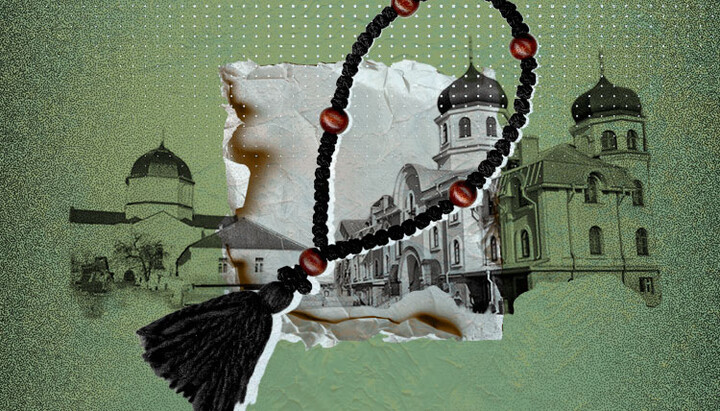
Prayer beads - a spiritual sword. Photo: Union of Orthodox Journalists
In Vasily Surikov’s painting Boyarina Morozova (1887), there is a detail easily overlooked. On the wrist of the noblewoman herself, and in the hand of the pilgrim to the right, are identical dark leather prayer beads. This is the lestovka, the Russian form of the vervitsa, i.e. the prayer rope. Surikov knew exactly what he was doing: in the hands of people ready to die for their faith, this small object conveys something essential.
Where the knot came from
The history of the prayer rope begins in the fourth century with a practical problem: how could an illiterate monk keep the required rule of prayer without losing count?
The first mention of knotted prayer ropes appears in the Life of Saint Pachomius the Great (+348). Monks who could not read or count were given a cord tied with knots. Soon the practice was adopted and systematized by Saint Basil the Great (+379), who introduced it throughout the monasteries of his diocese. The 87th rule of the Nomocanon states plainly: “Let the illiterate monk, for Midnight Office, say ten prayer ropes. For Matins, ten prayer ropes… And let the rope have one hundred and three knots.”
But why a knot, and not a bead or a stone?
Tradition preserves a story worth telling in full. One monk, praying with a simple rope, complained that the knots kept coming undone at the worst possible moments. Then an angel appeared and showed him how to tie the cord crosswise nine times – in honor of the nine orders of angels. According to the tradition, the devil could no longer untie such a knot, for the sign of the Cross prevented him from touching the thread.
Thus was born the “angelic knot” – a complex geometric interweaving that became the canonical standard of the Orthodox East.
Why wool?
Monastic tradition consistently prefers natural sheep’s wool, and for tangible reasons. Wool absorbs the warmth of the hands. Over time it changes in weight and texture, gradually becoming an extension of the palm itself. An old prayer rope is heavier than a new one: the thread quite literally absorbs salt from sweat and, monastery witnesses say, tears.
A thirty-year-old rope and a three-month-old rope are different instruments of prayer.
Its silence is another technical advantage, long valued in monastic life. Unlike wooden or stone beads, wool makes no sound when moved between the fingers.
In the practice of hesychia – sacred stillness – even the slightest noise can shatter the state of prayer.
At tonsure, a monk receives the vervitsa from the abbot’s hands with a direct designation: a “spiritual sword.” It is a weapon not against enemies outside, but against one’s own thoughts.
Regional forms
That the prayer rope spread throughout the Orthodox world, changing only its form, is itself a fascinating historical fact.
The Serbian brojanica consists of 33 knots, woven into a bracelet in memory of the earthly years of Christ. It is worn on the wrist and is as common among laypeople as among monks.
The Greek komboskini is stricter in design: austere, often with a single divider and almost no decoration. This reflects Athonite aesthetics, where only rhythm and precision of count matter.
The Russian lestovka is something special. It is a leather band closed in a loop, made up of small “steps” – leather rolls, each containing a tiny paper scroll with the Jesus Prayer written inside during its making.
Thus, the lestovka quite literally carries prayer within itself, in every step. Boyarina Morozova held it in her hand as the final argument of her faith. Surikov saw this.
The meaning of color
The color language of the prayer rope developed historically and is tied to specific symbolism. Black is the color of monastic repentance and dying to the world; these are the ropes given to monks at tonsure. On Mount Athos, deep blue is traditionally associated with the Most Holy Theotokos. In the Jerusalem tradition, red cords appear during Pascha – the color of Christ’s blood and the memory of the martyrs.
This is not arbitrary aesthetics, but a system a monk reads as attentively as he reads the liturgical rule.
The tassel at the end of the rope, called the priast'tsa, once served desert monks to wipe away tears during prayer. A detail easy to overlook – until one realizes that the same object counts prayers, steadies the fingers, and holds tears.
One instrument for everything at once.
Studying the history of this “simple little knot” yields an unexpected conclusion. Before us stands an object seventeen centuries old, one that survived iconoclasm, schism, Soviet decades, and reached us unchanged from the time of Saint Pachomius the Great: nine crosses in a single knot. One hundred and three knots in a circle.
A prayerful mathematics that has not changed for centuries.
Read also
Trial of a dead pope
Once in Rome, the body of a deceased pope was seated on the throne and put on trial. The accusation relied on a church canon that had once saved his see.
Monastery built in defiance of king
When Orthodox believers in Minsk were left with just one church, townspeople decided to build another – and even a royal decree did not stop them.
Young Mother and Sleeping Christ
Michelangelo carved a Virgin Mary who looks younger than her Son – and signed his name in marble for the only time in his life. Neither of these peculiarities was accidental.
Orthodox books from a Uniate printing press
In the 18th century, Uniate monks at Pochaiv printed books used in prayer by Orthodox Christians and Old Believers alike.
The story of the honey brotherhood
The Mogilev Brotherhood began with members pooling money to brew honey drinks for feast days – and eventually grew to have its own printing press.
Golgotha in the midst of a pogrom
In the autumn of 1938, the Jewish artist Marc Chagall painted the crucified Christ. Synagogues burn and refugees flee around the cross, while the Crucified One Himself is wrapped in a prayer shawl.