Dumenko discusses countering hostile influence in spiritual life with PO head
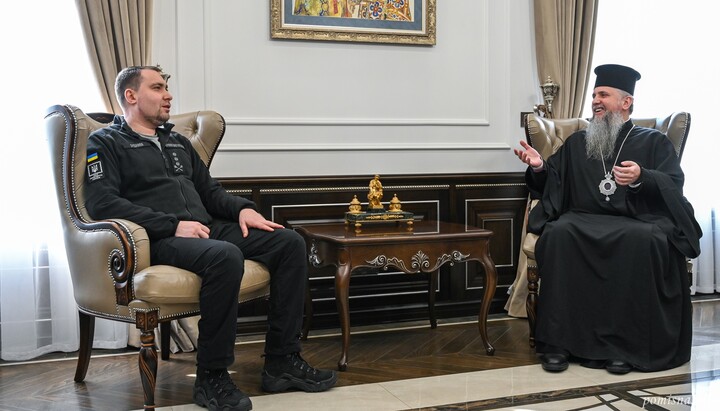
Budanov and Dumenko. Photo: OCU press service
On March 7, 2026, OCU head Epifaniy Dumenko met at his residence with Kyrylo Budanov, head of the Office of the President of Ukraine. According to the structure’s press service, the two discussed the religious situation during the war, state-church relations, and “countering hostile influences in the spiritual sphere.”
Also present at the meeting was Kostiantyn Kholodov, head of the HUR chaplaincy service. Earlier, Kholodov said that Budanov is an OCU parishioner who “never misses a single service” and regularly receives Communion together with his wife.
At the same time, Budanov’s religious activity points to his broad outlook. Three days before visiting Dumenko, he marked Purim with Kyiv’s Jewish community, delivering greetings and congratulatory remarks.
A little earlier, Budanov and Zelensky also joined Muslims at a mosque for iftar during Ramadan.
Read also
Medieval сhurch сrumbles as Culture Ministry сites missing agreement
The 14th–15th-century St. Nicholas Church in Chesnyky, Ivano-Frankivsk Region, is falling into disrepair.
Poland сondemns Lviv Regional Council's decision to declare 2007 year of UPA
Polish Prime Minister Donald Tusk says the Lviv Regional Council's decision to dedicate 2027 to the UPA and Roman Shukhevych is harmful to Ukraine.
OCU seeks court recognition of ownership of seized Cherkasy cathedral
The Cherkasy Regional Commercial Court will hear an OCU lawsuit seeking ownership of St. Michael's Cathedral, which was seized from UOC believers.
Lithuanian bishop: Ukraine is no model for believers' rights
Vicar of Vilnius Diocese voices concern over attempts to import Ukraine's religious conflict into Lithuania.
Hundreds of believers honor St. Alexis of Carpatho-Russia in Khust Eparchy
At the St. Nicholas Monastery in the village of Iza-Karputlash, Metropolitan Mark of Khust led a festive liturgy, concelebrated by six metropolitans, five archbishops and three bishops.
Court upholds UOC parish appeal in Voloshky over OCU switch dispute
The Northern Commercial Court of Appeal has upheld the appeal of the St. Nicholas parish of the UOC in the village of Voloshky, Volyn region, in a dispute over a transfer to the OCU.