Why the inability to weep is a diagnosis, not a virtue
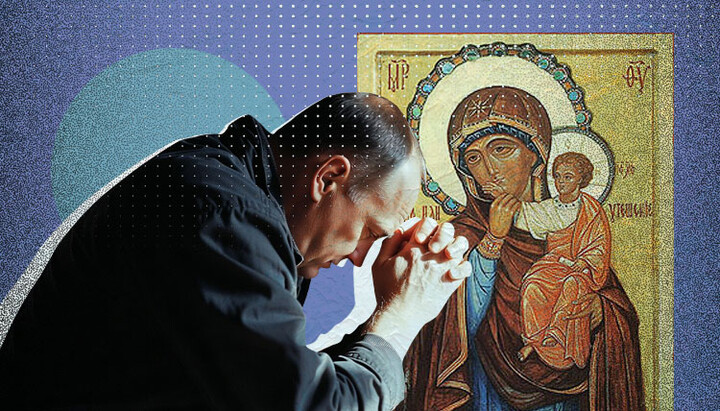
Purifying tears of repentance. Photo: UOJ
“I haven’t cried in years. I suppose I’ve simply grown up.” We say it with a certain pride, as though dryness of the eyes were a diploma from some difficult and necessary school. We have endured enough losses, enough disappointments, to acquire a kind of immunity. And we name this immunity maturity.
But in the seventh century, St. John Climacus called tears of repentance a “second baptism” – a water that washes away not original sin, but that crust with which we ourselves, willingly, have sealed our hearts so they would trouble us no longer. If we have forgotten how to weep, it does not mean we have grown. It means the circulation of the soul has ceased – and we have not even noticed.
Self-pity and repentance are not the same
“I’m just exhausted. I feel this sharp self-pity from overwork.” So we justify ourselves. And here we must stop, because we are confusing two entirely different states – and the Church has always drawn a clear line between them. The Apostle Paul speaks plainly: “Godly sorrow produces repentance leading to salvation, not to be regretted; but worldly sorrow produces death” (2 Cor. 7:10).
Self-pity – worldly sorrow – circles endlessly around our wounded ego: I was offended, I was overlooked, I was unlucky. It pulls us inward like a whirlpool, and at its depths lie resentment and despair. But tears of repentance are turned in another direction: not toward our grievances, but toward the chasm between God’s love and our betrayal of it. The saints called such weeping “joy-creating,” for it does not empty the soul – it liberates it, and afterward one breathes more freely.
Strong warriors or grown children?
“God needs strong warriors, not whiners,” whispers the unbelieving mind. Yet St. Isaac the Syrian, who lived a life of ascetic struggle that would break the knees of most modern “warriors” in a single day, left us a formula that overturns all such notions of strength: he who sees his own sins is greater than he who raises the dead.
In the Christian understanding, courage is not the ability to clench one’s teeth and feel nothing. It is the ability to look upon the hell within oneself without anesthesia – and to weep over it.
Infantilism is precisely the conviction of one’s own blamelessness. Tears for oneself belong to those who have grown enough to stop lying.
The Teflon heart
“Inner detachment is a sign of healthy personal boundaries,” we are told. But St. Symeon the New Theologian says something altogether different: a man who cannot weep for himself is in a spiritual coma. We have coated the heart with an invisible Teflon – nothing adheres to it anymore: neither another’s pain, nor another’s joy, nor even the grace of God. We call this “healthy boundaries.” In the language of asceticism, it is called hardened insensibility – like a frostbitten limb that no longer hurts not because it is healed, but because it is dead. Pain returns only when blood begins to flow again through lifeless tissue.
Tears, in Orthodoxy, are precisely this pain of thawing – the sign that the nerve endings of the soul are still alive.
The prophet Ezekiel once spoke a promise from God that unsettles our Teflon age: “I will give you a new heart, and put a new spirit within you; I will take the heart of stone out of your flesh and give you a heart of flesh” (Ezek. 36:26). A heart of flesh means a heart that can be wounded, that can bleed. God does not promise us comfort. He promises to restore our capacity to feel.
Why action without contrition is poisoned
“I have no time for reflection. The world demands action.” So we insist. But every “good deed” performed without inner contrition is immediately poisoned by vanity. We begin to help in order to feel good about ourselves, rather than because there stands before us a human being in need.
St. Silouan the Athonite said that to pray for others is to shed blood. St. Isaac the Syrian described this state with surgical precision: “A merciful heart is a burning of the heart for all creation – for men, for birds, for animals, for demons, and for every creature. At their remembrance, and at the sight of them, a man’s eyes pour forth tears.” Without these tears of compassion, our social activity is mere management – something that has nothing to do with salvation.
The fear that holds us back
“If I begin to cry, I will fall into a dark abyss and never recover.” So the mind deceives us. It is a trap – and the one who sets it desires precisely this: that we never fall to our knees before God. Yet the experience of the saints says the opposite. Tears of repentance do not destroy – they restore. St. Theophan the Recluse compared such weeping to a deep cleansing, after which the house of the soul is filled with air and light.
The man who has wept out his pride in secret comes back to others not broken, but peaceful. His smile is real – not stretched across his face by effort of will.
St. Symeon the New Theologian wrote: “As fire devours straw, so tears burn away every visible and invisible impurity. They cleanse the mind, make it radiant, and free it from the burden of sins.” Tears are not a pit into which one falls. They are a fire that consumes what is dead – and leaves behind a clear and living space within the soul.
We began with pride in our dry eyes, calling it strength of will. But the Church, which for two thousand years has watched the rise and fall of human pride, says quietly: this is not strength – it is anesthesia. And when it wears off – as it must, for God will not leave us in a coma forever – it will hurt. But that pain will mean that we are becoming alive again.
And perhaps, for the first time in a long while – truly human.
Read also
Weeping Queen at Blachernae
On the night of the Feast of the Intercession of the Mother of God, only two people witnessed the miracle in the Church of Blachernae. Everyone else was praying and saw nothing. Yet the grace was bestowed upon them, too.
Deadly spiral of human hatred
The tragedy of Lebanon's civil war lays bare how dehumanization and fear can turn human beings into monsters.
Woe to expectant mothers – or to those of little faith?
God commanded one prophet not to have children, yet told his people in exile to bear sons and daughters. What does this apparent contradiction tell us today?
The help God never asked for
Uzzah wanted only to keep the Ark of the Covenant from falling into the dust. Why did this well-intentioned act cost him his life, and who was really responsible for his death?
Freedom begins when there's nothing left to take
Fear of persecutors takes root in our attachment to possessions. We turn to St. Basil the Great to understand why the prefect's threats held no power over him.
The bride in the window frame
The author of the earliest account of St. Thecla’s life was defrocked. Yet it was his book that preserved the only ancient description of the Apostle Paul’s appearance.