The energy of eros: from the abyss of passion to the heights of holiness
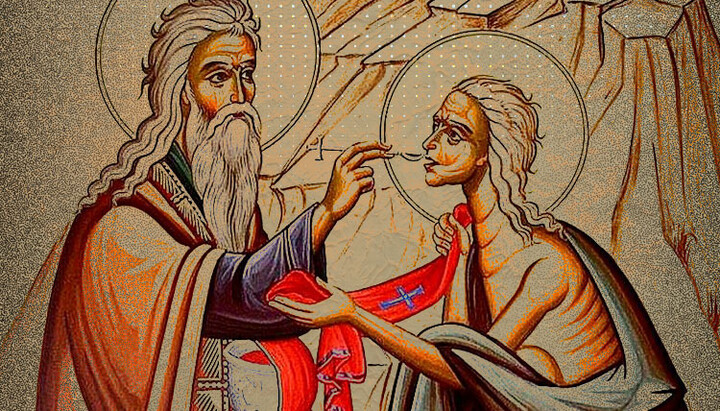
Communion of Saint Mary of Egypt. Photo: UOJ
Within the liturgical rhythm of Great Lent, and especially on the penitential days dedicated to the memory of Saint Mary of Egypt, the Church offers us a profound meditation on the nature of human desire. The Gospel image of a woman whose immense capacity for love was transformed from sin into sanctity opens before us a discussion of one of the most fundamental powers placed within man – the energy of eros.
Eros as the vector of the spirit
In the mystical tradition of Christianity, the question of sex has never been secondary. The erotic principle is understood as the most powerful inner engine, the very “fuel” of the soul. In itself, this energy is neutral – but the direction it takes determines the entire trajectory of a person’s life. The same inward fire can either lift a man to the contemplation of Divine light, making him an illumined ascetic, or hurl him into the abyss of self-destruction, turning him into a slave of instinct.
The difference between a holy hesychast and a degraded sensualist lies not in whether this force is present or absent, but in the object on which it is fixed.
Theology calls us not to suppress this energy, but to discern it rightly and direct it rightly, lest it degenerate into the passion of fornication.
The origins and the original design
Patristic thought regards the modern understanding of sexuality as a kind of pathology that arose after the loss of primordial purity. In Paradise, Adam and Eve dwelt in chastity, and the continuation of the human race was conceived in a manner fundamentally different from that of the animal world.
According to John Chrysostom and Gregory of Nyssa, the transition to biological reproduction became a consequence of the Fall, when man was “clothed in garments of skin” – that is, in mortality itself. Christ, however, speaks plainly of humanity’s final destiny: in the Kingdom to Come, people “will be like the angels,” returning to a state in which external division into sexes and fleshly union lose their relevance.
The Holy Fathers on sexual desire
Saint Gregory of Nyssa, writing in the fourth century, saw sex as a kind of “safety net.” God created man in His own image, and that image is beyond sex. But foreseeing the Fall, He endowed humanity with a biological mode of reproduction, akin to that of the animals, so that mankind would not perish after losing immortality. Gregory calls this the “garments of skin.” For him, the aim of Christian life is to gradually lay aside those garments and return to the angelic condition.
Eros is the soul’s longing for the lost Divine unity – a longing we mistakenly try to satisfy through the body.
Yet where Gregory is more a philosopher, John Chrysostom is above all a pastor and a realist. He lived amid the corruption of Antioch and Constantinople. He taught that marriage was given for childbearing, so that death might be overcome through posterity, but after the coming of Christ and faith in the resurrection, that purpose became secondary. The chief purpose of marriage now is chastity – the preservation of fidelity – and mutual support. Saint John Chrysostom called the marriage bed “undefiled.” He taught that where there is love and prayer in a family, Christ Himself is invisibly present in that home. He also opposed extremes, warning against one spouse imposing abstinence on the other without consent, calling such behavior “theft.”
Saint Maximus the Confessor, in the seventh century, developed a profound teaching on how our natural powers – desire and anger – are to be transformed. In the soul there are three parts: the rational, the desiring (eros), and the irascible, the energy of action. Sin begins when eros is directed downward – toward things, food, and bodies. Holiness begins when eros is directed upward – toward God. Saint Maximus does not call for the destruction of desire. He calls for its deification. Love for another person must become an icon of love for God.
Saint John Climacus offers what is almost a medical description of the way the passion of fornication attacks the mind. Fornication is not merely an outward act – it is first of all the captivity of the imagination. John Climacus describes how a stray thought becomes an obsessive image.
The meaning of intimacy in marriage
At the same time, the Church does not reject the present reality of human nature. Within marriage, physical intimacy is blessed and placed within lawful bounds.
Sin begins where sexuality becomes an end in itself, severed from its spiritual purpose.
If in antiquity the emphasis was placed almost exclusively on childbearing, Christianity sees conjugal intimacy as the periphery of sacrificial love, not its center. True unity is, before all else, a union of souls. History knows many examples of “white marriages,” where the renunciation of bodily relations only deepened tenderness and strengthened inward communion. Bodily union has value only when it becomes the continuation and expression of spiritual kinship.
The distortion of perception: the first phase
Spiritual illness begins when the focus of attention shifts away from the person of the beloved and toward the mere pursuit of physical pleasure. At that moment an “energetic short circuit” occurs: man ceases to be open to Divine grace and becomes locked within himself. The spirit is subordinated to the flesh, and the soul’s higher aspirations are blocked, replaced by the hunt for sharper sensations. This state leads to inner hardening and a darkening of consciousness.
The loss of personhood: the second phase
At the next stage of degradation, a person begins to identify himself exclusively through his needs. The other person disappears from view as a person and becomes only an object, an instrument for the achievement of orgasm. One of the great tragedies of modern consumer culture lies in the fact that women, striving to conform to hypersexualized standards of beauty, often doom themselves to ontological loneliness. The more they accentuate bodily attractiveness, the less likely it becomes that anyone will see in them a living human being. The end of this road is emptiness – and severe depression when the body inevitably begins to fade.
Obsession and illusion: the third phase
The passion of fornication is akin to addiction. As with gluttony, habituation sets in, yet the range of real sensations remains painfully limited. The fornicator is trapped by his own imagination: fantasy always paints something grander than any actual experience can deliver. Chasing this illusion, he is driven to seek ever more elaborate and perverse forms of stimulation. This inevitably leads to psychological exhaustion and the fragmentation of the personality. It is no accident that the Holy Fathers called the extreme forms of fornication a species of madness, for man loses contact with reality and becomes a slave to maniacal images.
The spiritual consequences and the path of healing
The clinical picture of this passion is marked by constant anxiety and bitterness. Even after desire is gratified, a person feels inward discord, because his nature subconsciously senses that his actions do not correspond to the Divine design. Shame is the soul’s protective response; the loss of shame signifies final spiritual death.
The development of this passion drags behind it an entire chain of other vices – from despondency and pride to complete insensibility toward the Divine.
Yet this very same “erotic” force, once redirected into prayer, ascetic labor, and attentive watchfulness over one’s inner life, becomes a mighty instrument of deification.
Chastity is not simply a prohibition – it is the building of a temple. The human body is called to become a dwelling place of the Holy Spirit, and only in purity can this union between God and man become possible.
The life of Saint Mary of Egypt stands as a unique witness to the fact that the colossal force of human eros, once redirected toward the Creator, is capable not of destroying the person, but of raising him to supernatural heights. In the person of the saint we see that genuine holiness is not the mechanical suppression of inward energy, but its radical healing and its return to the primordial Source. In the end, the supreme degree of deification she attained proves that even the most “earthbound” sensuality can become a mighty engine on the road to Heaven – provided it finds its true Addressee. When human desire meets the love of God, it ceases to be fornication and becomes a holy fire, transfiguring even the very matter of the body.
Read also
Honest atheism vs. spiritual hypocrisy
The 70th anniversary of Albert Camus’s Nobel Prize recalls an uncompromising challenge to Christianity. An honest unbeliever brings theology back to the mystery of the Cross.
The valley of trouble and the gateway of hope
One soldier buried an expensive cloak and some gold beneath his tent. Because of this, all Israel lost a battle. Why did one man’s sin bring disaster upon an entire nation?
From love spells to bishop's throne
Antioch’s most powerful sorcerer sent demons against a devout young Christian woman three times – and failed every time. In the end, a demon himself revealed the truth that led to his conversion.
The Weeping Queen of Blachernae
On the night of the Feast of the Protection, only two people witnessed the miracle in the Church of Blachernae. Everyone else prayed and saw nothing. Yet they, too, received grace.
Deadly spiral of human hatred
The tragedy of Lebanon's civil war lays bare how dehumanization and fear can turn human beings into monsters.
Woe to expectant mothers – or to those of little faith?
God commanded one prophet not to have children, yet told his people in exile to bear sons and daughters. What does this apparent contradiction tell us today?