Schism as a result of weakened faith and trust in the Risen Christ
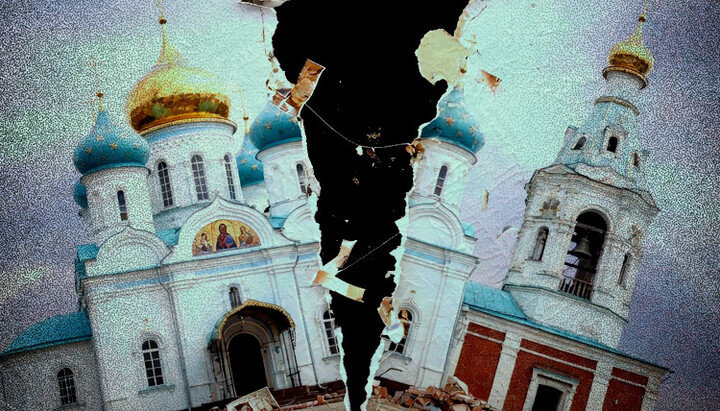
Schism arises when faith weakens. Photo: UOJ
In these days, all of us, Orthodox Christians, are experiencing the best period of the calendar year – the Bright Week of Christ's Pascha. The Lord's Resurrection is not merely a significant event of the past, but, most importantly, an event of decisive significance both for the fate of every person whom God calls from non-being, and for the entire Church, which is the historical continuation of the Paschal night. For it is precisely in the Church that each of its members experiences their personal Golgotha, their personal transfiguration, sanctification and deification.
The Church of Christ is the Church of the Resurrection
The Church is not merely a human community united by common beliefs or moral principles. It is the Body of Christ, living by the power of His Resurrection. If Christ had remained in the tomb, there would be no Church as a living organism of salvation. But Christ is risen – and therefore the Church not only exists, but remains unconquerable throughout all ages.
The Lord Himself said: "I will build My Church, and the gates of hell shall not prevail against it" (Mt. 16:18). These words become understandable precisely in the light of the Resurrection: the gates of hell, that is, the power of death and corruption, have already been destroyed from within by the Risen Christ. Consequently, nothing belonging to death can defeat the Church.
The history of the Church – from apostolic times to our days – is a clear confirmation of this truth. Neither persecutions, nor heresies, nor internal crises could destroy the Church. Why? Because its life is based not on human strength, but on the power of the Risen Christ.
St. John Chrysostom notes that nothing makes the Church so unconquerable as faith in the Resurrection. This thought indicates that the source of the Church's steadfastness is not in organizational structure and not in earthly support, but in living faith that unites it with Christ.
Moreover, faith in the Resurrection makes the Church not only unconquerable, but also constantly renewed. In every generation, in every saint, in every sincerely believing person, the power of the Resurrection manifests itself again and again – the power that conquers sin, fear and death.
St. Nikolai of Serbia notes: "The Church stands not on an earthly stone, but on the Living Stone – the Risen Christ. That is precisely why it cannot be destroyed: its foundation is outside time and the power of death." Thus, the strength and invincibility of the Church lie not in external grandeur, but in inner unity with the Risen Lord. As long as the Church lives by this faith, as long as it proclaims: "Christ is risen!", it remains unshakeable, regardless of any trials.
Faith and trust in Christ is the foundation of Church unity
It is precisely faith in the Risen One that makes the Church capable of passing through persecutions, trials, internal crises while preserving its essence. Where this faith is alive, there is courage, faithfulness and spiritual clarity. But where it weakens, internal discord begins, which often manifests itself in schisms, compromises and spiritual confusion.
The weakening of faith and trust in the Risen Christ inevitably leads to deviation into schisms, because the very nature of the Church is rooted not in external force, not in human organization and not in political guarantees, but in the living and active presence of the Risen Lord.
The Church is the Body of Christ, and its unity is not administrative, but ontological, spiritual, flowing from unity with Christ Himself. Therefore, where faith in Christ as the Head of the Church weakens, there the unity of the church organism inevitably begins to be destroyed.
First of all, faith in the Risen Christ gives a Christian inner steadfastness in the face of pressure – whether persecutions, threats, social pressure or the temptation of compromise. The Resurrection reveals that death is conquered, that evil has no ultimate power, and therefore fear loses its absolute force.
But when this faith weakens, a person begins to think according to the laws of the fallen world: they fear suffering, loss of position, isolation, and persecutions. And this fear becomes the decisive factor in their behavior.
It is precisely fear that often lies at the foundation of schisms. When external pressure intensifies, a Christian faces a choice: to remain faithful to the truth or to seek a "safe" path.
If faith is alive, a person understands that Christ has already overcome the world (Jn. 16:33), and therefore no temporary trials can harm their salvation. But if trust in Christ weakens, then there arises a desire to "adapt," to change the truth, to compromise in order to avoid suffering. And it is precisely here that the internal breakdown begins, which subsequently results in external schism.
The holy fathers repeatedly pointed out that schism most often begins with moral damage – with fear, pride or distrust of God.
A person who has lost trust in God begins to seek support outside the Church – in themselves, in the powerful of this world, in ideologies or in alternative "church" structures that seem safer or more convenient.
Moreover, the weakening of faith leads to a distortion of the very understanding of the Church. When a person lives by faith in the Risen Christ, they perceive the Church as a mystery of salvation, as a space of grace where God Himself acts. But with the weakening of faith, the Church begins to be perceived as a human institution that can be "reformed," "corrected" or even replaced. Then unity ceases to be a sacred reality for which one should suffer, and becomes something relative, something that can be sacrificed for "higher goals", for example, for external peace, political advantage or personal comfort.
This is especially clearly manifested in epochs of persecution. Church history shows that in periods of pressure there was always the temptation of division: some sought to preserve the purity of faith at any cost, others sought compromise for the sake of survival. But the authentic patristic position always consisted not in schism, but in faithfulness to truth within the bounds of church unity, even if this required confession.
The example of St. Maximus the Confessor expresses this thought especially vividly. The saint, remaining almost alone against the state hierarchy, preserved faithfulness to the fullness of church truth. His strength was not in external support but in deep conviction that the truth of Christ does not depend on human majority or political force.
Thus, the weakening of faith in the Risen Christ destroys the inner center of church life. A person ceases to see in Christ the source of life and truth, begins to seek support in the world and, under pressure of fear or circumstances, deviates either into compromise or into division.
Schism becomes not simply an error of thinking, but a spiritual illness rooted in the loss of trust in God.
And conversely, where faith in Christ is alive, there unity is also preserved. For the authentic unity of the Church is held not by human efforts, but by the Risen Lord Himself. It is precisely this faith that makes the Church unconquerable and preserves it from disintegration even amid the most severe trials.
From fear, man seeks safety rather than truth
Fear before the "powerful of this world" leads to confusion because it destroys a person's inner spiritual support and deprives them of integrity, clarity and the ability to act in truth. At the foundation of this phenomenon lies a deep spiritual law: a person either establishes himself in God, or begins to depend on external forces – and then their inner world becomes unstable.
But as soon as fear comes to the forefront – especially fear before authority, force, and pressure – the mind begins to waver. A person no longer seeks what is true, but seeks what is safe. This is the beginning of confusion: the loss of inner criterion.
Sacred Scripture repeatedly points to this condition. The apostles before Pentecost were filled with fear: they "locked themselves" out of fear before the Jews (Jn. 20:19). But after the descent of the Holy Spirit they acquired boldness, because fear was conquered by faith in the Risen Christ. Where there is living faith, there is also inner composure; where there is none, confusion is inevitable.
The holy fathers also emphasize that fear before people arises from the weakening of the fear of God – the reverent feeling of God's presence. Thus, St. John Chrysostom notes that he who fears God fears no one among people; and he who has lost the fear of God begins to fear everyone. This is a spiritual paradox: the more a person seeks security in the external world, the more vulnerable they become.
Thus, fear before the powerful of this world leads to confusion because it shifts the center of a person's life from God to external circumstances. A human being begins to live not by truth, but by reaction to pressure. His mind is darkened, his will is divided, and he loses inner integrity.
And conversely, where a person is rooted in faith in Christ, they can experience external difficulties, but do not lose inner peace and clarity. Because the foundation is not the power of this world, but the Risen Lord, Who is stronger than any earthly authority.
The desire to "save" the historical Church through conformism
The desire to "save" the historical Church through conformism becomes a cause of deviation into schisms because this intention conceals a deep distortion of the very understanding of the Church, its nature and the way of its preservation.
At first glance, this desire may seem good: a person wants to protect the Church from persecutions, preserve its external structure, temples, protect its influence in society. But in reality, this often involves a substitution: instead of reliance on God, there arises reliance on human means.
The Church by its essence does not need "salvation" by human efforts in the sense in which earthly institutions are saved. It is already saved and established by Christ Himself. When a person begins to think as if the fate of the Church depends primarily on their diplomacy or concessions, they thereby place themselves in the place of God's Providence.
It is precisely here that the danger of conformism arises.
Under pressure from external forces, the thought appears: "If we give in a little, if we change formulations, if we adapt to the demands of the time or authority, we will thereby preserve the Church."
But such logic destroys the very truth of the Church, for the Church lives not by compromise but by faithfulness.
The patristic tradition clearly indicates that any attempt to "save" the Church at the cost of truth leads not to preservation but to loss. St. Athanasius the Great in the epoch of Arian disputes found himself almost alone, when many bishops, wishing to preserve peace and avoid conflicts, agreed to ambiguous formulas. They believed that in this way they were "preserving the Church," avoiding divisions. But it was precisely this policy of compromise that threatened to destroy the very foundation of faith. St. Athanasius understood that the Church is preserved not by external unity at any cost, but by faithfulness to truth. They said of him: "Athanasius against the world," but in reality it was the world that turned out to be against the truth.
Here another paradox arises: striving to avoid schism through concessions, a person themselves ultimately becomes its cause. Because compromise with truth inevitably generates new divisions. Some accept the concessions, others reject them, and instead of unity an even deeper split arises. Thus, accommodation does not prevent schism but only deepens it.
Moreover, in the desire to "save" the Church through conformism, fear is often hidden – fear of suffering, loss of influence, and persecutions. But fear cannot be the foundation of church life. Where decisions are made from fear, and not from faith, spiritual distortion inevitably occurs. A person begins to justify concessions with "higher goals," but in reality this means the loss of trust in God.
Thus, the desire to "save" the Church through conformism leads to schism because it substitutes the spiritual foundation of the Church with human logic of survival. It destroys trust in God, weakens faithfulness to truth and introduces into the Church the principle of compromise, incompatible with its nature.
In the "Spiritual Meadow" there is a story about times of troubles, when some Christians for the sake of preserving temples agreed to compromises with false teaching.
Then one ascetic said: "It is not the temple that makes people the Church, but following the Truth. It is better to pray under the open sky than in a temple where faith is distorted."
To preserve religiosity and at the same time avoid sacrifice
And finally, another cause of deviation into schisms can be called the desire to preserve one's own position and comfort, that is, emphasis on earthly well-being.
Such a desire becomes one of the causes of deviation into schisms because it imperceptibly substitutes the spiritual goal of Christian life – salvation and faithfulness to truth – with the striving for self-preservation within the bounds of this world. In other words, a person begins to live not for Christ but for themselves, although externally they may continue to speak of church goals.
The Church by its nature requires readiness for sacrifice. Christ Himself clearly says: "If anyone wants to come after Me, let him deny himself" (Mk. 8:34). This means that true church life is impossible without inner renunciation of the striving for convenience, security and human glory. But when this readiness for renunciation weakens, a person begins to seek in the Church not the way of the cross but the way of well-being.
It is precisely here that a dangerous shift occurs: truth begins to be evaluated not in itself, but from the point of view of how profitable or safe it is. If confession of truth threatens loss of position, respect, material prosperity or peaceful life, the temptation arises to change position, soften requirements, and avoid conflict. And this is no longer simply weakness, this is a change of inner orientation.
The holy fathers repeatedly warned about this. St. John Chrysostom said that nothing so destroys the soul as attachment to glory and convenience, for it makes a person dependent on external circumstances. He who seeks earthly well-being will inevitably fear losing it, and therefore will be ready to make concessions, just to preserve his position.
Schism in such a case becomes a kind of "way out" that allows one to combine the incompatible: to preserve religiosity and at the same time avoid sacrifice. A person can justify his separation with lofty words – concern for "purity," "justice" or "correct ordering of the Church," – but at the depth of their decisions often lies unwillingness to lose comfort or status. Schism then becomes simply a choice in favor of convenience.
Church history provides many examples when it was precisely the striving for earthly advantages that pushed people toward compromises and divisions. In periods of persecution, some remained faithful to Christ, accepting sufferings, while others sought ways to preserve their position – sometimes at the cost of apostasy or break with church unity. And here a clear boundary passes: where a person chooses Christ, there he preserves unity; where he chooses himself, there division begins.
And only where a person seeks first the Kingdom of God, they are ready to lose everything external, but preserve the main thing – unity with Christ and His Church.
It is precisely such faith that makes a human free from fear and incapable of schism, for their treasure is not in this world but in God.
Living faith in the Risen Christ preserves the Church as Church
Thus, the strength and invincibility of the Church lie exclusively in its faith in the Risen Christ. As long as this faith is alive, the Church remains the Church, even if it loses everything external. But when this faith weakens, fear, compromises and schisms appear.
The true preservation of the Church is not the preservation of its external form at any cost but faithfulness to Christ to the end. And therefore the main question for every time and for every person sounds the folowing: on what is our faith based – on the Risen Christ or on temporary supports of this world?
And it is precisely the answer to this question that determines not only the personal fate but also the fate of the entire church life.
Read also
Yelensky’s plan: Why is DESS demanding what the UOC has already done?
DESS is demanding that the UOC take steps it has already taken, while offering no assurance that further demands will not follow. What is behind Yelensky’s ultimatum?
Why OCU hierarchy lacks canonical ordination: what Local Churches say
The OCU head refuses to address invalidity of his ordinations. But almost all Local Churches speak of it – even those that recognized the OCU.
Why nation-first advocates do not call for peace
Ukraine’s population is declining by nearly one million people a year, and experts are warning of the nation’s demographic extinction. Yet the leaders of the Orthodox Church of Ukraine (OCU) and the Ukrainian Greek Catholic Church (UGCC) continue to call for war and mobilization.
The deception that decided the fate of the Tomos
In 2008, the "Filaret problem" derailed Yushchenko's plan. In 2018, Poroshenko solved it in just one hour – with a police escort for the Greeks and verbal promises to Filaret.
Lawyers in the crosshairs: How UOC is being stripped of its right to defense
Activists harass UOC lawyers outside courthouses, call them “traitors” on air, and promise them a “warm welcome” at hearings. The Church’s right to a legal defense is at stake.
How to respond to persecution: Lessons from St. Silouan the Athonite
The Church can and should be defended, but without malice. Why love for persecutors is not weakness but the only way to preserve the Spirit of Christ in the midst of the struggle.