Hardening of the heart: how not to grow used to another’s pain
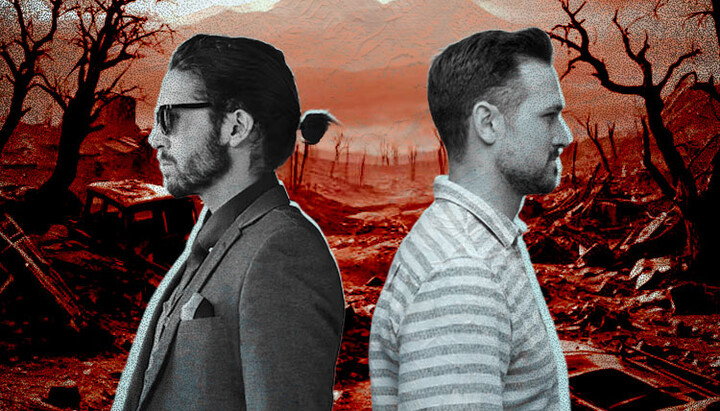
Epidemic of dehumanization. Photo: UOJ
Seven in the morning. The room is still steeped in gray twilight, yet your face is already lit by the bluish glow of a screen. A familiar gesture: your thumb flicks away notifications. Messengers, briefings, short videos. Somewhere out there – not in our neighborhood, not on our street – something terrible is happening. The video lasts a few seconds. We scroll on.
And then, while making coffee, we catch ourselves with an uneasy realization: we felt nothing.
This is not about deliberate cruelty. It is about how someone else’s grief has ceased to be an event. It has slipped into our morning routine somewhere between the weather forecast and the exchange rate. Without noticing, we have allowed a silent wall to grow inside us.
The Holy Fathers call this condition “the hardening of insensibility.” In ancient medicine, this term referred to a bony callus – a growth that forms at the site of a fracture. It is dense and strong, meant to protect the wounded place from further injury. A hardened heart is a heart covered by just such a layer. It has not disappeared; it still pumps blood. It has simply stopped feeling, because the nerve endings lie hidden beneath armor.
This growth forms unnoticed, and it feeds precisely on pain. When there is too much suffering around us, the psyche engages its safeguards. It is a survival reflex, an attempt not to go mad. We understand this mechanism. Yet for a human being, such a protective shell is dangerous: it makes us invulnerable to pain, but at the same time impermeable to love.
Face and label
There is a story from 1914. Christmas on the Western Front of the First World War. Soldiers – German and British – spontaneously climbed out of their trenches. Without orders, against prohibitions. They met in no man’s land, exchanged food, sang hymns together, and buried the fallen. Command had to take measures to restore discipline, even rotating units in some sectors.
Those who saw a human being in the other could no longer shoot. The propaganda that had fashioned a monster dissolved the moment one living gaze met another.
The same mechanism works in reverse. Dehumanization begins with language. In Rwanda in the 1990s, genocide was preceded by radio broadcasts calling the Tutsi people “cockroaches.” In Germany of the 1930s, entire groups were turned into an “infection.” When the word “human” is replaced with a label, the inner prohibition against cruelty is lifted. Evil is not committed because everyone suddenly becomes a madman, but because, in the eyes of the crowd, its target is no longer human.
Today we grow accustomed to words that allow us not to empathize. “And because lawlessness will abound, the love of many will grow cold” (Matthew 24:12), Christ warns. External chaos chills the love within us. It is the soul’s response to the cold of the world. But if this is a natural process, what remains for us? Simply to try to be kind? Under the pressure of reality, such attempts quickly fracture.
The tears of God
The answer is hidden in a short verse from the Gospel of John. Jesus stands at the tomb of His friend Lazarus. He has just spoken with Martha about eternity; He knows with absolute certainty that in five minutes He will raise Lazarus. For Him, death here is only a temporary sleep. And yet: “Jesus wept” (John 11:35).
He weeps together with the sisters. He does not say, “Come now, why are you crying? It will all be set right in a moment.”
His tears acknowledge that human grief has the right to be grief. Even if victory is assured, pain in this moment remains pain.
This right – to weep with those who weep – is what we are losing today as we try to be strong and informed.
In the third century, the Roman Empire was shaken by epidemics. Pagans, guided by the instinct of self-preservation, often abandoned sick relatives and fled the cities. Christians remained. They cared for the sick – their own and others alike. Not because they felt no fear, but because they could not look into the face of the dying and walk away. This became a powerful witness of faith, opening the path to the Church for many.
The work within
The Greek word σπλαγχνίζομαι, translated as “to have compassion,” has a root meaning “the inward parts.” In the biblical sense, compassion is an inner ache at another’s suffering. It is when another’s wound is felt in your own body.
We know how difficult it is to preserve this. We catch ourselves wanting to shut our eyes, to scroll past the news, to retreat into a cocoon. A person has no internal resource to keep the heart alive indefinitely in an atmosphere of hatred. The callus grows of its own accord.
But the Bible contains a promise: “I will take the heart of stone out of their flesh and give them a heart of flesh” (Ezekiel 36:26). A heart of flesh – soft, vulnerable, capable of pain.
This is not our job – to make ourselves alive. It is God’s work. Our task is not to hide from this operation, not to allow the armor of indifference to become our second skin.
Mother Maria (Skobtsova), an Orthodox nun in the Ravensbrück camp, could have chosen the strategy of emotional self-protection. In the hell of a concentration camp, it seems the only way to survive. Yet she gave her rations to others, comforted them, spoke about the meaning of life. According to witnesses, in the end she voluntarily entered the gas chamber in place of another woman. It is a testimony that even in a place designed for dehumanization, one can preserve a “heart of flesh.”
To remain a human being with a living heart is not naïveté. It is the hardest labor of all. It is more important than any positions or declarations.
If we win in conflicts and arguments, but our hearts become as hardened as those we fought against, then whom have we truly defeated?
To keep the ability to weep with those who weep, to see a person behind every label – this is the path Christ traced with His tears. We must admit that there is no such thing as someone else’s pain as long as we breathe the same air with those around us. It hurts, at times it is uncomfortable, but it is the only way to remain truly alive.
Read also
Honest atheism vs. spiritual hypocrisy
The 70th anniversary of Albert Camus’s Nobel Prize recalls an uncompromising challenge to Christianity. An honest unbeliever brings theology back to the mystery of the Cross.
The valley of trouble and the gateway of hope
One soldier buried an expensive cloak and some gold beneath his tent. Because of this, all Israel lost a battle. Why did one man’s sin bring disaster upon an entire nation?
From love spells to bishop's throne
Antioch’s most powerful sorcerer sent demons against a devout young Christian woman three times – and failed every time. In the end, a demon himself revealed the truth that led to his conversion.
The Weeping Queen of Blachernae
On the night of the Feast of the Protection, only two people witnessed the miracle in the Church of Blachernae. Everyone else prayed and saw nothing. Yet they, too, received grace.
Deadly spiral of human hatred
The tragedy of Lebanon's civil war lays bare how dehumanization and fear can turn human beings into monsters.
Woe to expectant mothers – or to those of little faith?
God commanded one prophet not to have children, yet told his people in exile to bear sons and daughters. What does this apparent contradiction tell us today?