Honest doubt: What the Apostle Thomas teaches us
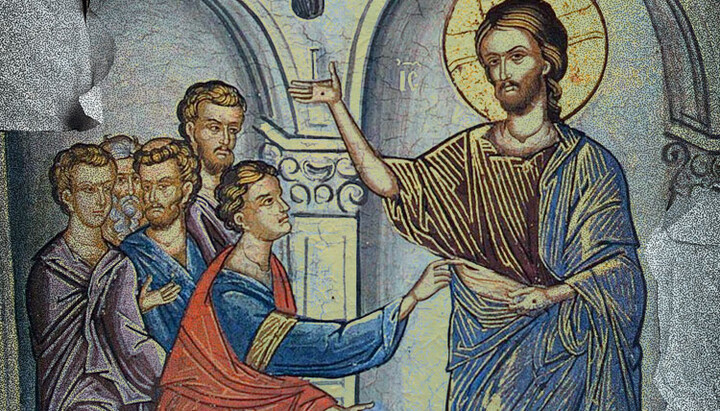
The Incredulity of Thomas. Photo: UOJ
We are used to dividing the world into “believers” and “nonbelievers,” often drawing a line far too crude between light and shadow. In church tradition, the image of the Apostle Thomas is often viewed with a hint of reproach, as though he embodied a certain spiritual weakness. Yet when we look into the mirror of Scripture, do we not find our own features reflected there?
Faith is not a static state of “having the answers,” but a dynamic – and at times painful – process of coming to know God personally. If our “blessedness of faith” rests on a sense of intellectual superiority rather than on the quiet, undeserved miracle of divine presence, then it is time to ask ourselves a difficult question – are we truly believers?
The apostle of honest doubt: the phenomenon of Thomas
The Gospel reading of this Sunday traditionally centers our attention on the figure of the Apostle Thomas. In everyday consciousness, he has been branded “the doubter,” yet such a label borders on injustice. Thomas was no more skeptical than the other disciples. Let us recall – did not those same apostles dismiss the news of the Myrrh-bearing Women as idle talk? Did they not, in fear, take the Risen Lord for a ghost when He first appeared to them in the upper room?
Christ, condescending to human weakness, shares a meal with them to dispel the illusion of bodilessness. He proves the reality of His Resurrection through tangible presence – “bones and flesh.”
Thomas merely gave voice to a universal longing for empirical certainty in the face of mystery. His demand for “proof” is not cynicism, but a thirst for personal encounter.
We often imagine that the Savior’s words – “Blessed are those who have not seen and yet have believed” (John 20:29) – are a compliment to our age. But are we flattering ourselves? Our faith is not the fruit of intellectual effort, but the result of God allowing us to “touch” Him within the space of personal experience.
The world is full of brilliant minds, erudites, intellectual giants for whom heaven remains empty. At the same time, Christianity knows a host of geniuses and scholars whose faith was unshakable. The dividing line does not run along the axis of IQ, but along the line of divine calling. Faith is not an achievement, but a gift – a transcendent breakthrough that occurs within us by the will of Love. We believe only because He has allowed us to approach His wounds, just as He once allowed Thomas.
Theodicy and silence: eternal questions
The question of why some are granted the ability to “feel” God while others remain in darkness remains open. It is one of those “accursed questions” of which Fyodor Dostoevsky wrote. Logic shatters before metaphysical abyss. Why does an innocent child suffer? What is the meaning of prolonged frailty or sudden death in youth? Where is justice in the fate of entire nations?
God does not hand us a theoretical treatise in response. Instead, He places us before Himself and asks a single existential question: “Do you trust Me?” In that “yes” lies the blessedness of those who “have not seen,” yet entrust their lives to the Incomprehensible.
The true measure of our trust is revealed not in calm seas, but in storms. It is easy to be a “captain of faith” when life’s waters are mirror-still. But when sorrow comes, we often discover that our “faith” lives only in the mind. We try to hammer into the granite of a hardened heart the dry formula – “it is all God’s will” – yet the heart remains paralyzed by despair. In such moments, we face a bitter truth: faith is not a sum of correct ideas, but a living heartbeat in rhythm with eternity.
Dialogue versus ritualism: the example of Job
Let us recall the Book of Job. His friends spoke “correct” words, defending God’s authority and the logic of justice. Job himself, however, dared to question the Creator from the depths of his suffering. The paradox is that God justified the “rebellious” Job and reproached his “orthodox” friends.
This is a crucial lesson: God has no need of pious puppets.
Faith stripped of search and questioning becomes dead ritualism. Doubt is not the opposite of faith, but its crutch as we ascend Tabor. Just as a climber tests each ledge for stability, so must we ask: “Lord, where next? How am I to understand Your providence?”
The vacuum of the soul and modern idols
By nature, the human being is homo religiosus. We cannot help but believe. If the place of the Living God in the soul stands empty, it is instantly occupied by demonic substitutes – the cult of the self, magic, horoscopes, superstition, ideological phantoms. History teaches us that a people who reject Christ are easily seduced by “red demons” or any other “prophets of a bright future.” Today we see the same pattern: the less the Word of God lives in a person, the more readily they believe television voices. Without the anchor of prayer and the Gospel, the mind becomes a fragile vessel carried by every wind of political fashion.
Faith is a sacred fire that demands constant tending. To lose it is to commit a kind of spiritual suicide – to strip one’s life of its ultimate meaning.
Faith is not given merely to “explain” the world, but to initiate us into Paschal joy – the joy that makes a person a victor over death in every moment of existence. Faith is a gift, not an achievement. We are not “smarter” than atheists; we are simply those who have been permitted to feel the touch of eternity. This awareness should give rise not to pride, but to deep humility and gratitude.
Doubt as the engine of growth
The examples of Job and Thomas show that living questioning addressed to God is more precious to Him than dead, automatic agreement. Faith without questions risks becoming a dusty exhibit in the museum of ritualism. The true strength of our spiritual anchor is tested not in calm, but in the storm of trials. Only where reason reaches its limits does the trusting heart truly begin to act.
The human soul cannot endure emptiness. If it is not filled with the living presence of Christ, it will inevitably be occupied by substitutes – from superstition to media manipulation.
Faith is the only genuine freedom from ideological bondage. In the end, the question “who, then, is the unbeliever – Thomas or I?” remains open for each of us until our final days. But it is precisely in that honest answer before ourselves that the Paschal joy is born – the joy that does not depend on external circumstances and transforms our existence into a meaningful journey home.
Read also
A tale of two oaths and a mother on a mountain
The story of a drought in Judea reveals the depths of God's justice and the price of a human promise.
Collapse of Babel's tower of globalism
October 24 is United Nations Day. An analysis of the crisis of secular institutions and the ideology of globalism through the prism of biblical Babylon and Pentecost.
Archpastor's word for weary city dwellers
When exhaustion weighs us down, we turn to ancient sermons to ask profound questions about human destiny and the nature of existence.
Brother of tax collector and brother of Lord
The Gospel is silent about the son of Alphaeus, and commentators have argued for centuries over who he was. And the Church commemorates two apostles named James in close proximity.
Prayer commemorations instead of loving embraces
At every Orthodox wedding, the choir sings a hymn to the martyrs. For families separated by war, these words carry a special meaning.
Honest atheism vs. spiritual hypocrisy
The 70th anniversary of Albert Camus’s Nobel Prize recalls an uncompromising challenge to Christianity. An honest unbeliever brings theology back to the mystery of the Cross.