Righteous anger burns the heart to ashes
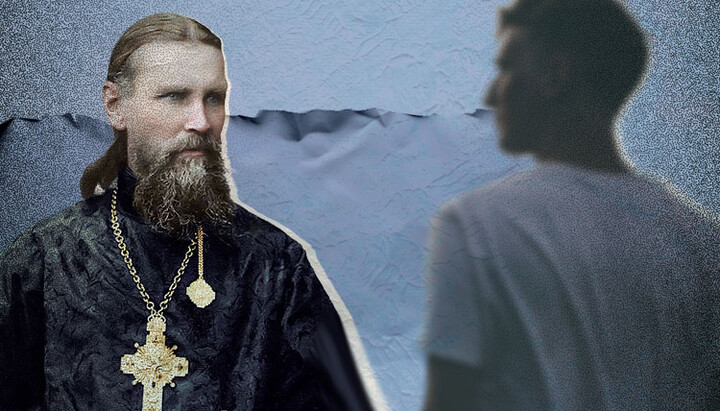
Anger is from the devil. Photo: UOJ
You stand in the evening before the icons at home, trying to read your prayer rule, but your lips move mechanically, reciting the familiar syllables. Meanwhile, your mind keeps circling back to a fragment of the day’s argument, a news item you read, someone’s bitter comment on social media.
In your thoughts, you have already demolished them all. You have marshaled ironclad arguments from the canons, proven your historical case, thrown yourself bodily in defense of the persecuted Church. It seems you are doing something holy, standing up for the truth. But if, at that moment, you simply stop and listen to your own body, you suddenly notice your jaw clenched tight. Your fists are closed so hard that your nails dig into your palms. A heavy pulse hammers in your temples and echoes in the back of your head. We stand before the God of love – and yet we are literally choking on hatred for those who hang locks on churches or write yet another denunciation.
We simply fail to notice how, month after month, we live in a state of scorched earth – and call it normal.
When the inner roar becomes unbearable, let us open the worn pages of My Life in Christ. Righteous John of Kronstadt is an essential interlocutor for our time. He was no quiet hermit hidden from the world behind high monastery walls. A choleric by temperament, he served in a poor, aggressive port city. Every day he saw the crudeness of the crowd, the provocations of the metropolitan press, human meanness. He knew flashes of anger from within. He caught himself growing irritated, fell – and immediately repented.
Closing our eyes, we sit across from him in our mind and ask the question that torments so many of us today.
“Father, but we are defending our holy places. Our churches are being taken from us; we are openly humiliated. Is our anger not justified? Is this not holy zeal for the faith?”
Father John looks out from the pages of his diary with no indulgence for our attempts to excuse ourselves:
“All malice, whatever pretext it hides behind, is from the devil,” he says firmly.
A knife wrapped in a torn-out page
These words strike like a blow. Human nature is always looking for an alibi. When everything around us is collapsing and so little depends on us, anger gives us the comforting illusion of control. We have invented a very convenient loophole: we call our aggression righteous. For some reason, we imagine that the defense of doctrine grants us a lifetime indulgence for contempt. We take the knife of cruelty, wrap it in a torn-out page of the Gospel, and sincerely believe that we now hold a spiritual sword.
The saint cuts off these self-justifications sharply.
“Do not grow malicious toward anyone,” he writes. “Do not avenge yourself on anyone – not by word, not by deed, not even in thought.”
We try to argue. A protest immediately rises within us, and memory obligingly produces the very passage from Scripture we so love to cite in Facebook battles.
“But the Savior took up a whip! He drove the money changers out of the Jerusalem Temple; He overturned their tables. Are we not obliged to do the same when we see brazen falsehood?”
Father John does not argue with Scripture. He invites us instead to look honestly at our own motives. Christ drove out the merchants while being wholly without sin.
But what is our whip of righteousness braided from? Wounded vanity. Fear of losing familiar comfort and being left outside. The ordinary desire to avenge our pain. We put on the mask of the fearsome Judge, utterly forgetting that we ourselves are gravely ill. We demand a scalpel so we can punish the patient in the next hospital bed, though we ourselves should long ago have been lying under an IV in intensive care.
The suffocation inside the victor
“And what happens to us after such victories?” we ask, remembering how only the other day we annihilated an opponent in the comments. The arguments were flawless, historical truth was on my side – and yet there was no joy at all.
Father John’s answer sounds like the revelation of a man who had himself known the poison of anger:
“Anger produces such tightness, such torment, such anguish in the soul, that life itself becomes heavy. If you have grown angry with someone, you have admitted the devil into your heart.”
Many of us know this sudden suffocation. You can win a dispute over jurisdictions brilliantly, defend your correctness to the last detail – and afterward find it physically impossible to read even “O Heavenly King” with sincerity. Everything inside turns to ice. Grace simply withdraws, leaving us sitting alone amid correct quotations and references to the church canons.
Truth defends itself. It has no need of our frayed nerves, our hysterics, or our insults. Trying to defend churches at the cost of inner peace, we unknowingly drive from the heart the very One for whom those churches were built.
The courage of unclenched fingers
“But if we give up this hardness, they will call us weak,” we admit. “They will call us compromisers, traitors.”
Father John was never a soft nonresistant. He rebuked sectarians; he fought against the falsehood that was corroding the country. But he knew how to separate, with surgical precision, the heresy from the living person. Destroy the lie – yes. But to hate the one who carries that lie is to become infected by the same disease at once.
His counsel strikes our wounded pride:
“Pity those who are hostile to you. They know not what they do. They are blinded. The devil teaches them.”
To refuse hatred entry into oneself is an act of immense courage. Hatred is astonishingly easy. All one has to do is relax and let fallen nature take the wheel. But to preserve peace when sirens are howling and familiar supports are collapsing requires daily, exhausting labor.
The dialogue with the saint ends. The room is quiet. And suddenly an almost unbelievable relief comes from one simple thought: God does not require you to be a sword of punishment. You do not have to carry that exhausting burden – to avenge everyone, persuade everyone, pronounce a just verdict on everyone.
You can simply breathe out. Finally unclench your numb fingers. Let that cold stone of judgment fall to the floor. Leave judgment to the One who alone knows how to judge without error.
We have learned brilliantly how to clench our fists for the truth. Perhaps now it is time to allow ourselves simply to pity those who are trying to take God away from us – without even suspecting that He cannot be locked in investigators’ offices or captured in state registries.
Read also
The help God never asked for
Uzzah wanted only to keep the Ark of the Covenant from falling into the dust. Why did this well-intentioned act cost him his life, and who was really responsible for his death?
Freedom begins when there's nothing left to take
Fear of persecutors takes root in our attachment to possessions. We turn to St. Basil the Great to understand why the prefect's threats held no power over him.
The bride in the window frame
The author of the earliest account of St. Thecla’s life was defrocked. Yet it was his book that preserved the only ancient description of the Apostle Paul’s appearance.
Drinking priest, or the flip side of parish life
In his epistle, the Apostle Jude describes a scene familiar to anyone who has seen a church meal turn into a drinking party.
A lesson from a speechless donkey
The famous seer struck his donkey three times for refusing to go forward. All the while, she was saving his life – and seeing what he could not.
The time when the soul ripens
Modern society has turned youth into a cult and old age into a period of merely “living out one’s days.” The Christian perspective reveals the profound spiritual meaning of our later years.