Pope Leo calls for artificial intelligence to be “disarmed”
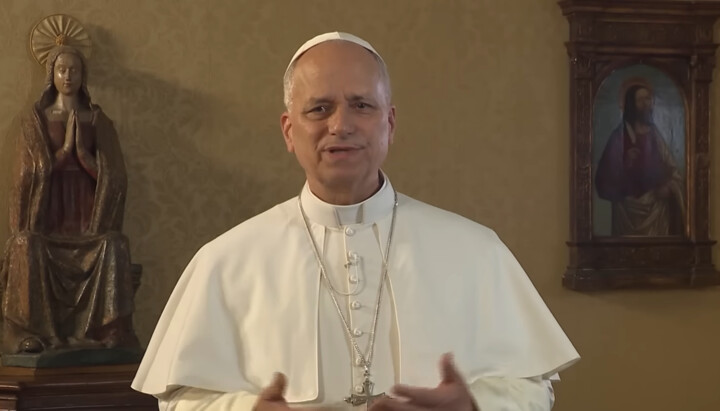
Pope Leo. Photo: screenshot from Vatican News YouTube channel
Pope Leo presented his first social encyclical, Magnifica Humanitas, calling for artificial intelligence to be freed from the logic of domination, exclusion, and war. This was reported by the Vatican press service.
Speaking in the Synod Hall before participants at the presentation, the pontiff described the current technological revolution as a “change of era,” comparable to the upheaval of the Industrial Revolution. According to him, artificial intelligence is already affecting many areas of life and is “radically changing the nature of warfare.” The encyclical was prepared after consultations with scientists, engineers, educators, politicians, and families concerned about the future of younger generations.
The pope drew a direct parallel with Leo XIII’s 1891 encyclical Rerum Novarum, in which his predecessor reflected on the consequences of the Industrial Revolution in light of the Gospel and human dignity. The pontiff said that during preparation of the document he had heard "deeply troubling voices” about autonomous weapons systems and algorithms capable of denying people access to healthcare, employment, and security on the basis of “unjust and biased data.”
“Disarming AI means freeing it from the mentality of 'armed' competition, which today is not limited simply to the military context, but is also an economic and cognitive phenomenon,” he stressed, adding that "to disarm does not mean rejecting technology, but preventing it from dominating humanity."
In the new encyclical, Leo XIV also called for cooperation among states, institutions, technology developers, and those directly affected by digital systems, with the aim of directing AI advances toward the "shared good" for all humanity, rather than a privileged minority.
As the UOJ reported, Israeli rabbis criticized the pope over his anti-war statements.
Read also
UGCC cleric calls Russian Orthodox literature cangerous for clergy
While examining the causes of divisions within the UGCC, Yustyn Boiko concluded that Russian Orthodox literature had influenced Greek Catholic clergy.
UOC will play major role in achieving peace, says Vadym Novynskyi
UOC Protodeacon Vadym Novynskyi believes the Church will help bring about reconciliation within Ukrainian society after the war ends.
Catholic media outraged by forcible conscription of Uniate cleric
The Vatican’s Apostolic Nunciature has demanded the return of a forcibly mobilized Greek Catholic cleric.
Rivne court fines man for criticizing parish's "transfer" to OCU
A resident of the Rivne region was convicted over Facebook posts criticizing the “transfer” of a religious community in the village of Butove to the OCU.
Novynskyi: I quoted the Gospel to Zelensky on first day of war
The former Ukrainian MP said he advised Davyd Arakhamia to begin negotiations with Russia in the first days of the full-scale war and later spoke with Volodymyr Zelensky.
Sumy Eparchy venerates miraculous Korsun-Shpylivka Theotokos Icon
Celebrations honoring the Mother of God’s icon known as the “Restorer of Sight” were held at Sumy Cathedral and concluded with a car procession around the city.