If prayer has frozen, it is not your fault
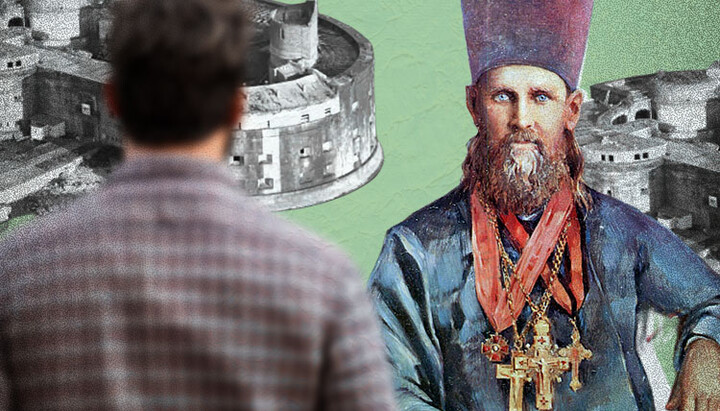
A conversation on coldness in prayer. Photo: UOJ
The eyes move over the lines of the prayer book from top to bottom, the lips repeat words we have known since childhood, while the mind is somewhere far away. It scrolls through the morning news or listens for whether the siren sounds. The rule is finished, a mental checkmark is made — and afterwards we will not remember a single line. Sounds familiar?
The hardest part here is not even the coldness in prayer itself, but the shame about it. We are afraid to admit to ourselves that we have long been standing before God like actors: sighing where it is required, making the sign of the cross where it is required, while inside there is emptiness and coldness.
Ice with an ancient name
This state has a precise name. The ascetics called it hardened insensibility. Saint John Chrysostom knew it so closely that he included a plea for deliverance from this affliction in his prayer: “O Lord, deliver me from all ignorance and forgetfulness, cowardice, and hardened insensibility.” This means that Christians fell into this coldness fifteen hundred years ago, long before world wars and modern social upheavals.
One naturally wants to ask about this difficultstate someone who knew it not from books. Righteous John of Kronstadt is remembered by the people as a fiery pastor who celebrated the Liturgy in tears. His heart seemed to burn without pause. All the more striking is his diary, My Life in Christ. There, the man of prayer honestly recorded days when he stood before the Altar, while his heart was dry and cold. He does not judge us but supports us.
– Father, you knew this inner cold. We are praying, but the heart is like stone, the lips keep moving, and inside there is emptiness. Is this already betrayal of God?
Righteous John responds: “The evil one tries to scatter prayer like a heap of sand, to make the words like dry sand – disconnected, without moisture, that is, without the warmth of the heart.” According to him, prayer can be either a “house built on sand” or a “house built on rock”: those who pray coldly and distractedly build on sand, and such prayer falls apart on its own.
The saint did not pass judgment on us, but he named the cause of our disorder. It is the evil one who breaks our prayer into grains of sand and dries it out so that it crumbles. What is being stolen from us is nothing less than the life-giving and binding moisture of grace.
Amulet instead of God
– But we often cling to the prayer rule out of fear as well. We read a canon or the Psalter – and it feels as if we’ve covered ourselves with a shield: perhaps no missile will fall, perhaps the day will pass quietly. The prayer book has imperceptibly become an amulet. What should we do about this?
Father John responds sharply: one must not stand in prayer “with spiritual laxity.” And he recalls the stern words of the Savior: “This people draw near to Me with their lips… but their heart is far from Me.”
Here is the subtle substitution. When we read the rule only for the sake of safety, we become those who honor God with their lips, while their heart is far from Him. The amulet takes the place of God. What is frightening is not even that we are tired of war and have become accustomed to defending ourselves with prayer – it is that in such a state one can live for years without noticing the substitution.
– Then maybe we should abandon the rule altogether, if there is no feeling anyway? Not force ourselves?
The saint does not command us to abandon prayer. “Do not allow your heart to become cold, especially during prayer,” he writes.
This is not “stop praying,” but “do not let coldness enter the heart.” He does not break the framework of the rule. For when the inner core has been weakened, only the external structure keeps us afloat. To abandon prayer when nothing is felt is like removing the handrails from an icy staircase. The handrails will not warm you, but they will also keep you from falling down onto the ice.
Strength in emptiness
– And still: what can one say to God when there is real emptiness inside? When there is nothing left to force out of oneself?
Father John consoles: “The Lord is so merciful that He never despises our prayer, but graciously accepts every prayer, and Himself corrects what is imperfect in it – only let us turn to Him sincerely and not forget Him entirely.”
This is an answer that lifts a weight from the heart. An honest “Lord, I feel nothing toward You” is not a failure of prayer, but precisely the sincere turning to God that the Lord expects. We bring to God our emptiness as it is, and He Himself will make up what is lacking. The boldest thing a person numbed by coldness can do is to stop pretending to be a strong righteous person and tell the Creator the truth.
If one gathers everything the holy pastor has said, something unexpected emerges. Coldness in prayer is not a mark of separation from God. More often, it is a sign of an immense weariness of the soul from the grief and anxieties of the present days. And in this spiritual eclipse, what matters is not to forget the One to whom we once came and whom we have found in our lives.
And as a farewell, the holy righteous one leaves a counsel that helped him remain afloat: “Let every spirit be fervent in serving the Lord.” In these words there is no strict command to burn with forced zeal, only a quiet plea to preserve the last ember of faith.
One question perhaps remains. Will we ever have the courage to stand before God, feeling nothing, and quietly say: “Lord, I feel nothing toward You”
If one gathers everything the holy pastor has said, something unexpected emerges. Coldness in prayer is not a mark of separation from God. More often, it is a sign of an immense weariness of the soul from the grief and anxieties of the present days. And in this spiritual eclipse, what matters is not to forget the One to whom we once came and whom we have found in our lives.
And as a farewell, the holy righteous one leaves a counsel that helped him himself remain afloat: “Let every spirit be fervent in serving the Lord.” In these words there is no strict command to burn with forced zeal—only a quiet plea to preserve the last ember of faith.
One question perhaps remains. Can we ever have the courage to stand before God, feeling nothing, and quietly say: “Lord, I feel nothing toward You” – and believe that He who sees us through hears even such a whisper if we turn to Him sincerely?
Read also
Weeping Queen at Blachernae
On the night of the Feast of the Intercession of the Mother of God, only two people witnessed the miracle in the Church of Blachernae. Everyone else was praying and saw nothing. Yet the grace was bestowed upon them, too.
Deadly spiral of human hatred
The tragedy of Lebanon's civil war lays bare how dehumanization and fear can turn human beings into monsters.
Woe to expectant mothers – or to those of little faith?
God commanded one prophet not to have children, yet told his people in exile to bear sons and daughters. What does this apparent contradiction tell us today?
The help God never asked for
Uzzah wanted only to keep the Ark of the Covenant from falling into the dust. Why did this well-intentioned act cost him his life, and who was really responsible for his death?
Freedom begins when there's nothing left to take
Fear of persecutors takes root in our attachment to possessions. We turn to St. Basil the Great to understand why the prefect's threats held no power over him.
The bride in the window frame
The author of the earliest account of St. Thecla’s life was defrocked. Yet it was his book that preserved the only ancient description of the Apostle Paul’s appearance.