When fear masquerades as prudence
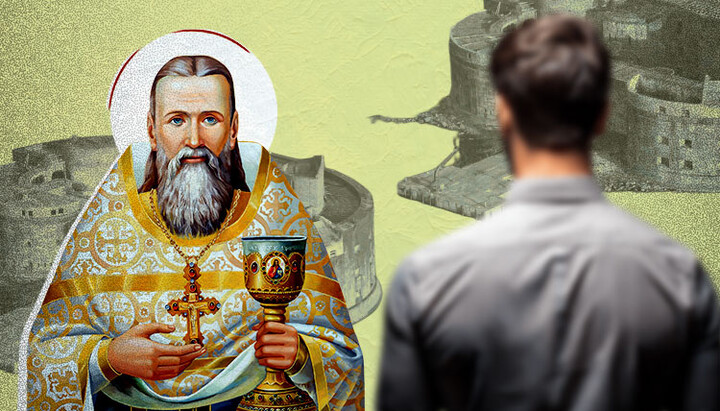
Dialogue with the Kronstadt pastor. Photo: UOJ
Payday is a familiar ritual. We count our salary twice to make sure every cent has been deposited. A pantry lined with jars and enough food to last the season somehow reassures us more than prayer does. We check our banking app several times a day, watching every transaction as if our peace of mind depended on the balance.
Taken separately, these habits seem harmless. Yet all too often they eclipse something far greater – trust in God's unfailing care.
Living through wartime, there is nothing sinful about preparing for emergencies. Keeping extra water and food at home, making sure batteries and power banks are charged while explosions shake the city and electricity disappears – that is simply wise care for ourselves and for those around us. We remember the righteous Joseph, who stored grain through seven years of plenty and saved an entire nation from famine.
But that is not what we are talking about here.
We are speaking about the subtle moment when prudence quietly becomes fear, when caution ceases to serve us and begins to rule us. When the mere thought of sharing what we have – or parting with even a little – makes the heart tighten with anxiety.
An evening conversation
Let's bring this question to the righteous John of Kronstadt.
The Kronstadt of his day was Russia's main naval port, a place of exile crowded with homeless people and alcoholics cast out from St. Petersburg. Poverty was everywhere. The young priest, John Sergiev, deliberately walked into those damp hovels to rescue people from despair.
He gave away everything he owned.
Eyewitnesses recalled that he often came home without his coat, sometimes even barefoot, having handed his boots to someone who was colder than he was.
Eventually, his wife Elizabeth had to ask the church authorities to pay his salary directly to her. Otherwise, he would give away every last coin to the poor, leaving his own household without bread.
"Father John, it's hard for us to give things away," we begin. "Not because we're selfish. We simply don't know how we'll feed our children next month in the middle of this crisis. Isn't it only sensible to keep some food, money, and necessities in reserve?"
"The reserve itself is not the problem," the priest replies. "The real question is whom you serve. Once I wrote these words in my diary: 'Serve no created thing more than the Creator... Attachment to earthly possessions is a form of idolatry.'
"A few sacks of flour in the pantry will not make you greedy. But a heart chained to its last coin or its last crust of bread no longer belongs to you."
"How can we tell the difference between responsible planning and a sinful attachment?"
"Look into your own heart," the pastor answers.
"Ask yourself this: Why do we become hard-hearted toward the poor? If compassion begins to grow cold the moment someone needs your help, then you've already crossed the line. Your possessions no longer belong to you. They belong to your fear."
"Did you ever struggle with that fear yourself?"
"I did," Saint John answers without hesitation.
"And I know exactly where it comes from.
"Everything that disturbs the heart and undermines its peace comes from the devil. He is the one who sows anxiety. Every attachment becomes another sharp arrow piercing the soul. Only the Lord gives true rest to the heart.
"When a voice whispers, Don't give it away. You'll need it yourself, those are not your thoughts. That is one of the enemy's arrows."
"And what did you do when that temptation came?"
"I opened my hand in almsgiving. I did not wait until fear finished making its case. I simply gave. The deed came before the fear. As I once wrote, 'The Lord stands at the door of our heart, which we ourselves keep locked by our attachments.' And the bolt on that door is often nothing more than a tightly clenched fist holding something we value."
Open your hand, and the door of your soul opens with it. Then you can breathe again. Then you can pray again.
We remind him of the story of the boots – how he took them off and stood barefoot in freezing slush.
By any worldly standard, that was not prudence. It looked like madness.
"In the world's eyes, yes," Father John smiles.
"But why do we seek life in money when money contains no life at all – only sorrow, anxiety, and spiritual death?
"I was cold. Truly cold. But it is not the soles of our shoes that keep us standing on this earth. It is the One in whose hands our lives rest."
"To give away what is yours when you yourself are afraid of dying – that is one of the surest ways to stop fearing death."
"One final question. Many people have almost nothing left because of war and poverty. What can someone give who has only a few crumbs remaining?"
"The crumbs," Father John answers quietly. "Remember the widow. Her two small coins outweighed every wealthy offering placed in the Temple treasury.
"God does not measure the size of the gift.
"He looks at what it cost you to open your hand."
The wealth of an open hand
This conversation reminds us that the real question is not how much we possess, but where our hearts have settled.
Saint John Climacus observed something strangely familiar about human nature: while people are still accumulating wealth, they give generously. But once they believe they finally have enough, their hands instinctively close.
A clenched fist shuts out more than the poor. It bars the very door through which Christ quietly seeks to enter.
An open hand, by contrast, is the only position in which we can both give and receive.
Including the grace of God.
Father John of Kronstadt prayed for exactly this:
"Lord, grant me a heart that is simple, free from malice, open, believing, loving, and generous."
Read also
A tale of two oaths and a mother on a mountain
The story of a drought in Judea reveals the depths of God's justice and the price of a human promise.
Collapse of Babel's tower of globalism
October 24 is United Nations Day. An analysis of the crisis of secular institutions and the ideology of globalism through the prism of biblical Babylon and Pentecost.
Archpastor's word for weary city dwellers
When exhaustion weighs us down, we turn to ancient sermons to ask profound questions about human destiny and the nature of existence.
Brother of tax collector and brother of Lord
The Gospel is silent about the son of Alphaeus, and commentators have argued for centuries over who he was. And the Church commemorates two apostles named James in close proximity.
Prayer commemorations instead of loving embraces
At every Orthodox wedding, the choir sings a hymn to the martyrs. For families separated by war, these words carry a special meaning.
Honest atheism vs. spiritual hypocrisy
The 70th anniversary of Albert Camus’s Nobel Prize recalls an uncompromising challenge to Christianity. An honest unbeliever brings theology back to the mystery of the Cross.