Evidence of early Christians' struggle against paganism found in Turkey
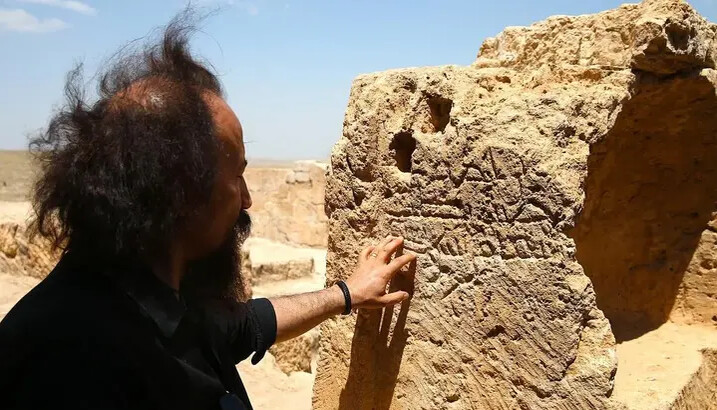
An Aramaic inscription at Zerzevan Castle. Photo: HeritageDaily
An Aramaic inscription at the entrance to an underground temple at Zerzevan Castle in southeastern Turkey has revealed that the sanctuary was symbolically sealed by early Christians around 1,700 years ago, providing rare direct evidence of the religious transition that followed the rise of Christianity in the Roman Empire. The text dates to the 3rd or 4th century, reports the Heritage Daily portal.
The inscription was deciphered by Professor Mehmet Sait Toprak, head of the Syriac language and literature department at Mardin Artuklu University. A carved Christian cross was also discovered at the entrance to the sanctuary.
Excavation director Professor Aytaç Coşkun said the discovery provides long-sought evidence explaining what became of Mithras temples after Christianity spread throughout the empire. “Previous coin discoveries had already suggested when the temple was abandoned, but the newly deciphered inscription now provides direct evidence of its closure,” Coşkun said.
While some sanctuaries were converted into churches, the temple at Zerzevan was deliberately sealed. Professor Toprak said the inscription makes symbolic references to both the “Invincible Sun God Mithras” and Jesus Christ, reflecting the religious transformation taking place during the period.
“The text refers to the Holy Cross in the name of God, describing the one who commands, reforms and spreads love,” he said. “This is the first known Old Aramaic inscription documenting the closure of a Mithras temple. It represents an extremely important archaeological discovery.”
As the UOJ reported, the number of people leaving Christianity for paganism is growing in Britain.
Read also
UOC volunteers deliver 30 tons of aid from Bukovyna to Sviatohirsk Lavra
Believers of the Chernivtsi and Bukovyna Eparchy of the UOC brought about 30 tons of humanitarian aid for the Sviatohirsk Lavra and residents of nearby villages.
Kyiv Theological Academy professor mobilized
Kyiv Theological Academy lecturer Serhiy Bortnyk, who was detained by the TRC in Kyiv, has been mobilized.
Kherson Eparchy receives another aid shipment from Dnipro
120 food packages, over a ton of vegetables and dairy products have been delivered from Dnipro to Kherson for parishioners and needy residents.
Supreme Court denies UOC open hearing on appeal against DESS
Judges decide to consider UOC appeal against DESS in written proceedings.
Pope holds phone call with Putin
Pope Leo XIV discussed the humanitarian situation in Oleshky with Vladimir Putin.
"Russia will collapse", Dumenko says, predicting OCU recognition after war
The OCU head believes that Churches that have not recognized the OCU now fear Russia, but will grow bolder after Ukraine's victory.