A stone box for a living soul
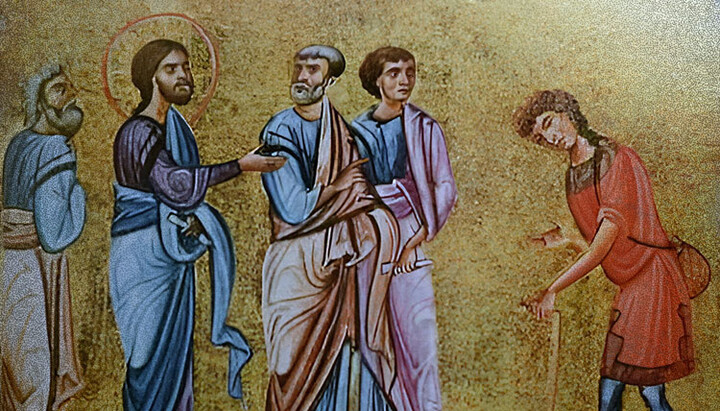
“Let the dead bury their own dead.” Photo: UOJ
A rocky road winds through the sun-scorched hills of Judea. The Savior walks ahead – swiftly and with purpose. A motley crowd follows Him. People press close to the Wonderworker, hoping for new healings, spectacular victories, and another free meal. But Jesus turns around and names the price of following Him.
At that moment, one of the disciples steps out from the crowd. The man lowers his eyes, shifts uneasily from foot to foot, and utters words that seem to embody filial devotion: “Lord, let me first go and bury my father.” Christ’s reply lands like the crack of a whip: “Follow Me, and let the dead bury their own dead” (Matt. 8:22).
For centuries, secular critics have seized on this Gospel verse, accusing the Savior of undermining family values and showing callous indifference to human grief. To understand what happened that hot day on a dusty road, we must look inside the dark burial caves of Judea from the Second Temple period. Archaeological discoveries made in Jerusalem in recent decades restore the story to its original context.
The ritual inside the burial cave
The burial customs of ancient Judea differed sharply from our own. Relatives did not simply place the dead in the ground and cover them with earth. Burial took place in two required stages spread over many months.
First, the body was wrapped in burial cloths with spices. It was then carefully carried into a family tomb carved into the limestone rock and laid on a stone bench inside a deep niche. The entrance to the cave was sealed with a heavy round stone.
There, in the darkness of the damp tomb, the body decomposed over the course of an entire year. Throughout that time, the relatives mourned, observed strict ritual restrictions, and prayed.
Exactly one year later, once only the dry skeleton remained, the family returned to the tomb. The stage of ossilegium – secondary burial – had begun. The eldest son entered the cave, carefully gathered the bones of his parent, and placed them inside a small rectangular box carved from a single block of limestone. This chest was called an ossuary. Its length corresponded to the body’s longest bone – the femur. Ossuaries were decorated with geometric carvings, and sometimes the deceased person’s name was scratched onto them. The box was then placed in a special niche in the corner of the tomb, while the now-vacant stone bench was prepared for the next dead body.
It is not difficult to imagine the cycle of ritual obligations into which a deceased person’s relative was drawn. The young man’s request may have meant that his father had died the day before and that the son now faced an entire year of mourning, waiting, and preparation for the ossilegium. But there is another, far more likely explanation for his position.
The trap of filial duty
In Middle Eastern culture, the phrase “let me first bury my father” was a well-established expression. It did not necessarily mean that an elderly man was already lying dead at home. The disciple was effectively saying to Christ: “Let me remain quietly with my parents. Allow me to wait until my father grows old, care for him, and receive my lawful share of the inheritance. Then I will perform every required rite, gather his bones into a box, seal the family tomb – and only then will I certainly follow You.”
The young man was trying to bargain with God for a convenient pause in ordinary life. He concealed his fear of the unknown behind the sacred duty of filial love. It was a flawless mask of piety.
Christ tears that mask away. The Savior sees that spiritual paralysis lies behind the proper words. The world is arranged in such a way that it will never release a person willingly. There will always be new urgent tasks, unpaid debts, offended relatives, and unfinished houses.
Trying first to satisfy every demand of society and only then remember God is spiritual suicide.
Without noticing it, a person walls his living soul inside a stone box of conventions. Life becomes an ossuary – beautifully carved on the outside, yet filled with dry bones within.
The mission of the spiritually dead
The ancient interpreters of Holy Scripture understood perfectly the radical challenge contained in the Savior’s words. In his homilies on the Gospel of Matthew, St. John Chrysostom stresses that Christ was not calling for cruelty or contempt toward one’s parents. He writes: “Christ said this not out of disrespect for parents, but to show that nothing should be more important to us than heavenly things... and that we must take up spiritual work with the greatest diligence, allowing not even the slightest delay, even when the strongest and most necessary bonds urge us otherwise.”
Blessed Theophylact of Bulgaria makes a similar point, drawing attention to the young man’s household. He notes that others were always present in the home of the deceased who could handle the practical obligations: “Christ forbade him, showing that honoring God must stand above honoring one’s parents... Besides, there were others who could bury the dead man – namely, the unbelievers.”
God demands an immediate response to His call. He pulls a person out of his comfort zone because delay in matters of faith is deadly.
The living dead are a society that fights desperately for survival and spends its life accumulating earthly possessions and observing outward rituals. Waiting for such people to approve your path toward God and bless your Christian service is pointless.
A Christian must not become a gravedigger
Look around us. How many people today are paralyzed by uncertainty, social obligations, and fear of the future? We constantly postpone the spiritual life until some mythical “later.” We tell ourselves: once the war ends, once the children grow up, once stability returns – then I will begin to pray, go to church, and change my life.
But the wheel of worldly vanity never stops turning. The world around us will always find new reasons for funerals. In the name of survival, it will demand that we bury our talents, our time, and our faith.
Christ calls the disciple to Himself – away from the burial caves. The Messiah saves the young man from the fate of a gravedigger. The divine call demands that we break free from spiritual death right now, without waiting for ideal circumstances. Only one question remains: are we prepared to leave our comfort zone and take a step toward the One who conquered death?
Read also
The help God never asked for
Uzzah wanted only to keep the Ark of the Covenant from falling into the dust. Why did this well-intentioned act cost him his life, and who was really responsible for his death?
Freedom begins when there's nothing left to take
Fear of persecutors takes root in our attachment to possessions. We turn to St. Basil the Great to understand why the prefect's threats held no power over him.
The bride in the window frame
The author of the earliest account of St. Thecla’s life was defrocked. Yet it was his book that preserved the only ancient description of the Apostle Paul’s appearance.
Drinking priest, or the flip side of parish life
In his epistle, the Apostle Jude describes a scene familiar to anyone who has seen a church meal turn into a drinking party.
A lesson from a speechless donkey
The famous seer struck his donkey three times for refusing to go forward. All the while, she was saving his life – and seeing what he could not.
The time when the soul ripens
Modern society has turned youth into a cult and old age into a period of merely “living out one’s days.” The Christian perspective reveals the profound spiritual meaning of our later years.