
The cry of the blind shatters religion's algorithms
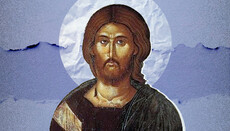
The digital age has reduced spiritual life to a dry protocol. The desperate cry of the blind men in the Gospel calls us back to the living reality of communion with God.
"Jesus, Son of David, have mercy on us!" cried the blind men who followed Christ in the Gospel passage read at the Divine Liturgy on the Seventh Sunday after Pentecost.
We live in an age ruled by algorithms and protocols. Modern people have grown accustomed to believing that every problem – from a malfunctioning smartphone to a lingering depression – can be solved by following a step-by-step guide.
Sadly, we have carried this assembly-line mentality into the Church itself. For many of us, the spiritual life has become little more than a mechanical routine. We leave the church building only to discover that our souls remain thirsty for God. We have mastered the geography of religious customs, yet lost the vision to behold the Kingdom above.
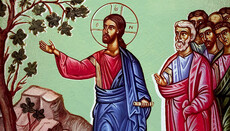
The blind men in the Gospel, whom the Church places before us on the Seventh Sunday after Pentecost, could not see Christ with their physical eyes as they sat by the dusty roadside. But they possessed something far greater – hearts wounded with longing. Their desperate cry, "Jesus, Son of David, have mercy on us!" is both the perfect diagnosis of our condition and the only true cure.
The illusion of the religious assembly line
The great illusion of outward Christianity is the belief that holiness is achieved by assembling the right combination of religious actions. But salvation cannot be automated. Its entire mystery lies in acquiring divine grace, and grace is a personal gift. It cannot be earned, calculated, or extracted from God through the mechanical observance of rules.
The mystery of salvation is hidden in repentance, and the mystery of repentance is hidden in prayer. But how can someone pray whose mind is bombarded day and night by terabytes of worldly noise? How can anyone enter into prayer while living without even the most basic peace with those around them?
The first step is a radical break with the instinct to "live like everyone else." What does "like everyone else" mean today? It means existing in this world as a spiritual corpse.
It is the condition of someone carried helplessly downstream, crushed beneath the weight of unrepented sins and desires manufactured by mass culture. This does not mean fleeing immediately into the desert. It means changing the very structure of one's life and reordering its values.
The battle for the mind
The first great battlefield – where most new Christians stumble and retreat – is the struggle for the human mind.
The mind is an immense power given by God.
The law of spiritual life is uncompromising: wherever we fix the attention of our mind, there flows the whole current of our life. If our thoughts revolve twenty-four hours a day around news feeds and everyday grievances, why should we expect our hearts suddenly to blossom with Christian love?
The mind must be imprisoned within the words of prayer until no escape route remains into the endless world of distracting thoughts.
Everything earthly to which the soul becomes attached slowly corrupts it. Everything heavenly toward which it struggles through interior silence leads it into the peace of God.
Christianity is not a religion of comfort. It is daily training for eternity.
Uprooting sin without compromise
Grace is exquisitely sensitive. It accumulates drop by drop whenever a person guards the purity of conscience more carefully than the pupil of the eye.
The greatest enemy here is self-pity – those endless whispers: "I'll sleep a little longer... I'll eat a little more... I'm tired... I deserve to relax."
Spiritual lukewarmness weakens the soul, turning Christians into "unprofitable servants." No one approaches Christ without genuine repentance. And genuine repentance is not sentimental emotion during confession. It is the ruthless, uncompromising uprooting of sin from its deepest roots within the heart.
Earthly life is neither an amusement park nor a health resort. It is an unceasing battle to the death against the evil that has lived within us since infancy.
Every moment.
Every unexpected encounter.
Every passing thought.
Each is an examination in which God reveals whether the scales of our heart incline toward Light or toward darkness.
If, instead of allowing our minds to wander endlessly through the kaleidoscope of the visible world, we descend with them into the hidden chamber of the heart, we shall discover there the source of the river of grace.
As St. Maximus the Confessor wrote: "He who loves God prefers the knowledge of God to everything created by Him."
The silence of the transfigured heart
Today much of humanity lies in a deep spiritual sleep, lulled into numbness by the endless variety of worldly impressions.
The fallen mind generates thoughts without ceasing, binding the soul with chains stronger than steel.
It whispers of weariness.
Of old age.
Of hopelessness.
Of surrender.
But in Christ the human spirit does not grow old. It grows younger. Old age itself fears spiritual youth. Thoughts of despair, exhaustion, and the futility of struggle are always arrows shot by the enemy from the left.
The moment the soul resolutely chooses radical inner transformation, without looking back, it immediately encounters the mercy of God. Then spiritual truth is no longer understood merely by reason, nor borrowed from theological books. It begins to be known by the heart.
The ultimate goal of every authentic life of prayer is the mysterious indwelling of the Holy Trinity within the human heart.
This is the state of the transfigured spirit – the peace of God that completely transforms a person's vision of reality. At this summit the mind falls utterly silent. Our ordinary worldly thinking finally ceases its restless motion.
The endless inner monologue we mistake for consciousness – the constant analysis, explanation, and argument – is often nothing more than a psychological defense against the overwhelming reality of the spiritual world.
We drown out God's voice with our own words because we fear meeting Him face to face. That is why thinking itself must gradually give way to prayer.
True knowledge of God is silent. It is beyond thoughts. It is repentance itself – the door flung open into Christ.
This life of prayer is not reserved for hermits alone. It is open to the layperson living in the middle of a crowded city. Its secret is both simple and immeasurably deep: to remain whole in God, to live soberly, and to guard the heart with unwavering attention.
The words once cried out by the blind men on the roadside should become the quiet, steady heartbeat of our entire life: "Lord Jesus Christ, have mercy on me."
So that when the hour finally comes for the soul to part from the body, its last earthly sound and its first eternal breath may be the same prayer:
"Lord Jesus Christ, have mercy on me."