UOC procession vs. Hasidic pilgrimage: one war, two security standards
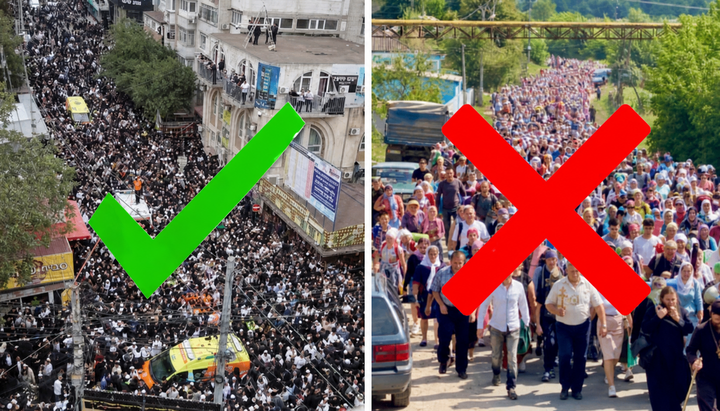
In Vinnytsia region, UOC pilgrimages are banned while Hasidic pilgrimages are allowed. Photo: UOJ
Ukraine has already demonstrated more than enough striking examples of its unprecedented “freedom of religion.” Yet the authorities keep producing new ones.
The Vinnytsia authorities canceled the religious procession from Brailiv Monastery to Pochaiv – and almost immediately held a meeting with police and border guards on how to ensure the safe passage of tens of thousands of Hasidic pilgrims through the region to Uman.
In both cases, the authorities invoke the same word: “security.”
But that security appears to be remarkably selective.
The procession to Pochaiv Lavra follows rural roads and fields in western Ukraine, where the likelihood of a Russian missile or drone strike is minimal. Hasidic pilgrims, by contrast, arrive in Uman by the tens of thousands and gather within a relatively small area. In the event of a strike, the number of casualties could be enormous – the city does not have enough shelters even for a small fraction of the pilgrims.
Yet UOC believers are told that their pilgrimage must be banned for “security” reasons.
When it comes to tens of thousands of Jewish pilgrims, however, those same security concerns somehow cease to be grounds for a ban. Instead, officials discuss routes, border procedures, transport flows, and how best to organize their arrival.
The same country. The same war. The same risks.
Different believers – different rules.
Rarely have double standards in religious policy been displayed so openly.
Read also
Ternopil post on Feast of Intercession: Has calendar reformn failed?
A significant number of believers have rejected the new church calendar introduced by the OCU and UGCC with government support.
Shoulder straps or a cassock: who writes the script for UOC "fighters"?
Everything indicates that both Veliar and Pshenychny are ordinary performers of someone else's script. There is only one question – does the scriptwriter wear shoulder straps or a cassock?
Why is it legal to kill a person before birth but not after?
Children are the most privileged members of society. Yet that same society officially permits children to be killed – and on a massive scale.
Honoring the Bolsheviks’ successors at Kyiv Lavra
It was under the Reserve that the relics of the saints were desecrated, Lavra churches were turned into an atheism museum, and toilets were installed in sanctuaries.
"Degenerates" and "stupid animals": anti-UOC activists turn on children
Future historians will wonder how a vast country’s information agenda could have been shaped for so long by people so petty, vicious, and utterly contemptible.
Zelensky sees murder of Polish priest but not of Sviatohirsk monk
Why does Zelensky react so emotionally and swiftly to the murder of a Catholic cleric while remaining completely silent about the murder of an Orthodox monk?