The unsung apostle
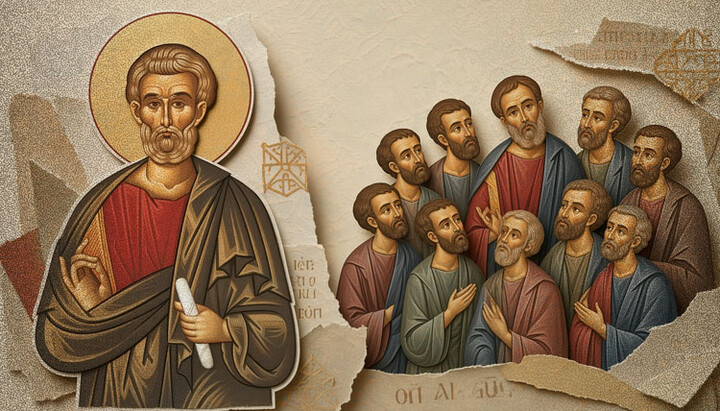
The phenomenon of the "reserve" apostle. Photo: UOJ
About a hundred and twenty people gathered in a room of a Jerusalem house. Their Teacher had ascended to heaven a few days earlier. One of His closest disciples had betrayed Him and then hanged himself in disgrace. The community was at a loss: what was to be done now? And at that moment, the Apostle Peter stood up and proposed what seemed, at first glance, a purely procedural matter – it was necessary to elect a twelfth apostle to take Judas’s place.
But the requirement for a candidate to the apostolic office turned out to be far more remarkable than the proposal itself.
The criterion that excluded nearly everyone
Peter was not interested in who among the community of disciples was the most eloquent or who had the most experience in working miracles. He sets out a single requirement: this person must have been with Christ continuously, "beginning from the baptism of John unto that same day that he was taken up from us" (Acts 1:21–22).
Of the 120 people in the room, only a handful met this requirement. The apostles put forward two candidates: Joseph called Barsabas (who was surnamed Justus), and Matthias. The community prayed and then cast lots. The lot fell upon Matthias, and he was "numbered with the eleven apostles" (Acts 1:26).
This is the first and last mention of the name of Matthias in the Book of Acts. It will not appear there again, nor anywhere else in the subsequent Scriptures.
The forgotten apostle
If Matthias was truly with Christ throughout all that time, then he was present at the healing of the man born blind, the feeding of the five thousand, the entry into Jerusalem, the Last Supper, the arrest in the Garden of Gethsemane, the Crucifixion, and the appearances of the risen Christ. He saw everything that Peter, John, and the other eleven saw. Yet not once does any of the evangelists mention him by name.
One cannot claim that Matthias kept himself apart from the company of the apostles. The point is that the Gospels name only a small circle of disciples, while a much larger crowd of faithful but unnamed witnesses constantly followed Christ.
Matthias was one of them – a man who missed not a single day of the Saviour's ministry, yet never once appeared in the foreground.
It is easy to see why the Apostle Matthias is often confused with the Apostle and Evangelist Matthew. These are two different men, yet the confusion occurs even in iconography and church calendars. One wrote a Gospel and was among the twelve from the very beginning. The other joined the twelve later, by lot, but left behind not a single line of autobiography.
The right of primacy that the apostles renounced
It is important to understand that the apostles had two worthy candidates, both of whom had traveled with them and Christ throughout the entire course of His difficult life. They could easily have held a formal vote, discussing which of the two was a stronger preacher or firmer in faith. But instead, they prayed: "Thou, Lord, which knowest the hearts of all men, shew whether of these two thou hast chosen" — and only then cast lots.
The casting of lots in the biblical tradition is a recognized means of discerning the will of God where human judgment is powerless.
By lots the land of Israel was divided under Joshua; by lots the courses of priestly service were assigned in the Old Testament. The apostles were in effect saying: we do not presume to judge which of these two faithful men is more worthy. This decision is not ours, but God's.
Meanwhile, Joseph Barsabas, who did not receive the lot, did not disappear. Tradition numbers him among the Seventy Apostles and associates him with an episcopal ministry in later years. In the apostolic Church, not being chosen for a particular office did not mean being rejected.
A lost life
After his election, Matthias received the gift of the Holy Spirit on the day of Pentecost together with his eleven brethren and once again vanishes from the pages of Acts as an individual figure. Further information about him is known only from later traditions, which have preserved accounts of his preaching in Judea, the region assigned to him by lot after the Lord's Ascension, his travels with Peter and Andrew to Syria and Cappadocia, his miraculous deliverance from prison in Sinope, where, according to tradition, he was freed by the Apostle Andrew the First-Called, and an episode involving a poisoned drink, which he consumed and yet remained unharmed.
According to some sources, the apostle returned to Judea and was stoned by order of the Sanhedrin around the year 63. According to others, he suffered martyrdom in Pontic Ethiopia, in what is now western Georgia. It is impossible today to reconstruct a precise picture of the final days of his life. The accounts of eyewitnesses were recorded too late and differ too widely. But all the chroniclers agree on one thing: he preached to the very end of his life and died having remained steadfast in his faith.
The background can be a calling
Matthias performed no phenomenal miracles and left us no theological treatise for our edification. His sole merit, of which we know with certainty, is that he was always with Christ. Every day, without absences, without any claim to the leading role, while others were leaving, denying, or betraying.
It is no accident that the Church remembers him today precisely for this.
An apostle does not have to be a charismatic personality or an eloquent speaker. An apostle is someone who remains steadfastly faithful to the Lord.
Matthias silently teaches us not to put our talents on display, but simply not to renounce the cross, nor the One who bears it together with us.
Read also
Prayer commemorations instead of loving embraces
At every Orthodox wedding, the choir sings a hymn to the martyrs. For families separated by war, these words carry a special meaning.
Honest atheism vs. spiritual hypocrisy
The 70th anniversary of Albert Camus’s Nobel Prize recalls an uncompromising challenge to Christianity. An honest unbeliever brings theology back to the mystery of the Cross.
The valley of trouble and the gateway of hope
One soldier buried an expensive cloak and some gold beneath his tent. Because of this, all Israel lost a battle. Why did one man’s sin bring disaster upon an entire nation?
From love spells to bishop's throne
Antioch’s most powerful sorcerer sent demons against a devout young Christian woman three times – and failed every time. In the end, a demon himself revealed the truth that led to his conversion.
The Weeping Queen of Blachernae
On the night of the Feast of the Protection, only two people witnessed the miracle in the Church of Blachernae. Everyone else prayed and saw nothing. Yet they, too, received grace.
Deadly spiral of human hatred
The tragedy of Lebanon's civil war lays bare how dehumanization and fear can turn human beings into monsters.