Prayer commemorations instead of loving embraces
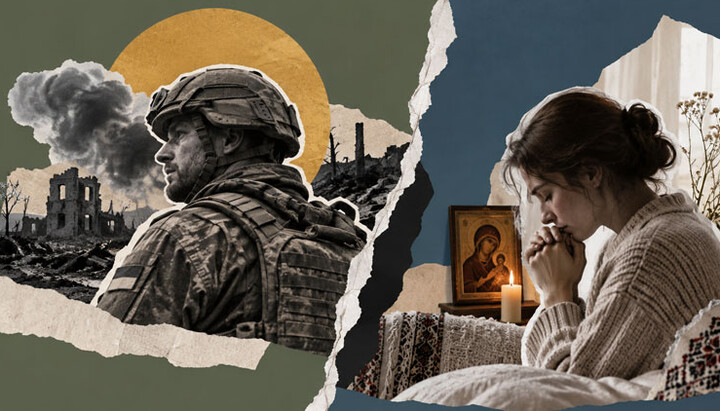
At every Orthodox wedding, the choir sings a hymn to the martyrs. For families separated by war, these words carry a special meaning.
The bride and groom have just drunk from the common cup. The priest joins their hands and leads them three times around the analogion. The joyful hymn “Rejoice, O Isaiah” rings out. Then the choir begins a seemingly unusual troparion: “O holy martyrs, who fought the good fight and received your crowns, entreat the Lord to have mercy on our souls.”
A hymn to the martyrs at a wedding? Why?
Father Alexander Schmemann explained: “The crowns of marriage signify the glory and honor of martyrdom.” He added: “For the way to the Kingdom is always martyrdom, that is, the witness to Christ.” From the very beginning, the Church tells newlyweds that marriage is not just a celebration. It also means being willing to sacrifice yourself for the other person every day.
In peacetime, these words may seem like a beautiful metaphor. But when a husband leaves for the front and his wife remains at home, alone with the children and consumed by worry, their meaning becomes painfully clear.
Stories of holy married couples
Saints Adrian and Natalia had been married for just over a year when their lives were turned upside down. It happened in Nicomedia in the early fourth century. Adrian, a young government official, witnessed Christians being tortured and publicly confessed his own faith in Christ. He was thrown into prison.
Natalia had already been a Christian. One day, when Adrian unexpectedly returned home, she assumed that he had renounced his faith and been released. She refused to let him through the door, reproaching him: “Depart from me, you apostate from God!” She was terrified of losing her husband, but the thought of his apostasy frightened her even more.
When Natalia realized her mistake, she did everything she could to remain close to her beloved. She cut her hair, dressed in men's clothing, and slipped into the prison disguised as a young man. When Adrian was executed, she held his hands and feet as they were crushed with a hammer. After his execution, she secretly took one of his hands and kept it with her.
The married life of Timothy and Maura was even shorter. Timothy was a reader in Egypt. Soon after their wedding, he was arrested for his faith. Timothy immediately called upon his wife: “Come with me to this noble struggle.” And Maura replied: “I desire the very same thing that you desire.”
They were crucified on crosses set facing each other. For nine days and nine nights they hung face to face and supported each other with spiritual words. The last thing they saw in this life was each other's eyes.
Of course, we would never wish for any family today to repeat their martyrdom literally. But their stories contain experiences familiar to many: separation, fear, the inability to embrace a loved one or express one's feelings aloud. And, of course, the shared faith that holds every Christian marriage together.
Letters from the camp
The twentieth century also saw countless stories of married couples forced apart. Father Pavel Florensky wrote to his wife, Anna Mikhailovna, from the Solovki prison camp. In one letter, he said: “My dear Annulya, the past has not passed away; it is preserved and remains forever, but we forget it and drift away from it.” Six months later, he confessed: “Amid the torrents of words, I cannot find the one word I wish to say to you.”
This feeling is familiar to those who send brief messages to loved ones at the front today.
There is so much they want to say, yet all that comes out is “How are you?”, “Have you eaten?”, or “Take care of yourself.” But right now, these simple words are worth more than the most passionate declarations of love.
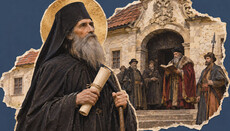
When Kyiv priest Anatoliy Zhurakovsky found himself in prison, the first thing he asked his wife to send him was, surprisingly, not food but his cassock. Even in captivity, he wanted to remain, first and foremost, a priest.
On another occasion, Anna Nikolayevna, the wife of confessor Roman Medved, traveled with their daughter to the prison-camp town of Kem. They rented a corner of a barracks for three days, just to spend a little time near him.
Chrysostom's advice
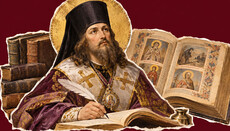
St. John Chrysostom wrote about marriage long before the age of prison camps and trenches. Yet some of his advice sounds as though it were written for families today.
He suggested that a husband say these words to his wife: “I value your love above all things, and nothing would be more painful to me than to be separated from you.”
The saint was speaking about family life in peacetime. But his advice applies just as much in our own time of war. The Christian life of a married couple continues even when hundreds of miles separate them.
What can be done today
The Church offers simple ways for families separated by distance to preserve their spiritual unity.
One can submit names for commemoration at the Proskomedia, the preparation of the gifts before the Divine Liturgy. The priest will then remove a particle from the prosphora, the liturgical bread, while praying for the husband's health and well-being.
Even from far away, a person is spiritually present wherever he or she is remembered in prayer. This applies to both the living and the departed.
We can also pray for our loved ones morning and evening, either in our own words or using a prayer book. God hears every prayer.
Spouses can also agree to pray at the same time each day. It is a wonderful way to feel that they are always together. In those moments when both stand before God, the distance between them disappears.
The Apostle Paul, speaking of spouses who agree to abstain from marital relations for a time in order to devote themselves to prayer, adds: “And come together again” (1 Cor. 7:5).
He was referring to voluntary abstinence during fasting. But these words can also speak to families today. Separation is only temporary – “for a time.”
Of course, enduring a long separation can be extremely difficult. Emotional distance, jealousy, silence, and the temptation to start a new life with someone else may arise. These are matters worth discussing openly, as soon as they arise, with a priest you trust. The Church does not offer ready-made solutions, but a spiritual father can help you work through your particular circumstances.
Until death unites us
Western marriage vows include the words “till death do us part.” Father Alexander Schmemann observed that Orthodoxy does not speak of marriage in these terms. Christian marriage lasts forever, while death and the passage into eternity, on the contrary, unite husband and wife for all eternity.
In Kyiv in 1936, the granddaughter of Hieromartyr Alexander Glagolev was returning home from school one morning when she saw her grandfather praying at her grandmother's bedside. He was simply standing there, praying.
There are many such tender moments in the life of a believing family. They pass unnoticed and are never recorded in the lives of the saints. Yet it is precisely these moments that make up what the Church calls the crowns of martyrdom: daily faithfulness, prayers for one another, and the willingness to wait for the person you love – sometimes for a very long time.
The crowns placed upon the heads of newlyweds in church remain with them forever. And it is during times of trial that their true purpose becomes especially clear.