
Woe to expectant mothers – or to those of little faith?
God commanded one prophet not to have children, yet told his people in exile to bear sons and daughters. What does this apparent contradiction tell us today?
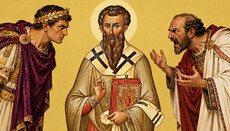
In the Book of Jeremiah, God gives the prophet a stark command: “You shall not take a wife, nor shall you have sons or daughters in this place” (Jer. 16:2). Jerusalem is facing siege and devastation. By God's design, Jeremiah's solitary life is to become a living sign of the calamity to come.
Years pass. The city falls, and thousands of Jews are forcibly taken into exile in Babylon. Yet the same Jeremiah writes a letter to the captives with an entirely different message: “Build houses and dwell in them; take wives and beget sons and daughters ... that you may be increased there, and not diminished” (Jer. 29:5–6).
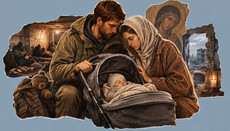
This apparent paradox brings us face to face with a question that weighs heavily on families in a country at war: Should we have a child now? Is it right to take such a step with so many dangers surrounding us? And would choosing to wait for better times be a sign of weak faith?
A letter written to a foreign land
Jeremiah's letter to the exiles in Babylon speaks to people living in a hostile land, far from their place of worship and with little hope of returning home anytime soon. Their broken hearts must have cried out: Why build houses when we're only here temporarily? Why bring children into the world on foreign soil?
Yet the prophet tells them: Build houses. Plant gardens. Give your daughters in marriage. And he goes even further: “Pray to the Lord for it” (Jer. 29:7) – meaning the very city to which they have been exiled.
The message running through this letter is unmistakable: life must not be put on hold, whatever the circumstances. A people who stop having children while waiting for disaster to pass may simply cease to exist before that day arrives.
But we must also remember that God calls certain people to a particular kind of service. His command to Jeremiah not to marry was never revoked. The prophet had his own calling, and celibacy was part of it. God gives each person a different cross to bear.
A basket of reeds
The Book of Exodus opens with Pharaoh ordering the Hebrew midwives to kill newborn boys. Two women flatly refuse. Scripture tells us that they “feared God” (Ex. 1:17). Pharaoh then orders that the infants be thrown into the river. A little later, we read that God rewarded the courageous midwives for their faithfulness by "establishing households for them" (Ex. 1:21).
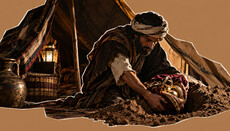
At that very time, a boy is born into a Hebrew family. His mother hides him for three months. When she can conceal him no longer, she waterproofs a basket of reeds with pitch, places her son inside, and leaves it among the reeds by the riverbank.
Thus begins the life of Moses, the prophet who would behold God.
Moses' parents did not pretend the danger wasn't real. They hid their child, took risks, and devised ways to keep him alive. But they refused to let fear rule them. Instead, their faith grew stronger.
Woe to expectant mothers – condemnation or compassion?
There are, however, other passages in Scripture to which some believers turn in troubled times. Foretelling the destruction of Jerusalem, Christ says: “But woe to those who are pregnant and to those who are nursing babies in those days!” (Luke 21:23).
Is this a warning against having children when explosions are shaking the world around us?
St. John Chrysostom understood these words quite differently. Pregnant women, he explained, would find it difficult to flee because of the burden of pregnancy and their physical vulnerability. Nursing mothers, bound by their love and compassion for their infants, would be unable to escape easily with their children.
What we hear in Christ's words is compassion for mothers who will have to flee a burning city with babies in their arms. Fear of death is not always a sign of little faith. God understands that fear and has compassion on those who suffer. Yet nowhere does the Lord abolish the calling to bring children into the world.
The Apostle Paul, reflecting on the “present distress” of his own time, advised the Corinthians to weigh their circumstances carefully before marrying. But he immediately added: “Even if you do marry, you have not sinned” (1 Cor. 7:28).
In other words, prudence in starting a family is entirely permissible. What is not permissible is to declare that starting a family in a time of crisis is somehow sinful.
Two mothers in a Carthaginian rison
Carthage, early third century. Two young women are imprisoned for confessing Christ. One is Perpetua, a 22-year-old mother nursing her infant son. Her father begs her to renounce her faith for the sake of her child. Beside her is Felicity, her fellow Christian and servant, eight months pregnant.
Felicity gives birth to a daughter right there in prison. When a prison guard mocks her labor pains and asks how she expects to endure the arena if childbirth hurts her so much, she replies that now she is the one suffering, but when the time comes, Another will suffer for her.
Throughout the history of the Church, children have never been a luxury reserved for peaceful times.
In the second century, the anonymous author of the Epistle to Diognetus wrote of persecuted Christians: “They marry, as do all others; they beget children; but they do not cast away their offspring.”
Persecution did not prevent Christians from living full family lives.
An Elder's advice
St. Paisios of Mount Athos was once asked about a young couple who were afraid to start a family because of the troubled times in which they lived.
His answer was striking: “That is the wrong way to look at it. If they have trust in Christ, they have nothing to fear. What about the years of persecution? Were those easy times? Yet didn't Christians marry and raise families then? How many saints do we have in our Church who suffered martyrdom together with their children and spouses!”
The elder was convinced that natural human fear should not become a barrier to marriage and family life.
We have no right to judge another family's choice
So where does sound judgment end and lack of faith begin?
There is no single answer that applies to everyone.
God told Jeremiah one thing and the exiles in Babylon another. Moses' parents risked their son's life to save him, while Christ expressed compassion for pregnant women who would have to flee for their lives.
Little faith begins when we allow fear to make our decisions for us. When God is no longer part of the equation. When “now is not the time” quietly hardens into “never.”
Discernment, on the other hand, means something very different. It means a husband and wife praying together, seeking counsel from their spiritual father, and looking honestly at the realities of their lives – not only the dangers of war.
They consider the mother's health. Whether they have a roof over their heads. Whether they have the strength and resources to raise a child. And then, together, they decide: Is this the time to welcome a child, or should we wait? Neither decision is sinful in itself. The sin may lie elsewhere: in judging others.
A mother of many children has no right to look down on a couple who have decided to postpone having a baby. And those who choose to wait have no right to dismiss parents raising four children as reckless.
Every family must answer before God for its own choices.
Jeremiah's letter from Babylon taught the Jewish exiles to live, pray, and love in the place where God had led them.
In wartime, every family's path unfolds differently. But God sees the hearts and intentions of those who choose to have children and those who choose to wait.
And He leaves neither without His loving care.