Zaporozhian Cossacks defend the persecuted faith
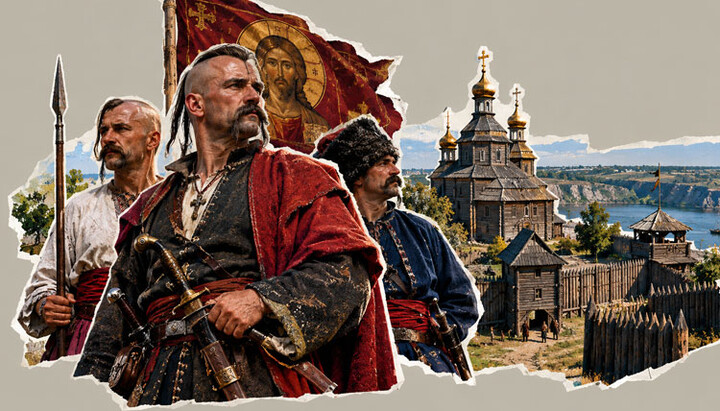
Cossacks defending Orthodoxy. Photo: UOJ
Open any study of Zaporozhian Cossack history, and a complex picture of religious conflict in Right-Bank Ukraine emerges. For a long time, official historiography portrayed the Cossacks exclusively as soldiers of fortune seeking military spoils or political gains. Yet historical records reveal another side of their motivations. When Polish nobles and Uniate missionaries began forcibly imposing a new faith, Cossack hosts and companies rose to defend Orthodox churches and beaten priests, regarding attacks on the faithful as a personal affront.
An oath before the altar
The formation of alliances within the Zaporozhian Sich had a profound religious dimension. The custom of sworn brotherhood carried sacred significance. When Zaporozhian Cossacks decided to become brothers by oath, they went not to a tavern or the town square, but beneath the vaults of a church. In the presence of a priest, they signed special documents, vowing before God to honor one another regardless of any threats from friends or enemies.
To seal their oath, the warriors kissed the holy cross and the open Gospel. The priest served as witness and spiritual guarantor of their bond, sanctifying their brotherhood through prayer. Similar rituals can be traced throughout many regions of the Orthodox world.
The Cossack community always sought support at the Church’s altar when state courts denied people a just resolution of their grievances.
Cossack leaders understood perfectly well the value of giving agreements a spiritual foundation. The regalia of the Zaporozhian Host were kept directly beneath the altar table in the sanctuary, and religious rites accompanied every important decision made by the Cossack leadership. Faith permeated the entire way of life of this free republic, making churches centers of prayer and equality.
Retribution for shorn beards
Documentary evidence from the period sheds light on the reasons behind many Zaporozhian military campaigns. Materials compiled by Lviv researchers describe the motives behind Cossack raids on the estates of Polish nobles. The Zaporozhians openly declared that the Uniates had inflicted “great devastation upon the Christian people.” They seized Orthodox priests and subjected them to public humiliation.
Cossack chroniclers describe how clergymen had their hair, beards, and mustaches forcibly cut off and were subjected to brutal torture. Such humiliations were inflicted not only on the clergy but also on ordinary laypeople. When punitive detachments of the confederates advanced into Ukrainian lands intending to impose their faith by force of arms, the Cossacks answered violence with violence.
Vengeance for humiliated pastors became the rallying cry of popular uprisings. The warriors regarded the destruction of the Uniate establishment as just retribution for desecrated holy things.
No royal prohibitions could quell this anger, for the people remembered the names of every tortured priest. Punitive raids turned into a religious war in which the Cossack saber became the only answer to the arbitrary actions of the authorities.
A brawl beneath the church dome
Relations between the Cossacks and the clergy were far from harmonious or ideal. Life in the Sich was quite different from the romantic legends surrounding it. Archival collections preserve disciplinary records attesting to the Cossack leadership’s strict control over church personnel.
One documented case concerns a priest named Koshman, who was expelled from a monastery simply because he had traveled to Kyiv without permission from the military authorities. The Sich demanded unconditional obedience to its discipline from the clergy. Moreover, churches themselves frequently became scenes of violent outbursts.
On January 6, 1748, a massive brawl broke out in the square during the election of the Kosh otaman, the leader of the Zaporozhian Host.
When the crowd of Cossacks moved into the Church of the Intercession for the evening service, the fighting continued right beneath the church vaults.
Several people were wounded, and the altar was splattered with blood. The terrified priest was unable to finish the service. He abandoned it, shut the doors, and sealed the church.
This episode shows that the Cossacks were ordinary human beings, with all their passions, sins, and cruelty. Yet even in times of severe turmoil, they returned to the Christian faith.
Three times a day, Cossacks filled the churches for prayer, while their officers occupied special wooden seats during services. Faith remained the backbone of the community, uniting free men in the face of external threats.
The Cossacks might fight one another until blood was spilled inside a church, but they were always prepared to defend the Orthodox altar against outside enemies to the very end.
Read also
Trial of a dead pope
Once in Rome, the body of a deceased pope was seated on the throne and put on trial. The accusation relied on a church canon that had once saved his see.
Monastery built in defiance of king
When Orthodox believers in Minsk were left with just one church, townspeople decided to build another – and even a royal decree did not stop them.
Young Mother and Sleeping Christ
Michelangelo carved a Virgin Mary who looks younger than her Son – and signed his name in marble for the only time in his life. Neither of these peculiarities was accidental.
Orthodox books from a Uniate printing press
In the 18th century, Uniate monks at Pochaiv printed books used in prayer by Orthodox Christians and Old Believers alike.
The story of the honey brotherhood
The Mogilev Brotherhood began with members pooling money to brew honey drinks for feast days – and eventually grew to have its own printing press.
Golgotha in the midst of a pogrom
In the autumn of 1938, the Jewish artist Marc Chagall painted the crucified Christ. Synagogues burn and refugees flee around the cross, while the Crucified One Himself is wrapped in a prayer shawl.