
The History of the Honey Brotherhood
The Mogilev Brotherhood grew out of a communal fund for festive mead and eventually developed into a printing house of its own.
In 1619, the royal court heard a case against the residents of Mogilev. The prosecutor spoke of the townspeople as people who had forgotten their place. The keys to the churches, he claimed, were «not in the hands of priests, but of burghers,» and a priest goes to serve only when the burghers order the doors unlocked.
The prosecutor gave an accurate description of how Orthodox life in Mogilev was organized at the turn of the 16th and 17th centuries. The church was run here by merchants, craftsmen, and members of the city council. The brotherhood, which would later be called the Epiphany Brotherhood, was their union.
A Communal Fund for Festive Mead
A charter of 1561 permitted the burghers of Mogilev to «brew» mead for holidays twelve times a year, that is, to make a honey drink jointly at shared expense. The wax went to making candles. The money raised from the festive table was not wasted either: it was donated to the church, the hospital, and alms for the poor.
In 1589, the king granted a privilege to the Kushner Brotherhood, an association of furriers. The charter allowed every burgher of the «furrier's craft» to come to the brotherhood house and deliberate on the needs of the church and the hospital. Even Catholic priests were sometimes guests of the brethren.
Burgomasters and Councilors in the Brotherhood Rolls
Sources differ on when the Mogilev Brotherhood appeared. Some count from 1588–1589, from the charter of Patriarch Jeremias issued in Orsha. Unfortunately, the text of the charter has not survived. The king confirmed the brotherhood in 1597. The works of various historians also mention 1590 and 1595.
At first the brotherhood was attached to the Saviour Monastery. It received the name Epiphany only in 1633.
Among the brethren were mostly burgomasters, voyts, lavniks, and councilors, that is, the entire upper tier of city self-government. A document of 1752 calls it the «brotherhood of the Mogilev magistrate.»
The Mogilev Brotherhood was a union of townspeople who held in their hands the city treasury, the court, and access to the city gates.
Cannons Against the Archbishop
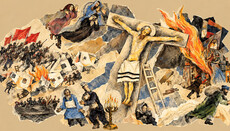
On October 9, 1618, the Uniate Archbishop Josaphat Kuntsevych approached Mogilev. The burghers locked the gates, set up cannons on the towers and on the rampart, and came out to meet him with muskets, pikes, and guild banners. They threatened the archbishop with gunfire. He turned back.
At that time the townspeople wrote to the voivode that they had not built so many churches in order to be led to divine service on ropes. The churches had been built with their money, and the burghers considered it their own business to decide who would serve in them.
Nevertheless, on March 22, 1619, the court sentenced the instigators of the resistance to death, although they were not actually executed. The city paid a fine, and all the churches and monasteries were handed over to Kuntsevych. The Orthodox of Mogilev began to pray in the field, beyond the city gate. Newborns were taken to be baptized ten or more miles from the city.
In 1623, Kuntsevych was killed in Vitebsk. An investigative commission accused the Vitebsk burghers of conspiracy, including with the people of Mogilev. But there was insufficient evidence of the brethren's guilt.
How Much to Put in the Brotherhood Chest?
The brotherhood spent its money wisely. The statute of 1597 left the size of the entry fee to the conscience of the brother himself. Each put into the common chest, the «skrynka,» «what he himself wishes according to his will and means.» The statute of the main brotherhood did not know a fixed rate; it existed only for individual guild brotherhoods such as the Kushner one. On Sundays alms were distributed, and once a year a general «collection» was gathered.
The king exempted the brotherhood house from taxes and from the quartering of soldiers, and permitted it to brew mead there three times a year. With this money the brotherhood maintained a school. Poor children and the children of the brethren studied there free of charge. Around 1601, the Uniate Archbishop Gedeon Brolnitsky complained to the king that preachers denouncing the union were coming out of this school. The complaint has survived and clearly shows how people were then taught to defend Orthodoxy.
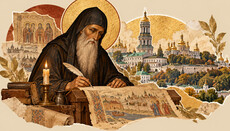
After 1633, the king permitted the brotherhood to maintain a monastery, a school of liberal arts, and a printing house with books in Russian, Greek, Latin, and Polish.
City reference books attribute to the Mogilev printers the publication of the «Service Book» of 1616 and the «Teaching Gospel» of 1619, but the first book that definitely came off the brotherhood's press appeared in 1636.
The Metropolitan of Kyiv on the Brotherhood Roll
In May 1620, the Mogilev brotherhood was one of the first to receive in Kyiv a charter from the Patriarch of Jerusalem, Theophanes. Fifteen years later, in 1635, Metropolitan Peter of Kyiv visited the city and enrolled as a «patron» of the brotherhood. Now his name stood alongside the burgomasters and councilors.
The Mogilev Brotherhood remained, from beginning to end, the possession of the townspeople.
The burghers preserved Orthodoxy in Mogilev during the years when their churches had been taken from them. What outlasted the cannons on the rampart and the court sentences was what had grown out of the brotherhood's communal fund: a free school for poor children and the primer from which literacy was taught in Mogilev.