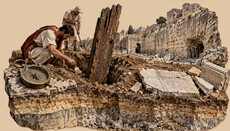

How a wedding stopped a war
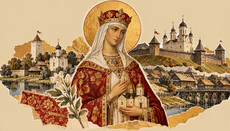
The young princess of Slutsk was married off to keep two powerful noble families from drowning the city in blood. Soon afterward, a Uniate metropolitan complained that Orthodoxy had been reborn in Slutsk.
On December 31, 1600, Uniate Metropolitan Ipatii Potii sat down to write a sorrowful letter. Bad news had arrived from Slutsk: its new ruler, Prince Janusz Radziwiłł, had expelled the Uniate superior from the Holy Trinity Monastery and returned the monastery to the Orthodox. Potii lamented the revival of the “accursed schism” in Slutsk and attributed the change to the influence of the prince’s young wife.
That young wife, Princess Sophia of Slutsk, was about fifteen years old at the time. Today the Church venerates Sophia as a righteous saint, but behind her brief biography lies a story in which money, cannons, high politics, and the resolve of a very young woman all came together.
The bride who ended the bloodshed
Sophia was the immensely wealthy heiress to the Principality of Slutsk. Her fate was decided by her guardians from the Chodkiewicz family. In 1594, an agreement was reached for her to marry the son of Prince Krzysztof Radziwiłł. The arrangement was primarily about lands, castles, and money – not a great love story.
What followed was something that often happens after lucrative deals. Sophia’s guardians and the groom’s father fell out over estates. By early 1600, the dispute had reached a breaking point. The Radziwiłłs brought troops to Vilnius, while the Chodkiewiczes turned their stone residence into a fortress and mounted cannons inside. According to one account, as many as 20,000 people could have died if the two sides had clashed. Royal envoys tried to reconcile them, as did Metropolitan Potii. No one succeeded.
A way out was ultimately found in the bride’s own decision. The young princess agreed to the marriage, and the confrontation ended in a wedding rather than a battle. The Life of St. Sophia describes her decision as a sacrifice made “for the sake of peace.” Historians may debate her motives, but, thank God, no blood was spilled in the streets of Vilnius.
A Calvinist on the side of Orthodoxy
Sophia’s husband was Janusz Radziwiłł, a Calvinist. At first glance, such a marriage would hardly seem to bode well for the Orthodox. Yet the historical record tells a different story.
By the end of 1600, only months after the wedding, the prince had returned the Holy Trinity Monastery to the Orthodox – the very development that so distressed Potii. Janusz later became one of the leaders of the 1606–1607 rokosz, which opposed restrictions on the rights of non-Catholics. In his will, he left instructions his descendants were required to follow: “The churches and monasteries of the Old Rus’ religion in my domains are to be preserved as before, and my descendants must ensure that no change is made in this regard.”
A popular retelling portrays a pious wife defending her faith against her heretical husband. Historical sources, however, provide no evidence of such a confrontation.
The prince respected his wife’s wishes and himself supported the Orthodox in his domains. The conflict in this story unfolded around the family, not within it.
A distinguished sister of the brotherhood
An Orthodox Brotherhood of the Transfiguration had existed in Slutsk since 1586. It had been founded during the lifetime of Sophia’s father and was revived under Sophia – according to some sources in 1606, and according to others around 1610. The princess became its patron and was referred to as a “distinguished sister of the brotherhood.”
At the time, Orthodox brotherhoods were the principal bulwark of Orthodoxy in the Polish-Lithuanian Commonwealth.
They ran schools, helped the poor, published books, and resisted pressure from the Uniate Church. The Slutsk Brotherhood had a monastery, a school, and a library and, if the Life of St. Sophia is to be believed, also a hospital and a printing house.
Sadly, the princess did not live long. She died in 1612, before reaching the age of thirty.
A debate that continues to this day
Sophia of Slutsk’s biography is not as straightforward as it might appear at first glance. Church tradition regards the princess as Orthodox, but some historians disagree. They cite documents according to which Sophia identified herself as Catholic in court on February 6, 1600, while her father-in-law guaranteed her access to a Catholic priest that summer. The 17th-century writer Okolski described her as a Catholic whom her “heretical husband” buried in a Rus’ church. An unexpected twist indeed.
Supporters of the Orthodox account offer arguments of their own: a Catholic priest refused to conduct her funeral service, while no record of the princess having been baptized Catholic has ever been found. The debate over the saint’s faith remains unresolved to this day. One thing, however, is beyond dispute: during her lifetime, the Orthodox of Slutsk regained their monastery, while the brotherhood received the protection of the ruling authorities.
A saintly preacher from Kyiv
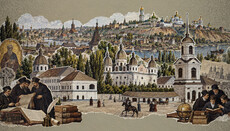
The brotherhood outlived its patron. Sixty-five years after her death, in 1677, a monk from Makariv near Kyiv came to serve as a preacher at Slutsk’s Transfiguration Monastery. He lived and preached there until early 1679, when, at the request of Hetman Samoilovych, he returned to Ukraine. The Church would later glorify him as St. Demetrius of Rostov, compiler of the Lives of the Saints that Orthodox Christians continue to read to this day.
At the time, Slutsk’s Orthodox population was suffering severe pressure from the Uniates. The pressure intensified with each passing year. The Orthodox were prevented from repairing their wooden churches, and in 1696 the Jesuits arrived in the city. The Holy Trinity Monastery survived until 1930, when it was closed and destroyed. The princess’s relics returned to Minsk only during the German occupation.
The story of Righteous Sophia of Slutsk is often retold as a simple tale of faith triumphing over unbelief. The real story is more complicated – and more interesting.
A young woman whose marriage had been the subject of bargaining helped avert bloodshed by giving her consent. Her Calvinist husband instructed his descendants to preserve Orthodox churches. And the brotherhood she patronized later gave refuge to a future saint from near Kyiv. Sometimes help for the Church comes from those from whom it is least expected.