
Hospice room and soul’s intensive care: Why good manners cannot save from death

We have grown used to measuring human decency by silence in the stairwell and the absence of a criminal record. But Christ did not come merely to polish our manners.
Imagine a spotless room in an expensive private clinic. The atmosphere is calm, the light is even, the water glasses are filled, personal belongings are neatly arranged. No one raises his voice. No one shoves the patient in the next bed. Everyone is polite, considerate, careful not to inconvenience anyone else. And it would seem – what more could one ask for?
Only one thing shatters the whole elegant picture: the diagnosis. It may be hidden beneath pressed clothing and a composed smile. But it remains a diagnosis all the same.
And here is where we fall into a trap. We call it goodness when we simply avoid hurting anyone. We give ourselves credit for the absence of outward disorder. We tell ourselves: if we have not robbed anyone, struck anyone, or been dragged into court, then surely all is well. But that is far too narrow a measure. It may suffice for a police station or a courtroom. It does not suffice for eternity.
The law does not heal a soul in decay
There is an almost imperceptible substitution we have made without even noticing it. We have exchanged the thirst for eternal life for the desire to be socially acceptable. It is a very gentle substitution, even an attractive one. We know how to sort our garbage, donate to charities, smile at the courier, refrain from arguing in line. And within us there arises a deceptive feeling: if the external order is intact, then the same must surely be true inside.
But death does not retreat from a man because he parks neatly and never quarrels with the concierge. And at that point, ordinary instructions prove powerless.
To hand a man yet another code of rules is like pressing a paper napkin against an open wound. The criminal code will not save anyone from spiritual death. It may keep society from immediate collapse – and that is no small thing – but it cannot give what so many of us are truly seeking: a life that does not end at the grave.
We are not criminals – so what?
We often comfort ourselves with a strange phrase: at least we have never killed or robbed anyone. It is usually said almost with relief – as though the absence of a crime were itself enough to open the doors of eternity.
But does a man die only when he breaks the law? Does the emptiness in the chest appear only in those caught red-handed? Of course not. We may live a wholly respectable, even exemplary life – and still remain mortal.
That is why the Gospel is so unsettling to us. It is not concerned with renovating our morality. It speaks of something else entirely: man has been condemned to death through sin, and he cannot save himself from it by his own strength.
St. Gregory of Nyssa stressed that our nature was sick – and needed a physician; it had fallen – and needed one who could raise it up; it had died – and needed resurrection. We were seized by darkness – and needed light. And this saving light was given to us by God.
The cross is not a lesson in good behavior
If our tragedy were merely ignorance, a perfect handbook of instructions would have been enough. If everything came down to discipline, then a strict teacher, a schedule, and a good memory would have sufficed. But the Cross of Christ says otherwise. It tells us that what we need is not advice, but salvation – and salvation is impossible without God’s intervention.
Protopresbyter Alexander Schmemann insisted that Christianity is not a new philosophy and not a set of prohibitions.
Into a world seized by death enters Life itself. Not an idea about some abstract life, but God Himself as Life and the Giver of eternal life.
“The thief comes only to steal and kill and destroy. I came that they may have life and have it abundantly” (John 10:10), Christ says. Everything is contained in these words. God comes not so that we may become more comfortable for those around us, but so that we may have life with Him.
The comfort that lulls us to sleep
The most dangerous person is not always the one who shouts and kicks in doors. Sometimes the most dangerous man is the one sitting in a soft armchair, fully convinced that everything is fine. Nothing disturbs him. He lives punctually, avoids conflict, never crosses anyone’s boundaries. And for that very reason he does not feel the sickness of his own soul.
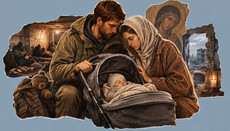
A man driven into a corner – literally or figuratively – often understands the true price of his life with far greater clarity.
But the man lulled to sleep by comfort, cleanliness, and outward calm may fail to notice the essential thing for a very long time – until something breaks into his life from outside the safe routine he has built around himself.
The Church is the soul’s intensive care unit
We are so fond of the idea that religion ought to affirm our socially convenient lives. As if, provided we trouble no one and disturb no one’s peace, eternity will somehow attach itself on its own. But eternity does not simply attach itself. It is given as the gift of God, delivering us from corruption.
The Church does not resemble a clinic for correcting character. It is closer to an intensive care ward.
What is brought here is not a handful of slightly flawed habits to be polished like teeth. What is brought here is that which can no longer heal itself – a sick soul. And only here do we first stop lying to ourselves and come face to face with our true diagnosis.
Then it becomes clear that the crucified God does not exist to decorate our moral image. He enters into the very heart of death and abolishes it. We build coziness around ourselves – He gives fullness. We take pride in not violating the rules of etiquette – He goes through the Cross to meet death itself, into that place where etiquette can no longer save anyone.
And perhaps that is precisely why the Gospel is so hard for many secular people to understand and accept. It does not pat us on the head or congratulate us on being decent. It calls us to the place where life becomes real – and eternal.