Brother of tax collector and brother of Lord
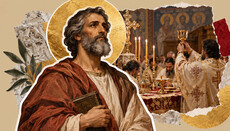
The Gospel is silent about the son of Alphaeus, and commentators have argued for centuries over who he was. And the Church commemorates two apostles named James in close proximity.
The Evangelist Matthew lists the host of the twelve apostles in pairs. The ninth in this list is a man of whom nothing more is said: “James the son of Alphaeus, and Lebbaeus, whose surname was Thaddaeus” (Matt. 10:3). Unlike the others, he is given both a name and a patronymic. Here the patronymic is a matter of necessity: there were two Jameses among the Twelve, and the second, the son of Zebedee, had to be distinguished somehow.
But it is precisely this patronymic that proves to be the key. In the Gospel of Mark, Christ walks along the seashore and sees a tax collector at his work of collecting tolls. Mark calls him “Levi the son of Alphaeus.” The words are spoken: “Follow Me” (Mark 2:14). The tax collector rises and follows the Messiah. In the list of the Twelve this man is recorded differently – “Matthew the publican” (Matt. 10:3). And right after him stands yet another son of Alphaeus.
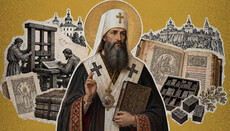
The Gospel nowhere clearly calls them brothers. It was Tradition that arrived at the conclusion that the apostles were related. St. Dimitry of Rostov opens the life of the saint thus: “The holy Apostle James was the son of Alphaeus and the brother of the Apostle and Evangelist Matthew, who had formerly been a tax collector.” Alphaeus himself is also venerated by the Church as an apostle. Truly a pious family, in which the father and his two sons became disciples of Christ.
Afterward, James set out toward the south. He preached in Judea, reached Edessa together with the Apostle Andrew, and then went on to Gaza, Eleutheropolis, and Egypt. His death came in the coastal city of Ostracine: the apostle was crucified and died, in the words of St. Dimitry, “being an imitator of Christ’s sufferings.” Other traditions speak differently. According to one version, the apostle was stoned in Marmarica, while a Syriac list records that he was killed and buried in Batnan. The exact year of the preacher’s death is unknown.
How many Jameses did the Church know?
Notably, the New Testament knows several Jameses. The son of Zebedee, the brother of John the Theologian, perished by the sword. The son of Alphaeus is one of the Twelve. And there is also James, “the Lord’s brother,” the first bishop of Jerusalem.
The Christian East firmly regards them as three different persons and commemorates them on different days. For the Orthodox, the Lord’s brother is an apostle of the Seventy and a son of Joseph the Betrothed by his first wife. The West took a different road. There the prevailing opinion became that James the son of Alphaeus and the Lord’s brother were one and the same person.
The chief author of this view was Blessed Jerome. He wrote a treatise against a certain Helvidius, who held that the “brothers of the Lord” were children of Joseph and the Virgin Mary. Jerome zealously defends the perpetual virginity of the Theotokos and offers his own solution to the disputed question. The “brothers” are cousins. Alphaeus and Clopas are one person. And the Lord’s brother is an apostle, for so Paul calls him: “But other of the apostles saw I none, save James the Lord’s brother” (Gal. 1:19). If he is an apostle, then he is from among the Twelve.
However, the verse cited from the Epistle to the Galatians admits of different interpretations. In the East a similar idea also surfaced, probably for the first time in St. Clement of Alexandria. He mentions only two: “There were two Jameses: one – ‘the Just,’ the other was beheaded.”
Mark adds to the confusion as well. Among the women at the Cross he names Mary, the mother of “James the less” (Mark 15:40). Thus this James was distinguished from the son of Zebedee, but who he is, interpreters still dispute.
For all the sharpness of the dispute, the parties to the discussion are united on the main point. The Church rejected the version of Helvidius, and both the East and the West confess the ever-virginity of the Mother of God. They differ on something else: how many men named James stand behind the pages of the Gospel.
Knees like a camel's
Much more is known about the Lord's brother than about James the son of Alphaeus. His death was described by the ancient Church writer Hegesippus, and the account was preserved by the historian Eusebius.
The events take place in Jerusalem in the early 60s. Here James is called the Just. He does not drink wine and wears linen garments. Hegesippus adds a valuable detail: "His knees became callused, like those of a camel, because he always prayed on his knees and asked forgiveness for the people."
The political framework is provided by Josephus Flavius. The procurator Festus has died, and the new one, Albinus, is still on the way. For a time there is no Roman authority in Judea. The high priest Ananus takes advantage of the pause and convenes the Sanhedrin.
James is placed on the pinnacle of the Temple – the very place to which the devil brought Christ during the temptations. The righteous man is thrown down. He is still alive and prays: "Lord God, Father! I beseech Thee, forgive them, for they know not what they do." These are almost verbatim the words of Christ on the Cross (Luke 23:34). He is finished off by a fuller – a craftsman who beat and thickened cloth. He strikes the bishop with a fuller's club. A craftsman's tool becomes an instrument of execution, while the dying man prays for his executioners.
In the West, the hero of this scene is considered to be James the son of Alphaeus, one of the Twelve. The East insists that it was the bishop of Jerusalem.
Theologians have never settled the question of how many men named James there were. The Church reconciled everyone through the calendar. On October 22 she commemorates the son of Alphaeus, the brother of the publican. On November 5 – the Lord's brother, bishop of Jerusalem, the man of prayer with camel's knees. Whatever their relation to one another may have been, both Jameses pray to God for one thing – for the forgiveness of our sins.