
The gears of eternity, or why the Benedictines invented the clock
Monks invented mechanical clocks not for the sake of deadlines. They created a rhythm to reclaim time and sanctify it with unceasing prayer.
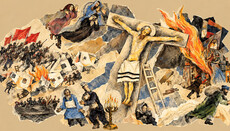
Time has long ceased to be a neutral coordinate. It has become an aggressor. We measure it by intervals of power outages, air raid timers, minutes of waiting for dawn after heavy nights. Time drives us forward, demanding that we hurry, that we fear being late. We feel like cogs in a giant press that crushes our days, turning life into an endless race for survival.
Surprisingly, the device that today has turned humanity into obedient slaves of the schedule was originally conceived as an instrument of freedom. Mechanical clocks were not invented by factory owners or bureaucrats. They were created by monks in European monasteries. They did so in order to devote every single second to the service of the Creator.
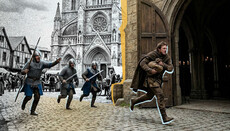
The path to clock invention
In the early Middle Ages, the principal keepers of time in Europe were the Benedictines. Their Rule, composed as early as the sixth century, required strict observance of the canonical hours. The most demanding part of this rhythm was the Midnight Office – the service to be performed long before dawn. Holy Scripture demanded precision. The Psalmist recalled: "Seven times a day I praise You for Your righteous judgments" (Ps. 118:164).
For monks, sleeping through the Midnight Office or Matins was considered a catastrophe. But how was one to determine the exact hour in the dark? Sundials are useless at night. Water devices – clepsydras – simply froze in winter, turning into blocks of ice. Hourglasses required continuous attention, and the monk on duty could fall asleep from exhaustion. Wax candles marked with divisions burned unevenly due to draughts in unheated rooms. And if the sky was overcast, it became impossible to tell the time by the stars.
The monasteries needed a device capable of operating autonomously, waking the duty monk with a chime, and independent of the weather whims. The search for this solution went on for centuries.
Then, in the thirteenth century, an unknown Benedictine inventor made a revolution. He devised the verge escapement with a foliot. This simple mechanism converted the continuous fall of a heavy weight into rhythmic, intermittent impulses. From that moment on, time was divided into tiny intervals.
Recall the ticking of an old clock. This measured sound is remarkably similar to the counting of knots on a monk’s prayer rope. Each click of the verge seems to bring the mind back from chaos into the present moment. The device was created so that a person would not oversleep their meeting with God. It urged them to remember eternity amid the distractions of earthly life.
The leper abbot and the brass sky
To see the scale this monastic ingenuity had reached, let us travel to 14th-century England. In 1327, the abbot of St Albans Abbey became a thirty-five-year-old man named Richard of Wallingford. The son of a humble blacksmith, he possessed an extraordinary mathematical mind.
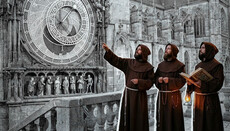
Soon after taking charge of the abbey, Abbot Richard began spending monastery funds on a strange undertaking. He was creating a vast instrument that was designed not merely to strike the hours, but to display the movement of the sun, the phases of the moon, the tides of the Thames, and the positions of the stars.
King Edward III, visiting St Albans, sternly rebuked the abbot. The monarch pointed to the monastery's dilapidated buildings and asked why the abbot was spending enormous sums on a useless brass toy instead of repairing the roof. Richard's reply entered the chronicles: "Future abbots will easily restore these stone buildings, but no one after my death will be able to replicate the mechanism of this clock."
Richard of Wallingford knew what he was talking about. He was suffering from advanced leprosy. The disease was gradually destroying his body; the abbot’s face was disfigured by the illness, and his fingers could barely hold his tools. Yet this leper managed to complete the designs for an instrument that his contemporaries called “Albion.”
The abbot was not building merely a timepiece. He was creating a working model of the cosmos.
The brass wheels turned in perfect accord with the celestial bodies. The life of the monastery now flowed in unison with the design of the Creator. Time no longer existed separately from eternity. The device reminded the monks that their earthly life was but a small part of the infinite heavenly motion.
The Orthodox Book of Hours as a remedy for chaos
In the Christian East, no brass giants were built into bell towers. But the Orthodox tradition created its own system for taming chaos — the Horologion, or the Book of Hours. This schedule of prayers divides the day into equal liturgical intervals: Midnight Office, Matins, the First, Third, Sixth, and Ninth Hours, Vespers, and Compline.
This cycle of prayer became a reliable framework for the human psyche. Beyond the monastery walls, wars raged, empires collapsed, and the Black Death arrived, wiping out entire cities. It seemed as though the world was falling into chaos. But within the monastery, at the appointed hour, the bell would ring, and the brethren would begin chanting the psalms. This strict rhythm did not allow people to lose their minds in terror. It kept the mind under control, returning it to the single point of support.
Today, when we peer at the face of a smartphone, we see nothing there but bare numbers. Secular people took from the monks the technology of measuring time but discarded from it the most essential element – Christ.
We have turned an instrument of salvation into a tool of our own enslavement. We count out our lives by the second, trying to squeeze maximum profit from them, and in this haste we lose our faith in God.
The Apostle Paul left us a stern warning: "Redeeming the time, because the days are evil" (Eph. 5:16). This means that time not sanctified by prayer draws a person into vanity, dissolving his personality in meaningless noise. It craftily steals eternity from us, substituting it with bare digits on a screen.
Returning to the monks' design
Saint Ignatius (Brianchaninov), in his ascetic writings, wrote: "The time given to us by God so that we might be saved, we use to destroy ourselves." We spend precious hours reading political forecasts, arguing on social media, buying things that could easily burn in the first fire, forgetting that the sand in our hourglass is relentlessly falling downward.
Every stroke of the pendulum is an invisible call to stop, to lift our eyes to heaven, and to remember the One Who holds in His hands both the stars and our fragile lives.
The clock ticks in order to return us to the reality of His presence. And this inner point of support cannot be exchanged for any earthly possessions.