
When every UOC church in Lviv Region is shut down – is that “freedom of faith”?
In Galicia, the authorities have effectively outlawed the UOC and are hunting down “underground” services – while in the United States they solemnly insist that no one in Ukraine is persecuted for their faith.
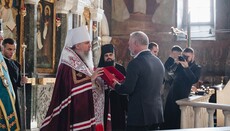
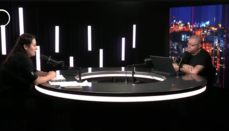
In early February, Ukrainian officials staged “advocacy events” on religion at the Hilton in Washington. The script was almost painfully predictable: thunderous denunciations of Russia for violating religious freedom, and polished, confident assurances that in Ukraine this freedom is exemplary.
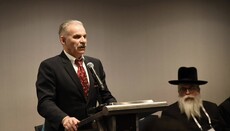
DESS head Yelensky; two deputy heads of the Office of the President – Kovalska and Mudra; two of Ukraine’s chief rabbis; the OCU’s “hierarchs” and “priests”; Protestants; and other members of the delegation – all together, in one obedient chorus, painted a picture of a country where religious freedom is not merely intact, but blooming.
And yet Galicia, it seems, lives in a different reality.
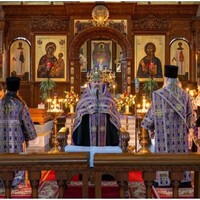
The Lviv Regional Council held an official event with a triumphalist title: “The End of the Moscow Patriarchate’s History in Lviv Region.” There they proudly heralded that the region had become “the first oblast where not a single UOC religious community remains.”
Not a single one.
Let that sink in. An entire region – and, according to the officials, not a single community of the UOC is left. And we are supposed to call this “freedom”?
Iryna Havryliuk, head of the Department of Culture, Nationalities, and Religions of the Lviv Regional State Administration, explained that in 2024 “the last four UOC communities” were “transferred” to the OCU, and another 27 “ceased activity by their own decision.” By their own decision. Of course. People prayed in these churches for generations, baptized their children there, buried their dead there – and then one fine day they all supposedly woke up and “voluntarily” decided: that’s it, no more worship. As if faith were a light switch. As if the Church were a hobby.
So what happened?
Local police answered, quite calmly. Together with the SBU, they are pursuing criminal cases against believers who had the nerve to build small chapels on their own private land and hold services there – as, for example, in Skhidnytsia. In other words: people gathered to pray on their own property – and the state came for them. Naturally, the police “stopped” it.
And in Brody the authorities installed a camera above a priest’s yard – to monitor whether parishioners might come. Imagine that: a priest’s home under surveillance, not for weapons or contraband, but for human beings who might dare to visit for prayer. And yes – they do not come. They have learned the lesson.
But the purge, it turns out, still isn’t complete. Some people continue to meet quietly in apartments – and here the police complain that their hands are tied.
“If people gather at home, we can’t influence that,” sighs Oleksandr Savchuk, head of the Preventive Activities Department of the Main Directorate of the National Police.
No, you can’t. But activists can.
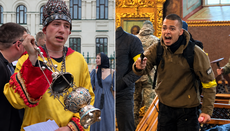
Wherever communities are tracked and hounded, “little incidents” occur – when “patriots” burst into apartments and, as a form of “education,” pour green dye over a priest.
This is what “freedom of religion” looks like on the ground: cameras over courtyards, criminal cases over chapels, raids by “activists,” intimidation dressed up as civic virtue.
And still, the deputies of Lviv Region were not satisfied. They instructed the security forces to “strengthen preventive measures in communities where religious organizations of the Moscow Patriarchate previously operated.”
Previously operated.
Because there are none left.
And now – against this backdrop – let us recall, almost at random, Yelensky’s polished line delivered in the United States: “Article 35 of the Constitution of Ukraine, which guarantees freedom of religion, is not subject to any restrictions, and freedom of conscience in Ukraine remains inviolable even under the conditions of a full-scale war.”
Inviolable.
So tell us: did we miss something? Did Lviv Region quietly stop being part of Ukraine? Because otherwise there are only two options.
Either the officials in Washington are speaking about a different country altogether.
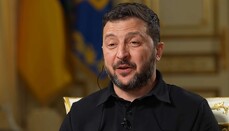
Or Yelenskyi is not telling the truth.
And he couldn’t possibly be lying – could he?
.jpg)
.jpg)