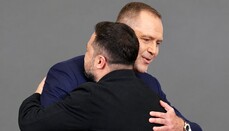

Can we judge those who joined the OCU from the military commissariat?
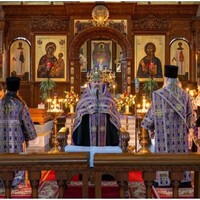

There are many known cases where priests and deacons of the UOC, detained by TRC officers, were offered a simple way to secure their release – to switch to the OCU. Most refused.
In Zakarpattia, Archimandrite Seraphim (Rastvorov), a cleric of the Rakoshyno Intercession Monastery, decided to join the OCU and submitted a petition to the local "bishop" Viktor Bed'. The latter accepted the petition. In response, Metropolitan Theodor of Mukachevo suspended Fr. Seraphim from ministry.
The situation might seem unremarkable: voluntary transfers to the OCU, while rare, do occur. However, there is a nuance. Shortly before this, Archimandrite Seraphim had been mobilized, and at the TCC he was offered a simple way to avoid the front line: either the front, or the OCU. The priest chose the OCU.
In July 2026, another transfer occurred under similar circumstances. Archimandrite Epiphany (Rudenko), rector of the Intercession Church of the UOC in the village of Khmelna, Cherkasy Region, joined Dumenko’s structure. He made the decision while at the military recruitment office. That is, he defected to the OCU simply to be released.
There are many cases in which UOC priests and deacons detained by TRC officers were offered a simple way to secure their release – to switch to the OCU. Most refused. But this raises the question: can those who were unable to refuse be condemned?
The choice UOC clergy are being forced to make today is terrible: renounce their Church or remain faithful to it and risk losing their health, or even their lives. At the same time, almost all of them have families and children who could be left without a father.
One thing can be said with certainty: in a state where clergy are confronted with such a choice, there can be no talk of any freedom of religion whatsoever.