
EU officials discuss UOC persecution with experts in Brussels

Two expert–level discussions on the state of religious freedom in Ukraine were held in the EU.
On December 3 and 4, 2025, two separate events took place in Brussels where representatives of the European Union and international experts discussed the situation surrounding the Ukrainian Orthodox Church and the condition of religious freedoms during wartime. Participants of the meetings reported this to the UOJ.
Meeting at the European Commission
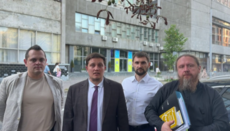
The first meeting took place at the European Commission with the participation of Martin Mülleka and Vincent Depaigne. Invitations were extended to sociologist Nikolai Mitrokhin, researchers Justina Panina and Dimitriy Krihan, as well as journalist and human rights defender Denis Lapin.
Human rights experts expressed concern that despite the UOC’s public patriotic stance, it is increasingly becoming the target of persecution.
According to Mitrokhin, the pressure on the Church “cannot be explained by the scale of real criminal cases, which are relatively few,” but is tied to the construction of the image of an “internal enemy.” Researchers also noted growing stigmatization of believers and a rise in local conflicts amplified by media escalation. Krihan stressed that such rhetoric can serve as a tool of political mobilization.
Representatives of the European Commission confirmed that issues of freedom of conscience and proportionality of any restrictive measures remain part of the EU–Ukraine dialogue.
Meeting at the European External Action Service
The second meeting was held at the European External Action Service (EEAS) with the participation of staff from the human rights and Ukraine units – Juan José García Carreño, Linda Ekholm, and Petra Ali Dolakova.
During the session, Denis Lapin presented video materials highlighting the growing number of conflicts around UOC parishes and restrictions that are generating alarm among believers.
Nikolai Mitrokhin provided a historical overview, noting that Ukraine had long stood out for its high level of religious freedom.
According to the researcher, the situation changed drastically after 2018, when the authorities supported the creation of the OCU. He described the subsequent developments as “a very aggressive propaganda campaign,” emphasizing that many Ukrainian media outlets began “publishing extremely biased information about the UOC.”
He added that the campaign escalated into widespread local conflicts: “In villages, local residents – simple women – try to defend their churches from groups of young activists arriving from regional centers.”
Particularly troubling, the researcher said, were the methods of security services. He reported that in 2022–2023 the SBU conducted around 1,300 searches in UOC monasteries and churches, where even a children’s Bible in Russian was presented as “evidence of Russian propaganda.”
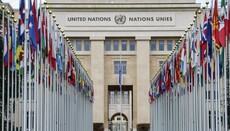
EEAS officials noted that while the EU continues to support Ukraine, it expects fundamental rights to be upheld – including the protection of freedom of religion.
According to participants, both Brussels meetings confirmed that European institutions are monitoring the situation closely and intend to take expert findings into account in further consultations with Kyiv. Human rights defenders expressed readiness to provide additional documentation, stressing that the absence of constructive dialogue could have long–term consequences for religious pluralism in the country.
Earlier, the UOJ reported that a roundtable on UOC issues was held in Paris.
.jpg)
.jpg)