
The state is losing its battle for youth to the UOC, says MP

Solomiia Bobrovska believes that the state and other religious confessions are losing to the Ukrainian Orthodox Church in their work with young people.
Ukrainian MP Solomiia Bobrovska said on the Espresso TV channel that the state and other confessions are losing to the Ukrainian Orthodox Church (UOC) in work with young people. According to her, while age and generational factors do matter, practice shows that it is precisely the UOC that demonstrates systematic and effective engagement with youth.
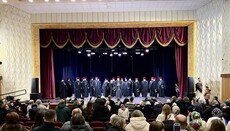
As an example, Bobrovska cited a recent case in Rivne, where a large Christmas charity festival was held at the UOC’s House of Culture. She said the event drew “virtually a full house,” which, in her view, indicates a large number of young people involved in church life. “This shows that there are very many young people and that work is being done with them,” she noted.
At the same time, the MP complained that the problem lies not only with churches and religious organizations, but also with the state’s stance. She said the current legislation has turned out to be “rather toothless,” and that the authorities are losing in their work with the population. “We are losing when it comes to working with the population. This is an obvious fact – both political and religious,” Bobrovska concluded.
In a comment, the press service of the Ukrainian Orthodox Church called the MP’s remarks telling. “Such statements are a vivid example of how certain media personalities or representatives of power, instead of respecting the constitutional right of citizens to freedom of religion, once again call for radical steps and try to divide society,” the UOC said.
The Church emphasized that, despite aggressive rhetoric, the UOC continues to carry out its spiritual mission and to provide large-scale assistance to soldiers and to all those in need.
As the UOJ wrote, Bobrovska also said on Espresso that Greek Catholics and other denominations in Ukraine should also work on the “transfers” of UOC communities to the OCU.