
Metropolitan Anthony explains Church's view of elders' prophecies
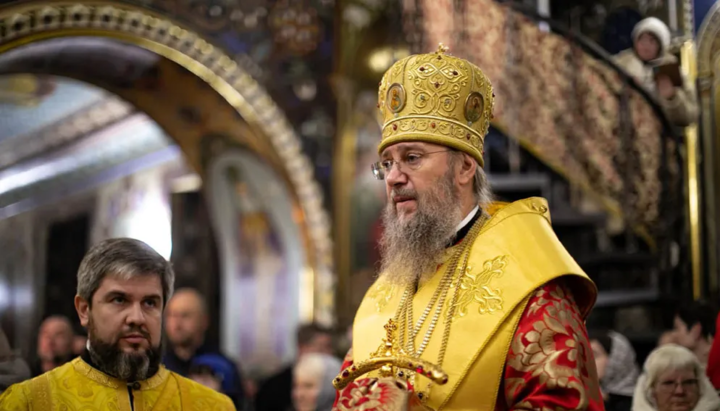
The UOC Chancellor noted that spiritual elders helped people preserve their faith during years of persecution and that their prophecies became part of Church Tradition.
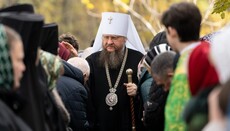
Metropolitan Anthony (Pakanich), Chancellor of the Ukrainian Orthodox Church, said that spiritual elders have left a profound mark on the souls of thousands of believers. The hierarch shared his reflections in an article published on the Orthodox Life website.
According to the metropolitan, Orthodoxy places personal spiritual experience and prayer above intellectual knowledge of God. He recalled that in the East, the center of theology has always been the monastery rather than the university, as in the Western tradition. A true theologian, the hierarch emphasized, is someone who has learned to pray and love God and their neighbor.
Metropolitan Anthony noted that it is difficult to overestimate the influence of spiritual elders on the spiritual life of the people in the eighteenth and nineteenth centuries. In the twentieth century, spiritual fathers continued their ministry amid persecution, helping people remain steadfast in their faith. In the hierarch’s view, the Church survived the Soviet era largely thanks to them.
Many of these elders were subsequently canonized. Among them, the metropolitan named Sts. Kuksha of Odesa, Lawrence of Chernihiv, and Job of Uholka, as well as the ascetics of Optina and Glinsk. He expressed confidence that, in due course, the Church would canonize other renowned spiritual fathers.

The hierarch also addressed the prophecies of spiritual elders. He explained that they were passed down by word of mouth and became part of Church Tradition, even though many of their conversations were never recorded.
“At times, the elders warned of future disasters and events and proclaimed prophecies. These words were passed down by word of mouth, from generation to generation. Many conversations were never recorded in writing, yet they became part of Church Tradition,” the hierarch noted.
According to him, in the Orthodox tradition, the prophecies of spiritual elders are regarded as a testimony to God’s will, through which the Lord may reveal the destinies of individuals and entire nations. The hierarch also pointed out that prophecies do not always meet with the approval of contemporaries, but this does not diminish their significance.
“Many people find this unpalatable, just as not all the contemporaries of the holy prophets Isaiah, Jeremiah, and others welcomed their prophecies. Yet this did not prevent the fulfillment of God’s providential revelations,” he said.
Metropolitan Anthony emphasized that prophecy cannot be regarded as the product of human reasoning or scientific analysis.
“Prophecy is the voice of God Himself reaching us from eternity here on earth, where time reigns, seeking to point us in the right direction,” the hierarch stated.
He added that a person’s response to prophetic words has spiritual consequences: by heeding them, people can avoid many hardships, whereas disregarding them does not prevent the fulfillment of what has been foretold.
“If we heed them, we will only stand to gain; if we do not, we will lose, because genuine prophecy inevitably comes to pass, but there will be many tragedies, hardships, and disappointments,” the metropolitan noted.
According to the hierarch, this is precisely why believers hold in particular reverence the spiritual elders whom the Lord chooses to convey His will to humanity. Metropolitan Antonii acknowledged that elders could make mistakes but recalled Christ’s words that people are known by their fruits. He cited Father Jonah (Ihnatenko), Mother Alipia (Avdeyeva), and Father Zosima (Sokur) as examples, urging people not to rush into making “scientific” assessments of their lives and teachings.
As previously reported by the UOJ, religious studies scholar Alexander Dvorkin addressed the issue of “false eldership” in the statements of ROC cleric Andrei Tkachev. The tradition of spiritual eldership in Eastern Christianity developed in monasteries, where experienced ascetics provided spiritual guidance to both laypeople and monastics.