
Why nationalism has no place in the Church: Antiochian metropolitan's legacy
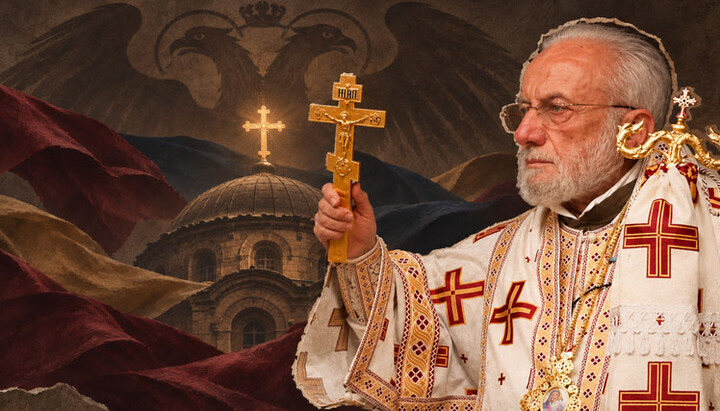
Metropolitan Georges (Khodr) of Mount Lebanon has reposed in the Lord. His words, spoken decades ago, now resonate as a direct warning to the entire Orthodox world.
On November 11, 1943, a peaceful demonstration took place in the Lebanese city of Tripoli, demanding independence from French colonial rule. Among the crowd was a twenty-year-old student named Georges Khodr. French forces opened fire on unarmed demonstrators, and eleven of his companions were killed before the eyes of the future metropolitan.
Eighty-three years later, on November 22, 2026, Lebanon’s Independence Day, Metropolitan Georges reposed in the Lord. He was 103 years old.
There is something symbolic about this coincidence of dates.
A man who had known the price of national freedom since his youth became one of the most uncompromising opponents of nationalism within the Church – nationalism of any kind, whether Russian, Greek, Arab, or Ukrainian.
The life of Metropolitan Georges spanned an entire era. At the age of eighteen, together with his friends, he founded the Orthodox Youth Movement, which breathed new life into the Church of Antioch. He studied theology at St. Sergius Orthodox Theological Institute in Paris under prominent representatives of the Russian theological tradition. In 1970, he became head of the Metropolia of Mount Lebanon. He revived monasteries, restored churches, and established charitable institutions and relief funds for those in need. When Lebanon was engulfed by civil war, he worked to reconcile the warring parties and secure the release of abducted people.
Above all, however, Metropolitan Georges was a thinker and the author of dozens of theological works. In 2006, a collection of his articles and essays entitled The Call of the Spirit was published in Kyiv. The metropolitan himself visited Ukraine and gave an extensive interview on the challenges facing contemporary Orthodoxy. Even then, he was diagnosing the spiritual ailments that are poisoning the Orthodox world today.
"There can be no nationalism in the Church"
In September 2006, in Kyiv, the metropolitan was asked a pointed question: two nationalisms – Ukrainian and Russian – were clashing within Ukrainian Orthodoxy. What was to be done?
“There can be no nationalism in the Church,” the hierarch replied. Christians have every right to preserve their national identity, love their country, and cherish its culture, he explained. But national identity cannot determine whether a person belongs to the Church of Christ.
In the same interview, the metropolitan was asked about the principle of “one state – one Church,” often invoked to justify the establishment of national ecclesiastical structures.
“This principle is not canonical,” Metropolitan Georges replied bluntly.
Such an arrangement, he believed, was acceptable only with the consent of the faithful and provided that it did not create new divisions. The metropolitan explained the origins of this problem in his essay “Away with All Forms of Confessional Nationalism,” included in The Call of the Spirit.
For centuries, Orthodox Churches helped their peoples preserve their languages, cultures, and historical memory. During struggles for national liberation, the clergy often stood shoulder to shoulder with their people. Over time, however, this historical achievement turned into a spiritual trap: national identity became confused with ecclesiastical identity, and loyalty to one’s nation with fidelity to Orthodoxy.
Orthodox Christians, the metropolitan observed, sometimes begin to regard their own nation as spiritually superior to others. When that happens, neither a shared faith nor a common Chalice prevents them from bringing national grievances, prejudices, and political disputes into the Church. As early as 1872, the Council of Constantinople condemned ethnophyletism – the subordination of ecclesiastical unity to national interests. Yet the disease was never cured.
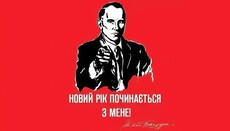
Is this not what we are witnessing in Ukraine today? On January 16, 2019, Petro Poroshenko, one of the founding figures behind the OCU, commented on the transfer of Metropolitans Simeon (Shostatskyi) and Alexander (Drabynko) to the OCU, declaring: “The Ukrainian people, the Ukrainian faith, and the Ukrainian Church come above all else.”
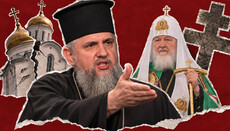
In May 2024, OCU leader Serhiy (Epifaniy) Dumenko, speaking about UOC clergy who had not joined his ecclesiastical structure, posed the question bluntly: “Are they on Ukraine’s side or on the side of the aggressor?”
This is precisely what Metropolitan Georges warned against: the danger of measuring a person’s belonging to the Church by their loyalty to the state.
Orthodoxy held captive by imperial mysticism
One of the essays in The Call of the Spirit bears a telling title – “The Orthodox Church in the Grip of Imperial Mysticism.” In it, Metropolitan Georges examines the centuries-old dependence of the Church hierarchy on state power. Byzantium fell more than five centuries ago, yet the conviction that the Church necessarily needs the patronage of a powerful state remains alive.
The issue is not merely the habitual desire to obtain government support, privileges, or protection. The danger runs deeper: ecclesiastical structures gradually begin to mistake the interests of the state for those of the Church, while the state uses ecclesiastical authority to justify its policies. Before long, the hierarchy, called to protect people from abuses of power, becomes a cog in the very machinery that serves those in power.
Contemporary Orthodoxy, the metropolitan believed, had yet to break free from this captivity. In his essay “Shaping History Rather Than Enduring It,” he expressed himself even more forcefully: “Dreaming of the restoration of an Orthodox empire in Russia is tantamount to death...” Nor was he speaking exclusively about Russia: he was equally critical of the idea of reviving Christian nationalism in his native Lebanon.
At the same time, he was by no means calling on Christians to withdraw from public life. On the contrary, he regarded it as their duty to defend the downtrodden, fight injustice, and share the fate of their people. But striving to make society more just is one thing. Cloaking imperial policies in religious slogans is quite another.
A textbook example is the declaration adopted by the World Russian People’s Council on March 27, 2024, which states: “From a spiritual and moral perspective, the special military operation is a Holy War in which Russia and its people, defending the unified spiritual space of Holy Rus’, fulfill the mission of the ‘Restrainer,’ protecting the world from the onslaught of globalism and the triumph of the West that has fallen into Satanism.”
In criticizing Russia’s imperial ambitions, Metropolitan Georges by no means rejected the Russian Orthodox heritage. In the preface to The Call of the Spirit, he recalled with profound gratitude his Russian teachers – Georges Florovsky, Nicholas Afanasiev, Alexander Schmemann, and other theologians of St. Sergius Institute. For him, there was no contradiction between loving Russian theology and rejecting the Russian imperial idea.
Between the speaker’s tongue and the killer’s bullet
Metropolitan Georges’ rejection of violence was no abstract intellectual position – it grew out of personal experience.
The killing of demonstrators in 1943 was only the beginning. A significant part of his episcopal ministry coincided with the Lebanese Civil War of 1975–1990. In that conflict, religion became inextricably intertwined with politics, and belonging to the “wrong” religious community could cost a person their life.
The hierarch knew all too well what hatred becomes when it is given religious justification. In his essay “Our Neighbor Is Our Brother,” he wrote about the responsibility not only of those who pull the trigger but also of those who pave the way for violence. One cannot incite a crowd and then wash one’s hands of the consequences. “Woe to the preachers of hatred: there is a direct link between their tongues and the killer’s bullet!” he warned.
How can we not recall here the years-long campaign of vilification against the UOC conducted by certain politicians, journalists, and public figures, and the murder of Sviatohirsk Lavra monk Varsonofiy on August 23, 2026?
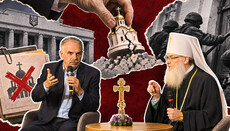
During a meeting between Viktor Yelensky, head of the State Service of Ukraine for Ethnopolitics and Freedom of Conscience (DESS), and the clergy of the Zaporizhzhia Eparchy, Metropolitan Luka asked the official directly: “Do you not think that the years-long campaign that dehumanized UOC clergy and branded monks as enemies and saboteurs – a campaign in which, to be frank, you yourself were involved – gave the killers free rein and led to the shedding of innocent monastic blood?” Yelensky expressed his condolences and steered the conversation toward another subject.
At the same time, Metropolitan Georges was not an advocate of unconditional pacifism. In his essay “The Rifle or the Cross,” he acknowledged that circumstances may arise in which a person is compelled to use force to resist evil. He did not deny the right to self-defense and understood the profound moral tragedy inherent in such a choice. But there is a gulf between defending one’s homeland against aggression and waging a “holy war.” To declare a war holy is to turn a political adversary into an enemy of God and use religious language to justify any means of fighting.
Who has the right to rule the Church?
The metropolitan’s warnings also concerned the very structure of global Orthodoxy.
On May 18, 2016, shortly before the Council of Crete, which its organizers envisioned as a pan-Orthodox gathering, Metropolitan Georges published an article entitled “The Holy Synod.” In it, he reflected on the equality of the Local Churches, ecclesiastical primacy, and the limits of episcopal authority.
The hierarch’s position was unequivocal. All Local Orthodox Churches are equal in dignity. There is a historically established order of precedence among them, enshrined in the canons, but this in no way implies the right of one Church to govern the others.
The Patriarch of Constantinople’s first place in the Orthodox world, the metropolitan explicitly stated, does not confer administrative authority over the other patriarchs.
In 2016, these words were read in the context of preparations for the Council of Crete. Following the events in Ukraine in 2018–2019, they acquired new significance. After all, the Phanar justified its intervention in Ukrainian ecclesiastical affairs by invoking certain special prerogatives allegedly vested in the Ecumenical Throne.
The metropolitan spoke no less sternly about the responsibility of bishops themselves, even when their authority is exercised collectively. “A council does not stand above the Church,” he wrote in the same article. Bishops possess genuine authority, but that does not make them infallible. The authority of conciliar decisions depends on their fidelity to Church Tradition and their reception by the fullness of the Church.
In light of these words, both the October 9–11, 2018, Synod of the Church of Constantinople, which sought to legitimize Ukrainian schismatics and revoke the 1686 Charter, and the so-called “unification council” held in Kyiv on December 15, 2018, at which the OCU was established, appear in a different light.
The Church cannot belong to the state. It cannot belong to a nation. Nor can it become the property of an individual patriarch or a group of bishops. For the Head of the Orthodox Church is Christ, not whoever possesses the greatest political, financial, or administrative leverage.
What Metropolitan Georges left us
The life experiences of Metropolitan Georges Khodr could easily have led him to embrace entirely different views. In his youth, he witnessed the killing of demonstrators demanding Lebanon’s independence. As a bishop, he lived through a civil war in which people killed one another, sometimes under religious banners. He knew the price of national freedom and understood the need to defend one’s homeland. But he also understood something else: conflating national, political, and religious identities distorts religious consciousness.
He warned us that loving one’s people does not mean considering them spiritually superior to others. Defending one’s homeland does not mean declaring war sacred. Respecting the Church hierarchy does not mean regarding every decision it makes as infallible. And no political necessity can justify replacing the conscience of the Church with loyalty to the state.
Will we heed his words?