The Council of Crete: a decade of unity in name only
Constantinople marked the anniversary of the Council of Crete with a theological conference in France. They spoke about the unity of Orthodoxy, although over the past years there has noticeably been less of it.
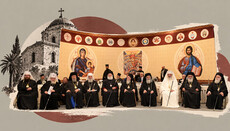
From October 5 to 8, 2026, an international conference marking the 10th anniversary of the Council of Crete, "The Holy and Great Council of the Orthodox Church (2016–2026): Assessment and Prospects," was held in Chantilly, France. It was organized by the Patriarchate of Constantinople. In addition to bishops and theologians from various Local Orthodox Churches, the meeting was attended by representatives of Catholics, Anglicans, and the World Council of Churches. The conference was opened by Patriarch Bartholomew, and the concluding discussion was led by Metropolitan Emmanuel of Chalcedon. A special event was the participation in the conference of representatives of those Local Churches that did not attend the Council of Crete: the Antiochian, Bulgarian, and Georgian Churches. Only representatives of the Moscow Patriarchate, the Polish Church, and the Church of the Czech Lands and Slovakia were absent from Chantilly.
One of the messages of the 2016 Council states: "The main priority of the Holy and Great Council was the proclamation of the unity of the Orthodox Church." But, paradoxical as it may seem, it was precisely after the Council that the division between the Churches only deepened. Ten years later, there is, of course, a reason for an anniversary, but there is little ground for celebration.

The Council that was awaited for half a century
The direct preparation of the Council began in 1961 on the island of Rhodes. Initially, it was intended to discuss a broad range of issues concerning inter-Church relations and Church life, but in the course of the preparatory meetings the agenda was gradually reduced and hollowed out. Put simply, issues on which the Churches had disagreements were removed from it, even though it was precisely these issues that were vitally important. For example, the discussion of the most important topic – the procedure for granting autocephaly – never took place in Crete.
All the decisions of the 2016 Council were agreed upon in advance, although at the Council itself some details were adjusted. To critics who asked what the point was of everyone gathering, a noncommittal answer was given: the main thing, they said, was to meet at such a high level and demonstrate unity, and then, perhaps, the pressing problems would be addressed.
However, the decisions of the Council of Crete contained two points which, even if they were not the main reason for its convocation, were nevertheless of great importance to its organizers. These were the affirmation of the special role of the Patriarchate of Constantinople in Orthodoxy and the opening of opportunities for broad ecumenical dialogue, in particular with Catholics.
In June 2016, delegations from ten of the fourteen then generally recognized autocephalous Churches came to Crete. The Antiochian, Russian, Bulgarian, and Georgian Churches refused to participate. The reasons varied: disagreement with some draft documents and the order of proceedings, as well as the conflict between Antioch and Jerusalem over ecclesiastical jurisdiction in Qatar. Nevertheless, the Council declared itself "Pan-Orthodox" and adopted six documents – on the diaspora, autonomy, fasting, marriage, relations with the non-Orthodox, and the mission of the Church – as well as two messages. The participants also proposed making such councils a regularly functioning institution, which, at least so far, has not happened.
What was discussed at the anniversary conference
For ten years now, the Patriarchate of Constantinople has insisted on the "Pan-Orthodox" status of the Council of Crete and on the binding nature of the documents adopted there, even for those Local Churches that did not take part in its work. Speaking in Chantilly, Patriarch Bartholomew once again declared that the refusal of four Churches to go to Crete was dictated by "non-ecclesiastical criteria", and that postponing the Council would have meant its final cancellation.
The discussion focused mainly on six documents of the Council of Crete: what they have given to church life, what questions they resolved, and where they left contradictions. The contradictions were not concealed, and critical assessments were voiced, including by representatives of the Patriarchate of Constantinople itself.
For example, Metropolitan Job of Pisidia (Getcha) spoke critically of the Council's position on such questions as the ecclesial status of the non-Orthodox, the theology of the human person, and the relationship between canonical strictness and economy.
"The Council, unfortunately, failed to to speak about the ecclesial nature of Christians who are outside its canonical boundaries," Getcha noted. In his opinion, the formula about recognizing the "historical name" of other churches and confessions became a compromise that did not resolve the theological dispute. He also criticized the decision to leave the regulation of mixed marriages to the Synods of individual Churches, as well as the scholastic approach to distinguishing between canonical strictness and economy.
Archbishop John of Albania highlighted in his report that unity must not only be confessed but also manifested in the relations between the Churches. He named the extremes of nationalism as one of the obstacles on this path.
Ecumenism and the primacy of Constantinople
Two directions in the decisions of the Council of Crete stand out clearly and still give rise to disputes: the approval of ecumenical dialogue and the definition of the special role of Constantinople.
Ecumenism, of course, did not arise in 2016. But the Council of Crete's document "The Relations of the Orthodox Church with the Rest of the Christian World" confirmed that the participation of the Orthodox in the ecumenical movement is assessed positively.
In particular, it states: "The Orthodox Church accepts the historical name of other non-Orthodox Christian Churches and Confessions that are not in communion with her." That is, they too may be called churches. This formula gave rise to fears that the distinction between the Orthodox Church and the non-Orthodox communities would begin to blur. At the same time, the document rejects the idea of the "equality of denominations" and of unity through interconfessional compromise.
Nevertheless, critics of the Council saw a theological concession here. Thus, Metropolitan Ambrosios of Kalavryta (Church of Greece) accused the organizers of having "opened wide the door to ecumenism".
The second question is the limits of the primacy of the Patriarchate of Constantinople. The documents of the Council of Crete assigned to it the following coordinating powers:
1. Presiding over the episcopal assemblies of the diaspora. They are to be chaired by hierarchs of the Patriarchate of Constantinople. 2. Consideration of pan-Church issues. Matters requiring a pan-Orthodox resolution are referred to the Patriarch of Constantinople for further consideration. 3. Settlement of disputes over autonomy. If a conflict arises between two Local Churches concerning the autonomy of a particular church territory, the parties appeal to the Ecumenical Patriarch to seek a canonical solution. 4. Coordination of autonomy in the diaspora. The establishment of autonomous Churches in the diaspora is permitted only with pan-Orthodox consent, which is ensured by the Ecumenical Patriarch.
These powers are interpreted differently: some see in them mere coordination, while others see already a claim to authority. At Chantilly this dispute continued – naturally, in diplomatic wording. Thus, Archdeacon John Chryssavgis (Patriarchate of Constantinople) stated: "Conciliarity does not mean the absence of leadership. Consensus does not mean paralysis." A somewhat different view was expressed by Carol Saba, representative of the Assembly of Orthodox Bishops of France: "Of course, nothing can be done without the Ecumenical Patriarchate. But the Ecumenical Patriarchate itself will not be able to do anything significant without the joint work of Constantinople with the other autocephalous Orthodox Churches."
Where is the line between coordination and authority over other Churches? The Council of Crete did not answer this question, and subsequent events have made it even more acute.
Ten years on: the unity that naver came
The Council of Crete did not grant the Patriarchate of Constantinople a universal right to receive appeals from clergy of other Local Churches. Nevertheless, Constantinople explicitly asserted such a right by considering the appeals of Filaret Denisenko and Makariy Maletich.

On October 11, 2018, the Synod of Constantinople "reinstated" them, together with their followers, in ecclesiastical communion and revoked its Synodal Letter of 1686 on the transfer of the Kyiv Metropolia to the jurisdiction of the Russian Church. And in January 2019, Patriarch Bartholomew signed and granted the Tomos of autocephaly of the OCU.
Obviously, such actions go far beyond "coordination". Constantinople presented these steps as overcoming the Ukrainian schism, but the schism only deepened, and it is no longer merely a Ukrainian one. The UOC and the ROC ceased Eucharistic communion with the Patriarchate of Constantinople.
An African conflict followed. Patriarch Theodore of Alexandria recognized the OCU in November 2019, and in December 2021 the Russian Church established the Patriarchal Exarchate of Africa and initially received into it 102 clergy of the Patriarchate of Alexandria from eight countries. Alexandria called this an invasion of its jurisdiction, while Moscow called it a response to the requests of the clergy who disagreed with the recognition of the OCU.
The dispute between Antioch and Jerusalem over Qatar has not gone away either. True, in October 2023 the Churches restored Eucharistic communion, but the territorial question has still not been finally resolved.
Of course, there is no basis for claiming that all these divisions were provoked by the Council of Crete. But it cannot be denied that after the 2016 Council, which was meant to affirm unity, there has been much less of it.
Conclusion
How, then, can unity be achieved, or at least approached? One of the necessary conditions is the real embodiment of the principle of conciliarity in the life of the Church. Metropolitan Job (Getcha), in his speech at Chantilly, stated: "After the Holy and Great Council in Crete, there was a sense of inspiration. We hoped that it would open a new era of conciliarity in the Orthodox Church and mark the beginning of the regular convocation of such councils every seven or ten years. Unfortunately, the crisis that the Orthodox Church is experiencing has not allowed this pious wish to be fulfilled."
But here Getcha confuses cause and effect: it is not the crisis that prevents councils from being held, but the absence of councils that in large part gives rise to the crisis. The Patriarchate of Constantinople for some reason believes that it alone has the right to convene Pan-Orthodox councils or similar meetings. Patriarch Bartholomew has repeatedly been urged to convene such a council to resolve the Ukrainian church problem and other issues, but the head of the Phanar stubbornly refuses. He claims that he has already "resolved" the problem – unilaterally, by his Tomos – and that there is no reason to convene any council. And as long as the Phanar holds to this position, the unity of the Local Churches will remain merely a "pious wish."