
Supreme Court overturns UOC renaming rulings: what comes next?
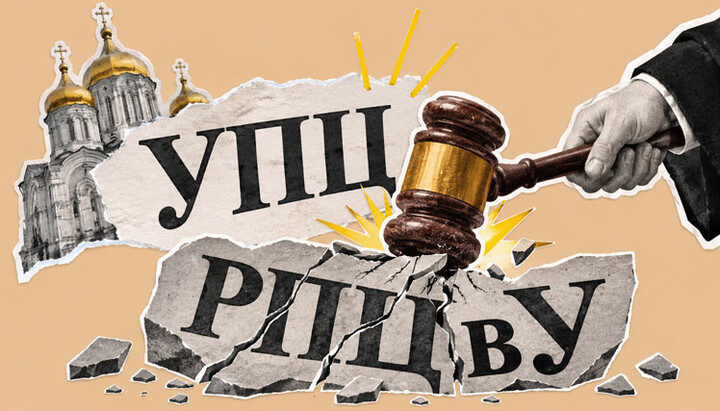
The Supreme Court has identified substantial violations in the case concerning the forced renaming of the UOC. How will this affect DESS’s actions, and what steps should the Church take?
In July 2025, the State Service of Ukraine for Ethnopolitics and Freedom of Conscience (DESS) released a study claiming that the Kyiv Metropolia of the UOC was affiliated with the Russian Orthodox Church (ROC). Among the arguments cited by the agency were court rulings dated May 15 and November 2, 2023. These rulings dismissed the UOC’s lawsuits against the Ministry of Culture and upheld the legality of its religious studies assessment, which had served as the basis for the so-called renaming of the Church.
However, on November 17, 2026, the Supreme Court overturned both rulings and remanded case No. 640/4748/19 for reconsideration.
This has created a paradoxical situation: a government agency relied on court rulings that have now been overturned. Does this mean that the campaign to forcibly rename the UOC has failed? And how might the Supreme Court’s ruling affect the Church’s position today?
What did the Supreme Court decide?
The story began in December 2018, when the Verkhovna Rada adopted Law No. 2662-VIII, which provided for the mandatory change of names of religious organizations belonging to the structure of religious associations whose governing centers are located in the aggressor state.
On January 25, 2019, MinCulture issued Order No. 37 on conducting a religious studies expert review, and the very next day it published a list of organizations required to change their names. The Kyiv Metropolis of the UOC, its dioceses, monasteries, and other church institutions fell under this requirement.
The Kyiv Metropolis and the Pochaiv Lavra challenged the ministry's actions. In 2019, a court temporarily prohibited registration actions with respect to hundreds of UOC organizations. However, in May 2023 the court of first instance rejected the lawsuits and lifted the interim measures, and in November the appellate court upheld this decision.
The Supreme Court overturned the rulings of both instances, pointing to a number of substantial violations.
First, MinCulture had no right to conduct the expert review in an arbitrary manner. Article 30 of the Law "On Freedom of Conscience and Religious Organizations" provided for the participation of representatives of religious organizations and relevant specialists. However, the courts of the previous instances decided that the special law on renaming allowed this requirement to be bypassed.
The Supreme Court did not agree with this approach. The court of first instance will have to determine whether MinCulture gave UOC representatives the opportunity to take part in the review and to submit documents and explanations.
Second, the state is obliged to prove the legality of its own actions. The courts of the previous instances pointed out that the UOC had not provided sufficient evidence that it is not subordinate to the ROC.
The Supreme Court reminded that when the actions of a public authority are challenged, it is that authority that must prove their lawfulness (Part 2 of Article 77 of the Code of Administrative Procedure of Ukraine), and the court has no right to do this work in its place.
In other words, it is not enough to claim that the UOC has not refuted its alleged dependence on Moscow: MinCulture is obliged to prove that there are legal grounds for applying the relevant requirements to it.
Third, the courts relied on materials that do not directly relate to the 2019 expert examination: the conclusion of another religious studies expert examination conducted in 2023, and a publication about a speech by the head of the UOC Legal Department, Archpriest Alexander Bakhov. The court's logic regarding this speech was as follows: since in 2022 the references to a connection with Moscow had to be removed from the Statute, it means that in 2019 they were there and the Ministry of Culture was right.
It is noteworthy that in May 2026 the court of appeal annulled the order of the SESCF approving the conclusion of the 2023 SESCF expert examination.
The Supreme Court pointed out that later documents in themselves do not confirm the Ministry of Culture's compliance with the established procedure in 2019. Moreover, the courts of previous instances did not properly verify whether the participants in the proceedings could have familiarized themselves with these materials and raised objections.
Finally, a case affecting the interests of many church organizations was considered under the simplified claim procedure. The Supreme Court acknowledged that the complexity of the case, the number of participants and its public significance required full-fledged judicial proceedings.
On the totality of these grounds, the 2023 decisions were annulled, and the case was returned to the court of first instance.
It is important to understand, however, that the Supreme Court did not declare the Ministry of Culture’s actions unlawful or invalidate Order No. 37. The legality of the 2019 assessment and the subsequent publication of the list remains to be determined by the court of first instance.
Meanwhile, the renaming provisions were removed from the law in 2024 (more on this below), although the legal consequences of their application in previous years remain disputed.
Nor did the Supreme Court establish the absence of organizational ties between the UOC and the ROC. Moreover, it allowed the use of the ROC Statute and other documents as evidence, provided that their content and legal significance are properly assessed.
This circumstance cannot be overlooked when assessing the prospects of the case. The UOC’s victory should therefore be viewed realistically: it is significant, but for now, it is only a procedural victory.
What the UOJ warned about years ago
Several key provisions of the Supreme Court’s ruling echo arguments we made long before the present decision.
As early as December 2018, in our article “UOC renaming law takes effect: what comes next?”, we drew attention to a legal problem: the subordination of the Ukrainian Church was to be determined on the basis of documents issued by a foreign religious organization. We warned that the application of the renaming law would give rise to serious legal disputes.

In December 2022, following the Constitutional Court’s decision, we returned to the issue in our article “Constitutional Court gives green light to UOC renaming: what's next?” We explained that declaring the law constitutional did not in itself establish its applicability to the UOC. For that to happen, the existence of the statutory indicators of subordination had to be established.
It is precisely this distinction that the Supreme Court has now emphasized. In paragraph 102 of its ruling, the court stated that the Constitutional Court’s decision confirms the state’s right to conduct religious studies assessments but does not establish the legality of the Ministry of Culture’s specific actions.
Finally, in May 2026, in our article “DESS expert review overturned by court: why this matters more than it seems,” we analyzed another case concerning the 2023 assessment of the UOC Statute. At the time, the appellate court overturned the DESS order approving the expert findings after establishing that the agency had failed to consider the UOC’s request to disqualify members of the expert panel.
We emphasized that compliance with legally prescribed procedures is a prerequisite for the lawfulness of government actions. The Supreme Court has now reaffirmed the importance of this principle.
Thus, our earlier warnings about the legal vulnerability of the government’s approach have proved well-founded.
The Supreme Court did not rule on the ecclesiastical status of the UOC, but it demanded a proper examination of precisely those circumstances whose problematic nature we had repeatedly highlighted.
What does the Supreme Court’s ruling mean for DESS and the UOC itself?
In its study dated July 8, 2025, DESS cited, among other things, the Ministry of Culture’s 2019 assessment and the 2023 court rulings upholding its legality to substantiate its conclusion that the UOC was affiliated with the ROC.
Both court rulings have now been overturned, meaning that DESS can no longer cite them as valid judicial confirmation of the legality of the earlier assessment. However, this does not automatically invalidate the 2025 study: it contains other arguments that must be assessed separately.
Moreover, the legislation changed in 2024. Law No. 3894-IX removed the previous renaming provisions from Article 12 and established a new procedure for determining whether religious organizations are affiliated with banned foreign religious entities.
The Supreme Court’s ruling therefore does not automatically invalidate subsequent DESS decisions, but it gives the UOC an additional legal argument for challenging them.
Implications for church communities
Military draft exemptions for clergy. DESS currently justifies the inability of UOC clergy to obtain exemptions from mobilization partly on the grounds that provisions in the statutes of ecclesiastical organizations concerning their official names have allegedly lost their legal force. The criteria for designating religious organizations as critically important do indeed include a requirement concerning the official name specified in their statutes.
In addition, an organization must not be included in the list of entities affiliated with a banned foreign religious organization.
On November 16, 2026, the UOC Legal Department challenged DESS’s position, pointing out that following the legislative amendments of 2024, the agency’s stance required proper legal justification.
The Supreme Court’s latest ruling does not resolve the issue of military draft exemptions. However, if the Ministry of Culture’s actions in 2019 are found unlawful upon reconsideration of the case, the UOC will gain an additional argument against the restrictions, although this alone will not guarantee exemptions for priests.
Registration of statutes. The Supreme Court’s ruling does not require government authorities to resume registering amendments to UOC statutes. Nevertheless, parish communities can already challenge specific refusals if they lack a lawful basis.
Reconsideration of the case. The Ministry of Culture will have to demonstrate that it acted lawfully in 2019 and complied with the prescribed procedure. The court will have to examine the documents and give the parties an opportunity to present their arguments.
This gives the UOC grounds for cautious optimism. However, an ultimate victory is not guaranteed: following a full hearing, the court may either uphold the lawsuits or dismiss them once again.
What should the Church do right now?
The Supreme Court’s ruling opens up additional avenues for legal defense that the Church should make use of.
- Review and organize documentation. Every eparchy, monastery, and parish should have a valid registered statute, an up-to-date extract from the Unified State Register, and documents confirming the authority of its head and its rights to church property. It is important to retain previous versions of statutes – particularly those in force before the UOC Council of May 27, 2022, and those adopted afterward.
- Do not leave registration refusals unchallenged. If a government authority refuses to register a statute or an amended version of it, a written decision explaining the grounds for refusal must be obtained. Legal counsel should be consulted to assess the legality of the refusal and determine the deadlines and procedures for challenging it. There is no need to wait for the current court proceedings to conclude before taking such action.
- Demand legal justification for refusals to grant military draft exemptions. Eparchies and parishes should establish the specific reasons why their organizations have not been included in the list of critically important entities. If DESS claims that provisions of their statutes concerning their official names have lost their legal force, they should demand that the agency specify the legal grounds for this claim and consider challenging its decision in court.
- Participate in government assessments and inspections. When ecclesiastical affiliation is being examined, religious organizations should insist on their statutory right to participate through their representatives and promptly submit documents concerning church governance and subordination. All explanations and objections should be submitted in writing, and proof of their receipt by the government authority should be retained.
- Use the Supreme Court’s findings in other legal proceedings. The UOC Legal Department and eparchial lawyers should invoke the court’s legal positions concerning assessment procedures, the participation of religious organizations, and the state’s obligation to prove the legality of its actions.
The issue of interim measures deserves particular attention. In 2019, the court prohibited registration-related actions affecting hundreds of UOC organizations, but these measures were lifted in 2023. In overturning the lower courts’ rulings, the Supreme Court did not separately address whether those measures should be reinstated. UOC lawyers should therefore establish their current procedural status and, where unlawful registration-related actions are threatened, promptly seek proportionate interim relief.
The Supreme Court’s ruling does not remove the existing restrictions imposed on the UOC. But it reaffirms a principle that government authorities are bound to observe: possessing lawful powers does not mean that every exercise of those powers is lawful.
That principle must now be defended not only in the renaming case but also in other legal battles on which the future of the Ukrainian Orthodox Church depends.