
Metropolitan Theodosiy: Dialogue with Church must not be an interrogation
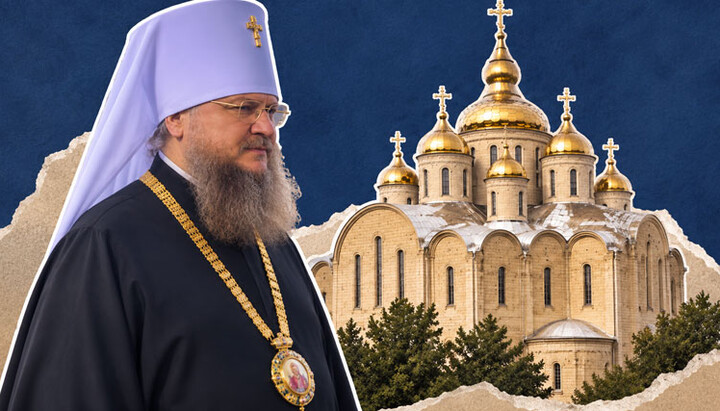
The hierarch whose cathedral in Cherkasy was forcibly seized and who was convicted over a sermon discusses what DESS demands of the UOC in public and what it demands on paper.
On October 17, Viktor Yelensky, head of the State Service of Ukraine for Ethnopolitics and Freedom of Conscience (DESS), said on the Vinnytsia-based DNA ["DNK" originally] podcast that he was willing to speak personally with the clergy of the Ukrainian Orthodox Church’s eparchies. Metropolitan Luke of Zaporizhzhia took him at his word, and on November 13, such a meeting took place – nearly two hours of questions and answers, with more than 40 priests in attendance. After the meeting, however, Metropolitan Luke concluded that “no one intends to engage in a genuine, honest dialogue” with the Church.
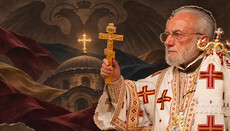
We asked Metropolitan Theodosiy of Cherkasy and Kaniv to analyze both appearances and identify the issues that remained unaddressed. The hierarch has a personal stake in this matter. In October 2024, his cathedral in Cherkasy was forcibly seized; in February 2026, a court convicted him over remarks made in a sermon; and on two occasions this year, he addressed the UN Human Rights Council on the situation facing the Church. We asked him what the state demands verbally and what it demands in writing, whether a government official has the authority to judge matters of heresy, and what needs to change for the conflict between the authorities and the Church to become a dialogue.
What the DNA podcast and the Zaporizhzhia meeting revealed
– Your Eminence, Metropolitan Luke invited the head of DESS, who came and spent nearly two hours answering questions from the clergy. Yet three days later, Metropolitan Luke wrote that “no one intends to engage in a genuine, honest dialogue” with the Church. Was there any point in holding this meeting?
– It did serve a certain purpose. Metropolitan Luke gave the official an opportunity to speak directly with priests in an open setting, and everyone can now see what came of it. No one can now claim that UOC hierarchs are unwilling to engage in an open dialogue with the state.
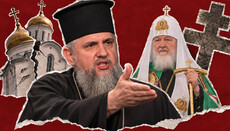
At the same time, we must understand that a meeting and a dialogue are not the same thing. Dialogue begins when each side acknowledges that it may be wrong and is willing to reconsider its position. Yet Viktor Yelensky showed no such willingness, either on the DNA podcast in Vinnytsia or in Zaporizhzhia. Whatever the subject, the official ultimately steered the discussion back to Russia – shelling, violations in territories outside government control, the person of Patriarch Kirill, and so on.
The situation reminded me of an old joke about a veterinary student who had prepared for his exam by studying just one topic – fleas. Whatever question he was asked, he found a way to bring it back to fleas. When asked about a dog’s anatomy, he immediately replied that dogs have fur, and fur, as everyone knows, is home to fleas. From there, he could proceed with the subject he knew.
The meeting in Zaporizhzhia followed exactly the same pattern. It was precisely because of this tactic employed by the head of DESS that the clergy received no clear or specific answers to many of the questions that concern us all.
– Yelensky opened the meeting by offering his condolences. According to his figures, 25 UOC clergy members have been killed in the war, and 420 of the 807 religious buildings damaged belong to the UOC. How would you comment on this?
– Well, what can one say? We are facing a paradox: the supposedly “collaborationist” Church has suffered more from the war than any other. Not the OCU, not the Ukrainian Greek Catholic Church, not the Protestants, but the Ukrainian Orthodox Church. And if our Church has suffered greater losses in this war than any other denomination, why are its priests denied mobilization exemptions? Why are our clergy barred from serving as chaplains? Why are UOC communities being evicted from churches that have survived the fighting? You cannot lay flowers on a priest’s grave and offer condolences to the UOC with one hand while signing a document stripping its communities of their churches with the other.
What the state actually demands
– Yelensky’s central message in Zaporizhzhia was that the state wants nothing from the UOC “except for it to withdraw from the Russian Orthodox Church.” Yet in the DESS statement concerning the Zaporizhzhia Eparchy, the first unmet requirement was a decision to withdraw not from the ROC but from the Kyiv Metropolia of the UOC. What are the authorities actually demanding?
– In my personal view, DESS has been tasked, among other things, with dismantling the organizational structure of the Ukrainian Orthodox Church.
Consider what is happening. In public, we are told: publicly withdraw from the Russian Church, and nothing more will be required of you. Yet the agency’s October 14 statement concerning the Zaporizhzhia Eparchy says something different: the eparchy failed to submit a decision to withdraw from the structure of the Kyiv Metropolia. In his interview with DNA in Vinnytsia, Mr. Yelensky explained how he envisioned this: the eparchy leaves the Kyiv Metropolia “and goes on existing on its own.” The same condition has reportedly been imposed on the Pochaiv Lavra.
But demanding that an eparchy withdraw from the Kyiv Metropolia constitutes interference in the canonical order of the Church. In ecclesiastical language, there is a precise term for such an act – schism. Through its written directives, DESS is effectively proposing that the UOC be fragmented into individual eparchies, each left to “exist on its own.”
– Yelensky keeps saying that it is simple: “There is no need to sign in blood, no need to appeal to Kirill.” It is enough to say, “We are leaving.” If that is done, he promises to withdraw the lawsuit. Why not comply with his demand and put the matter to rest?
–
Once again, we see this double game: one thing is said in public, another is done in practice. Even if we imagine that some Church hierarch with, shall we say, a diminished awareness of canonical obligations takes such a step and publicly signs a statement – “not in blood” – do you think that would put an end to the matter for him? Of course not.
Notice that even in Zaporizhzhia, it was said that the directive issued to the Metropolia contained four points. But I have read that directive, and it contains more requirements:
- a decision to withdraw from the structure of the Russian Church;
- a decision declaring all provisions of its Statute no longer applicable to us; the withdrawal of our clergy and monastics from its governing bodies;
- the invalidation of its decisions concerning our eparchies and appointments;
- a public declaration by the Primate of the UOC rejecting membership in the governing bodies of the ROC;
- a statement by the Primate terminating his authority within those bodies and severing ties;
- each decision must be communicated to the communities, and a report confirming this must be submitted.
This is no longer a matter of providing a simple document – it is an entire program.
Furthermore, in 2023, the same official criticized our hierarchs for never having written to Moscow asking to be removed from its governing bodies. Now he says there is no need to contact Moscow. What will he say a year from now?
Let us suppose that tomorrow this hypothetical, canonically unaware UOC hierarch utters the required words renouncing the Mother Church. Yet the criteria by which DESS considers him personally affiliated with Moscow are derived from the Statute of the Russian Orthodox Church itself. His name remains in that document, and under the letter of the law, the grounds for claims against him will remain as well. Nor would such a renunciation invalidate the DESS study that declares him and his eparchy “affiliated” with the Russian Orthodox Church on the basis of those same ROC documents. It is precisely this DESS “study” that forms the basis of lawsuits against our eparchies.
The hierarchs are being asked simply to take Mr. Yelensky at his word that declarations of renunciation by the UOC leadership will be sufficient for him.
For some reason, however, I suspect that once such a hypothetical UOC hierarch makes these declarations, it will simply become much easier to lead him by the bridle into the OCU, together with his eparchy. His flock, incidentally, will scatter along the way, abandoning this unfortunate bishop. I think many people understand this perfectly well. That is why we see little enthusiasm for the official’s proposal, even among hierarchs who are “open to compromise.”
– Suppose an eparchy does exactly what Yelensky says: it withdraws from the Kyiv Metropolia and “exists on its own.” What happens to it the following day?
–
It ceases to be an eparchy of the Orthodox Church and becomes a religious organization outside the Church. When asked about its future status, Mr. Yelensky replied: whether you want autocephaly or autonomy, “that is none of the state’s business.” It is a very convenient answer, but it amounts to encouraging people to step overboard while DESS remains unconcerned about whether they can swim.
Let me remind you that a bishop receives his grace-filled authority and power not from a government registrar. He is ordained by the Church, and through unity with his Local Church, he remains in communion with all the Local Churches and within the One Orthodox Church of Christ. A bishop who leaves his Church places himself outside communion under the canons. So do his priests. His parishioners receive Communion from someone who is recognized by no one in the Orthodox world. At the Zaporizhzhia meeting, this was stated very precisely: the Apostolic Canons grant a ruling bishop no such right.
What happens next? Such an “independent” eparchy will have only two options – canonical and spiritual isolation or a move into the OCU, which we have been urged to join since 2018. Let me remind you that Romanian-speaking UOC communities wishing to come under the Romanian Patriarchate were offered precisely this option – to join the OCU.
Yes, we hear assurances that “no one is forcing us anywhere,” yet we can clearly see the road down which we are supposedly not being forced.
The limits of state authority
– At the meeting, the head of DESS said that the Patriarch of Moscow “preaches heresy” and violates dogmas and canons, and that the ROC, in his opinion, “has ceased to be a religious organization.” Does an official of a secular state have the authority to make such judgments?
– As a private individual, he is entitled to think and say whatever he wishes. Mr. Yelensky is a scholar of religion, and he may have his own views. He himself made a point of saying that he was not imposing his opinion on anyone.
But in Zaporizhzhia, he was not acting as a private individual. He came as the head of an agency that declares communities “affiliated,” files lawsuits seeking their dissolution, and approves criteria determining which priests are granted exemptions that may spare them from being killed on the front lines and which are not. When someone in that position tells the clergy that the Patriarch “preaches heresy,” it is no longer a private opinion. It is the position of the authorities, expressed by someone who exercises that authority.
Incidentally, did you notice how often, both in Vinnytsia and in Zaporizhzhia, the head of DESS verbally identified himself with the state and presented his agency’s discriminatory demands on the Church as the position of the state itself, almost as though he were acting “in the name of Ukraine”?
Many officials behave this way today, and not only in religious matters. Does such conduct enhance the authority of the government or public trust in it among citizens who suffer from the arbitrary actions and impunity of these officials? I think quite the opposite. Could this eventually have negative social consequences? Absolutely. But that is a subject for another discussion.
As for the Patriarch’s alleged “heresy,” heresy in the Church is determined by a Church council, not a government agency. Over two thousand years, the Church has paid a heavy price to ensure that secular authorities do not decide who is Orthodox and who is not quite Orthodox enough. If one of the Primates teaches incorrectly, it is for the Church to judge the matter – conciliarity requires hearing all sides and examining the issue as prescribed by the canons.
A secular state, meanwhile, is prohibited from doing so by its own Constitution. Article 35 of our Constitution states that the Church is separate from the state. The European Court of Human Rights says the same: the state must remain neutral and has no authority to determine whose faith is correct. As I recently told Church journalists, “Politics is politics, and canon law is canon law.” When an official begins talking about heresy, he himself demonstrates that his dispute with us is not legal but religious. And under the Constitution, the state has no right to engage in a religious dispute.
– On the DNA podcast, Yelensky argued that the law imposes no burden on a believer’s conscience because “subordination to the Moscow Patriarchate is not part of Orthodox doctrine.” Is that not true?
– The word “Moscow” does not appear in the Creed, indeed. Neither do the words “Constantinople,” “Kyiv,” or “Rome.” But it does not follow that the state can move eparchies from one Church to another as though rearranging furniture.
Our doctrine teaches us that the Church is One, Holy, Catholic, and Apostolic. The canons – the ecclesiastical laws and rules established by the Apostles and the Ecumenical Councils – explain how this one Church is organized: who ordains whom, who is accountable to whom, and how the status of an ecclesiastical territory may be changed. This is not merely an administrative superstructure that can be dismantled without consequences. For an Orthodox Christian, it is part of living according to the faith. A priest who arbitrarily leaves his bishop is subject to deposition under the canons. So is a bishop who leaves his Local Church.
Notice the question that was asked. The host asked where the boundary lies beyond which the state cannot regulate canonical norms. He received no answer. Instead, the head of the agency took it upon himself to decide what is essential to our faith and what is not, and on that basis concluded that our conscience was not being burdened.
Allow us to judge matters of our own conscience.
For some reason, DESS does not tell Jews what place the Sabbath should occupy in their faith, Muslims how they should observe their fast, or Greek Catholics how they should regard the pope. Believers themselves know what is sacred to them. Freedom of conscience means precisely that this knowledge belongs to the individual and the Church, not to a government official.
– In your view, where is the line between what the state may legitimately demand of the Church and what it may not?
– That line was drawn not by us but by the Constitution of Ukraine and our country’s international obligations in the field of human rights and religious freedom. The state may demand of a religious organization what it demands of everyone else: compliance with the law, registration of its statutes – or, if it so chooses, the exercise of its religious activities without registration – and refraining from incitement to violence.
But there are things the state has no right to demand. It has no authority to decide with whom the Church maintains communion in prayer. It has no authority to judge matters of heresy. It has no authority to dictate the Church’s future. Ukraine’s law on freedom of conscience explicitly states that the state does not interfere in the activities of religious organizations conducted within the framework of the law. If those legal boundaries have been violated, show us exactly where.
There is another point. We are told that all this is being done in the interests of security. Yet Article 35 of the Constitution lists the grounds on which freedom of religion may be restricted: public order, public health and morals, and the rights and freedoms of others. National security is not on that list. Nor is it included in the International Covenant on Civil and Political Rights, as the UN Human Rights Committee has pointed out.
– At the end of the DNA podcast, Yelensky said that Ukraine “will definitely have a single Local Orthodox Church” and described nonrecognition of autocephaly as an indirect denial of Ukrainian statehood. In Zaporizhzhia, he justified his opposition to the transfer of Romanian-speaking communities to the Romanian Patriarchate by invoking the “principle of territoriality.” How do you assess this?
– Once again, we see the same inconsistency we discussed at the beginning. First, we are told that the state does not care whether we join the OCU or not, whether we become autocephalous or not – that it is our own business. Then the same person identifies the desired outcome: a single Local Church. He also claims that nonrecognition of the OCU amounts to indirect nonrecognition of Ukrainian statehood. And he himself acknowledges that constitutional law experts will remind him that Ukraine is a secular state. We will remind him of that, too.
If nonrecognition of autocephaly means nonrecognition of the state, then most Local Churches do not recognize Ukraine, including the Churches of countries currently providing Ukraine with military assistance – Romania, Poland, and Bulgaria. Where is the logic? The new structure has been recognized by only four Churches, and even within those Churches, recognition was not unanimous. The conclusion is absurd, as was pointed out in Zaporizhzhia.
As for territoriality, three Romanian-speaking UOC communities requested registration under the Romanian Patriarchate. It would seem that these people did exactly what DESS has been demanding of us – they decided to leave the “Moscow Church.” Yet they have been denied registration since 2024 because this supposedly “violates the principle of territoriality.” Let us repeat the question put to the head of the agency in Zaporizhzhia: in which Ukrainian law is this principle enshrined? None. It is a canonical argument, yet for some reason it is being invoked by an agency of a secular state – and against people who, by DESS’s own reasoning, have “broken with Moscow.”
So there you have the answer to what they really want from us. It is not even a break with the Russian Church. They want everyone to end up in a single structure – the OCU.
Double standards and the wider Orthodox context
– On November 5, Patriarch Theophilos of Jerusalem received the Order of Friendship from Putin at the Kremlin and spoke of meeting “our brother, His Holiness Patriarch Kirill of Moscow and All Rus’.” Eight days later, in Zaporizhzhia, Yelensky was asked why no one demands that Orthodox Christians in the Holy Land sever ties with the Patriarch of Jerusalem. He replied that “the situation is somewhat different.” Do you see that difference?
– Yes, this is a good illustration of the double standards employed by our officials. We have been told that communion with the Patriarch of Moscow is unacceptable because he is politically aligned with the Russian authorities. What, then, are we to make of the Primate of the Church of Jerusalem, who calls the Russian president a defender of the Orthodox faith and accepts a high state honor in Moscow? And why does DESS not criticize Epifaniy for continuing to commemorate Patriarch Theophilos during divine services? Or is that somehow different?
And spare us the talk about heresy. You cannot simultaneously claim that the state is concerned solely with legal affiliation and then proceed to explain to the clergy that the Patriarch has departed from Orthodox dogma. The former is a matter of law; the latter is a matter for a Church council.
– Some would argue that Constantinople and Jerusalem are not located in the aggressor state and that the law concerns structural affiliation rather than communion. Does that not change things?
– If structural affiliation is the only issue, then everything Yelensky said about heresy, “jihadism,” and the Church supposedly no longer existing in Russia is irrelevant and was said to no purpose.
That leaves just one question: is the Ukrainian Orthodox Church governed from Moscow or not? And the agency has failed to provide a coherent answer. Let me remind you what its head said in Zaporizhzhia: “I may or may not know the facts as to whether the Moscow Patriarchate exercises control.”
Viktor Yelensky as a private citizen may say such things. Viktor Yelensky as head of DESS has no right to say them. It is his official duty to know.
If, however, this is a matter of moral judgment – that, as we are told, “one cannot remain in communion in prayer with someone who blesses war” – then the same standard must apply to everyone. After all, without exception, the Primates of the Local Orthodox Churches commemorate their brother, His Holiness Patriarch Kirill, during the Liturgy and see no problem with doing so. Patriarch Bartholomew, for example, expressed his support in writing for the Turkish president during the 2018 military operation in Syria. Yet we did not hear of Syria’s numerous Orthodox Christians breaking Eucharistic communion with him at the time.
Indeed, even the head of the OCU commemorated Patriarch Kirill until 2022, explaining that the canons and the Tomos required him to do so. DESS has never reproached any of them for this and does not do so today. Why, then, are we subjected to such intense scrutiny?
In other words, you cannot alternate between legal and moral arguments depending on which is more convenient. Choose one, and we will respond to it.
– Yelensky says that the law discriminates against no one: it is written about everyone whose center is located in the aggressor state. Formally, that is so. Where, then, is the inequality?
– Formally, the law is general. But it is no secret for whose sake it was written: the people's deputies who voted for it openly named only our Church. It is a rare case when a norm is created for a single addressee and then declared a rule for all.
But there is an inequality that is visible even without a lawyer. A priest of any other confession can obtain a deferment from mobilization and remain with his flock, while ours cannot. A community of any other confession can use a municipal building, while ours has its agreement terminated sixty days after a decision of the SESS. Romanian communities, as we have already said, are not allowed to register in the Church that they themselves have chosen. The UN Human Rights Office writes about this from report to report.
In general, equality before the law is tested simply. Put any other religious organization of Ukraine in our place and ask yourself whether such a thing would be possible.
I will give the simplest example. In 2025, in Israel, the wedding took place of the daughter of the Chief Rabbi of the Russian Federation, Berel Lazar, and the son of the Rabbi of Odessa, Shalom Wolff. A wonderful event, the creation of a new family. But it is known that Lazar can hardly be called a critic of the war in Ukraine; his rhetoric toward the Russian state authorities is rather complimentary. Did we hear any demands from the SESS that Ukrainian Jews condemn the Chief Rabbi of the Russian Federation? Perhaps there were SBU (Security Service of Ukraine) inspections at the synagogue in Odessa? I have not heard of anything like that, and I think you have not either.
Such a thing cannot even be imagined. And so it should be: everyone understands that there is no connection with the Russian special services there. These are simply religious figures, citizens of their own countries. Why, then, does the state reason quite differently in relation to the UOC (Ukrainian Orthodox Church)?
The UOC's Claims Against the State and the SESS
– Yelensky claims that the transfers of communities to the OCU are "in the overwhelming majority" voluntary, and admits only "several cases" of seizures and violence. You were in Cherkasy on October 17, 2024. What would you say to him?
– I would say that our case is one of those "several cases." On that day our cathedral in Cherkasy was taken by force. According to official reports alone, 26 people were injured; in reality there were more. I was taken to the hospital with a concussion after one of the OCU "believers" struck me on the head with a club. Upon examination, the doctors also diagnosed damage to my spine. As the specialists noted afterwards, the monastic klobuk saved me.
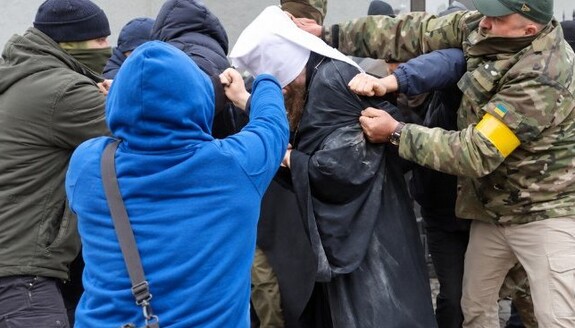
One of our parishioners was shot at right in the church; her whole face was covered in blood. One of the Cherkasy priests had six teeth knocked out at once. Fractures, bruises and hematomas hardly need mentioning.
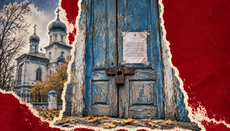
We no longer serve in the cathedral that our parishioners built and in which they prayed. A year earlier, nuns were driven out of the Nativity of the Theotokos Monastery in Cherkasy. There was a similar brawl there. Both cases are described in the UN human rights reports, which also state that the police did none of what they were obliged to do.

I know that in the SESCF statistics all of this is called a "change of subordination."
Yelensky said at a meeting in Zaporizhzhia that 1,900 parishes had transferred to the OCU in this way. I cannot claim that everywhere it was as it was in Cherkasy. Perhaps somewhere a community truly decided to leave the UOC, and that is its right under current legislation. But the statistics count "protocols" (often without seals), not people. They do not know who voted: parishioners, or village residents who never go to church, or even complete outsiders, "invited members of the community." They do not know where the priest and his flock are afterwards: in a shed, in a house, or nowhere at all.
That is why a fair question arises. Let the service say how many cases of violence in churches have been investigated and how many people have been punished for it. If there are even ten such cases, I will be the first to say that the state at least sometimes protects us.
But so far – even for words in a sermon about what actually happened in Cherkasy, I was convicted under Article 161 of the Criminal Code of Ukraine. And I know nothing about anyone being convicted for the beating and persecution of people in Cherkasy.
– Regarding mobilization, Yelensky said: "A priest has no right to take up arms as long as he is a priest." And he added that he is not to blame for the criteria for deferment. What is happening with your clergy?
– What is happening is what should not happen in a country that respects the faith of its citizens.
Mr. Yelensky spoke correctly: according to the canons, a priest who has shed blood can no longer serve at the altar. He knows this, and we know this.
Now the facts. The criteria by which a religious organization is recognized as critically important and given the right to defer its clergy were approved by an order of the SESCF itself. Two of them knowingly exclude us: the organization must not be listed in the register of "affiliated" organizations, which is maintained by the same SESCF, and its charter must comply with the renaming law. As a result, about six and a half thousand clergy of various confessions have been granted deferment. The organizations (parishes, monasteries) of our Church, according to the head of the service himself, cannot obtain this status.
Therefore, the words "I am not to blame for this" cannot be accepted in any way. The order was signed by Mr. Elensky himself.
I spoke about this in September at the UN Human Rights Council.
Our priests are being mobilized, for the most part by force. Some have already been killed, some have gone missing. A man who administered Communion yesterday receives a machine gun today, and after that he can no longer return to the altar. This is not simply a draft into the army; it is, in essence, a defrocking carried out by someone else's hands.
We are not asking for privileges for our clergy. We demand equality. If the state, in the person of the head of the SESS, acknowledges that a priest must not bear arms, let it acknowledge this for all priests. Or let it honestly say that ours are not priests in its eyes.
– Elensky claims that criminal cases have been opened against "13, at most 14" hierarchs, and does not understand "what dozens are being talked about." But, according to the SBU, 23 hierarchs were suspects, and in total 40 UOC clerics have been convicted. Whose figures are closer to the truth?
– As far as I know from the SBU's public reports, 208 proceedings have been opened since the beginning of the war, 78 people have received notices of suspicion, and 40 have been convicted. So it was not we who came up with the dozens.
But the main thing is to look at what people are being tried for. I can speak of my own cases – I have five of them. In one of them I have already been convicted under Article 161 of the Criminal Code, for "incitement of religious hatred." The grounds were words spoken in a sermon before nuns who had been expelled from a monastery. I consider this case to be completely fabricated; the verdict is currently being appealed in the Cassation Criminal Court within the Supreme Court. The other four proceedings repeat it almost one to one: the same "victims" – PCU chaplains – the same "witnesses" and experts. I think that the cases of other UOC clergy and laity, against whom criminal proceedings are ongoing or have already been completed, were stitched together from the same pattern.
But even if we suppose that all of us, the 200 believers prosecuted by the current authorities, are in fact dangerous criminals and enemies of the people, what does the whole UOC have to do with it? Is it because of such a small handful of "criminals" that the state is ready to dismantle the largest religious confession in the country? And what about the law? Where is the Constitution? "On pause"?
It is obvious to any reasonable person that the collective accusation of the country's leading confession of a common "crime" is a complete legal nonsense. It is nothing other than the imposition of collective responsibility for some unproven crime on millions of entirely innocent citizens of the country. It is a violation of the rights and freedoms of millions of believers of the Ukrainian Orthodox Church, placing them outside the framework of the law and the Constitution. This should not happen in a state governed by the rule of law.
Guilt can only be personal. That is the foundation of law. The UN Human Rights Office calls this the absence of an individual assessment. Put simply, it is called collective responsibility and is a criminal violation of human rights.
The voice of international institutions
– Elensky explains the criticism of Law 3894-IX, which is popularly called the law "banning the UOC," as the work of law firms and ill-wishers. You spoke at the UN. Are you being heard?
– Yes, they do hear us. The question is whether Kyiv hears those who hear us. I have spoken repeatedly this year at the UN Human Rights Council, twice in March and twice in September. But it is not only a matter of our statements. The UN Office of the High Commissioner for Human Rights has its own mission in Ukraine. It has been working here since 2014, and it is hard to suspect it of any political bias. It is this very mission that writes in its reports that the law refers to national security, which is not among the permissible grounds for restricting freedom of religion. It writes that the dissolution of a religious organization is an extreme measure, the necessity of which Ukraine has not substantiated, and that communities risk being held responsible for the conduct of individuals. In October 2025, a large group of experts – UN special rapporteurs – issued a separate statement on the violation of freedom of conscience with regard to the UOC in Ukraine.
I would stress that UN reports are not written by advocates. This means that when an official speaks of the critics of the law as mercenaries, or as "useful idiots," one wants to understand: does he count the Office of the UN High Commissioner for Human Rights among those categories?
But to be heard is not yet to be protected: while we are being talked about in Geneva and in Washington, nothing is changing in Kyiv. I said this at the UN Human Rights Council session in September: it is time to move from documenting violations to genuinely protecting people.
Therefore, as regards the anti-Church law 3894-IX, there is a simple proposal to the state. If the law is so flawless, let us send it to the Venice Commission. What is there to fear?
On what conditions an honest dialogue is possible
– Metropolitan Luke concluded that there is no real dialogue and that compromises are futile. Do you agree? On what conditions would you sit down at the table with Zelensky?
– Yes, there is no dialogue. But I think we should not abandon attempts to establish one.
If the current authorities truly develop a desire for real dialogue with the UOC, rather than an imperative monologue, they could begin it with a few simple steps.
- Send law 3894 to the Venice Commission for assessment, and then accept its conclusion, whatever it may be.
- Investigate every case of violence in a church and punish the perpetrators, whoever they may be.
- Leave to the Church what belongs to her: the canons, communion, judgment in matters of faith. And our Church, I think, is ready to show the state everything that interests it in wartime: who governs us, where the money comes from, who makes the decisions.
This is a description of how a conversation, a dialogue between the Church and the state authorities, could differ from a one-sided "interrogation."
– What would you say to a priest who is exhausted and thinks: perhaps it would be easier to sign what is being asked? And what would you say to Zelensky himself?
– It is very, very hard for a priest today. He has a family that he must protect and support, he has a church into which he has put his life and which can be taken away at any moment. He can be seized and sent to the front.
But this is the pastor's cross. A sacrificial cross that every priest voluntarily took upon himself at his ordination. True, few among the young clergy could have supposed that what is happening now would fall to their lot. But such a possibility is built into the pastoral calling by default, and in the seminaries future priests should have been told and warned about it. And now it has happened.
In the 1920s, during the time of the Renovationist schism, there was a very similar situation. And some priests also broke. But we know how it ultimately ended, both for them and for their flock. God always leaves us the possibility of not betraying Him. Sometimes it is enough simply to remain silent. But never to agree with evil. And then, sooner or later, on earth or in Heaven, the pastor will receive a reward for worthily bearing his sacrificial cross. Christ told us: "But he that endureth to the end shall be saved."
And to Mr. Yelensky, with whom we are personally acquainted, and with whom in former times we repeatedly had warm conversations at diplomatic receptions in the embassies of various countries in Kyiv, I would say the following today.
Viktor Yevgenyevich, you know the history of the Church better than many officials. You know that not a single schism was ever healed by an order from above, and not a single Church began to serve ideas alien to it because it was forced to do so. You rightly said in Zaporizhzhia that our Church has suffered more than anyone else from this war. This is true. So do not add new wounds to her wounds. We ask for little: let us, despite our common tragedy, continue to live in our country in accordance with its Constitution, its laws, and the fundamental principles of human rights and religious freedom.
Let us render unto Caesar the things that are Caesar's, and unto God the things that are God's.