Poroshenko doubts UOC canonicity: Where is their Tomos? Stalin signed?
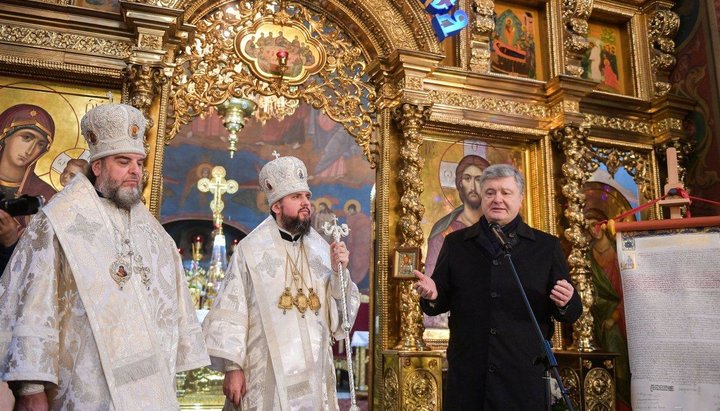
Petro Poroshenko in Vinnitsa
In Ukraine, the OCU is now canonical, and all the rest should prove their canonicity, said President Petro Poroshenko, speaking in Vinnitsa during his Tomos-tour on January 13.
“No one has the right to close the doors of the God’s temple for Ukrainians, to determine who is canonical and who is non-canonical ... And now our Church is canonical, and let them now get on with it, show Tomos ... And where is their tomos? Signed by Stalin? This is where it all began. Truth – you can't hide it,” the press service of the Presidential Administration cites Poroshenko.
The Head of State also stressed that “a Ukrainian should not ask whose patriarchate the Church is, because they are going to God. And the whole Church should be one.”
As reported, on January 13, Petro Poroshenko and the OCU head Epiphany came with Tomos to the Saviour-Transfiguration Cathedral of Vinnitsa, where they were met by Metropolitan Simeon (Shostatsky).
Read also
SBU told Phanar many UOC bishops would join OCU in 2018, report says
According to a Phanar representative’s account, Ukrainian security services told the Constantinople delegation that many UOC representatives were prepared to attend the OCU’s “Unification Council.” In the end, only two did.
Catholic cardinal visits Ukrainian POWs during trip to Russia
During three days of consultations in Moscow, Cardinal Matteo Zuppi discussed prospects for ending the war in Ukraine.
Ukrainians help restore Serbian Orthodox church in Paris
Orthodox Ukrainians have become regular parishioners of St. Sava Church in Paris and have taken part in its restoration.
Bulgarian Church clergy and laity oppose Phanar head’s visit
More than 2,000 clergy and laity have called for the Ecumenical Patriarch’s visit to be canceled, citing disagreement with his actions and concerns that the visit could legitimize schism.
Unknown intruders break down doors at two UOC churches in Sloviansk
Archbishop Paisiy said OCU activists are suspected of breaking into the churches in Sloviansk, and police have launched an investigation.
Sviatohirsk Lavra prays for murdered monk on 40th day after death
The brethren of the Sviatohirsk Lavra held a memorial service for murdered Monk Varsonofiy, calling on the faithful to pray for the newly departed monk.