St. Catherine’s Cathedral gets under fire in Kherson
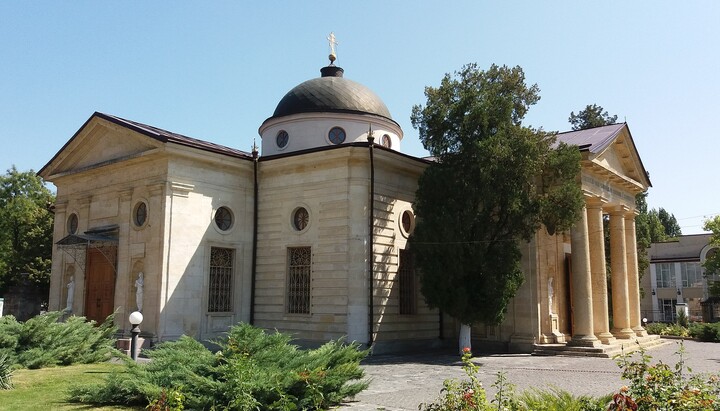
St. Catherine's Cathedral in Kherson. Photo: Wikipedia
On August 3, St. Catherine's Cathedral of the UOC in Kherson was damaged by shelling, report local Telegram channels. As a result of the Russian strike on the city centre, three passengers of a trolleybus passing by the cathedral were injured. The wounded were hospitalized.
St. Catherine's Cathedral (the Church of Great Martyr Catherine, the Spassky Cathedral) is an Orthodox temple in Kherson, one of the oldest in the city, the burial place of Prince Gregory Potemkin. The cathedral is rich in architectural symbols that reveal the meaning of the founding and the name of Kherson.
As previously reported, the residence of the ruling hierarch of the UOC in Kherson, along with the Church of the Kasperovskaya Icon of the Mother of God, was previously hit by shelling.
Read also
UOC hierarch celebrates Liturgy at relics of St. Nicholas in Bari
Archbishop Ambrose of Zghurivka, UOC clergy serving in Italy, and KDAiS students prayed at the myrrh-streaming relics of St. Nicholas the Wonderworker in Bari.
Police pledge increased security at UOC Kyiv Metropolia court hearing
UOC lawyers secured additional police presence following repeated provocations and direct pressure on the legal team outside the courthouse.
“Imperialist”: OCU cleric explains why Hieromartyr Vladimir is not venerated
An OCU representative claimed that Hieromartyr Vladimir supported “imperial policies” and was killed over money rather than for his faith in Christ.
Metropolitan Nektarios: Global system seeks to create “universal religion”
The Greek hierarch warned of the dangers posed by the global system.
OCU supporters stage provocation at soldier’s funeral in Polytsi
Relatives of the fallen soldier demanded that an OCU cleric conduct the funeral service inside a UOC church.
UOC Chancellor on OCU formation report: pressure, fear and suspicion
Metropolitan Anthony says the atmosphere of December 2018 described in the Phanar cleric’s report was the complete opposite of the love and freedom in which the Holy Spirit works.