In Kherson, archbishop's residence of UOC once again affected by shelling
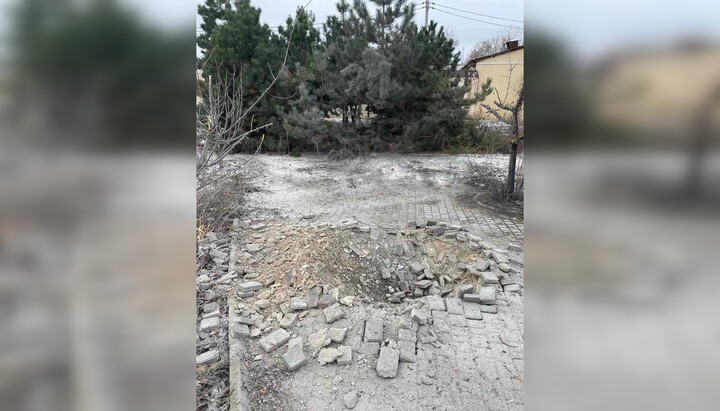
Crater from a Russian shell on the territory of the archbishop's residence in Kherson. Photo: pravoslavie.ks.ua
On January 13, 2024, during the shelling of Kherson, the archbishop's residence of the Kherson Diocese of the Ukrainian Orthodox Church suffered once again, according to the diocesan press service.
Two shells hit the residence area. The explosive wave shattered windows in the historic archbishop's house, which houses the cross-domed church of the Caspian Icon of the Mother of God. In addition, auxiliary premises and the residence fence were damaged.
As reported by the UOJ, the Kherson archbishop's residence had previously come under shelling on the nights of February 20, June 22, the night of July 5, and December 12, 2023.
Read also
UOC volunteers deliver 30 tons of aid from Bukovyna to Sviatohirsk Lavra
Believers of the Chernivtsi and Bukovyna Eparchy of the UOC brought about 30 tons of humanitarian aid for the Sviatohirsk Lavra and residents of nearby villages.
Kyiv Theological Academy professor mobilized
Kyiv Theological Academy lecturer Serhiy Bortnyk, who was detained by the TRC in Kyiv, has been mobilized.
Kherson Eparchy receives another aid shipment from Dnipro
120 food packages, over a ton of vegetables and dairy products have been delivered from Dnipro to Kherson for parishioners and needy residents.
Supreme Court denies UOC open hearing on appeal against DESS
Judges decide to consider UOC appeal against DESS in written proceedings.
Pope holds phone call with Putin
Pope Leo XIV discussed the humanitarian situation in Oleshky with Vladimir Putin.
"Russia will collapse", Dumenko says, predicting OCU recognition after war
The OCU head believes that Churches that have not recognized the OCU now fear Russia, but will grow bolder after Ukraine's victory.