Filaret explains why the head of Phanar is called "Ecumenical Patriarch"
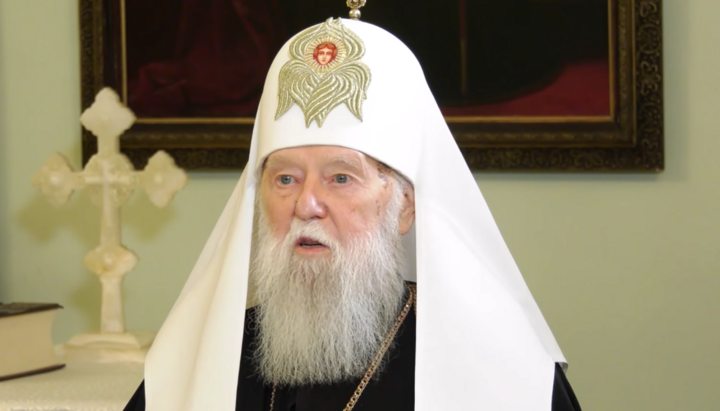
Filaret stated that the title of the "Ecumenical Throne" was self-assigned at the Phanar. Photo: screenshot from the Ukraine World News YouTube channel
Filaret Denisenko, in an interview with Ukraine World News, shared his thoughts on Patriarch Bartholomew and explained why he is called "ecumenical".
Filaret stated that he had met with Bartholomew many times—in Kyiv, Geneva, and Istanbul.
"He is the Ecumenical Patriarch. Why ecumenical? Because the Greeks (have spread—Ed.) all over the earth, across the universe. And since they are in his jursdiction, he calls himself the 'Ecumenical Patriarch'. Although no council gave him the title of the Ecumenical Patriarch. He gave himself that title," Filaret said.
Earlier, the UOJ reported that a letter from the head of the Phanar confirming the anathema of Filaret had been published in the media.
Read also
OCU head: We will never accept claims that we lack holy orders
Dumenko compared the UOC’s conditions for dialogue to Russia’s demands in peace negotiations and declared that the OCU would never acknowledge any problems with the validity of its ordinations.
“Russian propaganda”: Dumenko responds to Vance’s defense of UOC
OCU head Serhiy Dumenko has attributed US Vice President JD Vance’s criticism of the treatment of the UOC to Russian propaganda allegedly spread by paid voices in the United States.
OCU journalist calls activists’ antics at UOC court hearings a circus
OCU religious commentator Tetiana Derkach said that radical activists’ protests at UOC court hearings have nothing to do with Orthodoxy.
“Patriarch” Nikodym establishes UOC-KP eparchy in Philippines
The UOC-KP head has authorized communities in the Philippines to hold “services” according to both the Byzantine and Latin rites.
Dumenko: Even Jews say Ukraine has religious freedom
The OCU head cited unnamed Jewish representatives in claiming that Ukraine enjoys greater religious freedom than Europe and that the UOC faces no persecution.
Dumenko: UOC provokes communities into seizing their own churches
The OCU head claimed that UOC communities allegedly try to “seize their own churches” during jurisdictional transfers, dismissing believers’ resistance as a provocation orchestrated by Moscow.