Court orders UOC Synod to refute words calling Drabinko’s actions “shameful”
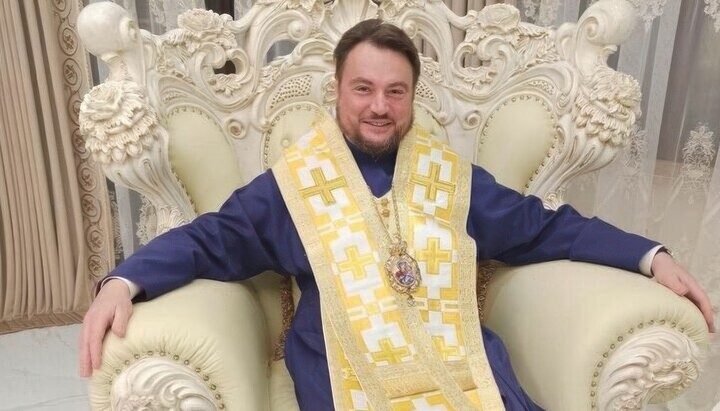
Alexander Drabinko. Photo: Drabinko's Instagram
The Kyiv Metropolia of the Ukrainian Orthodox Church (UOC) has been ordered to retract statements describing the actions of Alexander (Drabinko) as "shameful," which were published in the official “Open Appeal of the Holy Synod of the Ukrainian Orthodox Church to the President of Ukraine Petro Poroshenko” on November 14, 2016. The appeal had criticized the actions of the prosecutor’s office in investigating the final years of Metropolitan Volodymyr (Sabodan). Drabinko himself published the court documents on Facebook.
The appeal included the following passage:
“It is disheartening to witness the public, low-grade speculations regarding his physical condition in the final years of his life, the distortion of his vision for the future of the Church and Ukraine, expressed in his prayers, and the attempts to push personal ambitions under the guise of the late Primate’s last will.
What adds shame to the situation is the fact that the source of this smear campaign is Metropolitan Alexander (Drabinko) of Pereyaslav-Khmelnytskyi and Vyshneve. Without informing the Church authorities of any significant facts he may have known, he chose to spread unsubstantiated gossip and slander through the media. Seeking to avoid legal accountability for well-founded suspicions of complicity in a high-profile crime, this bishop deliberately became a tool of political struggle, disregarding morality and discrediting the ministry of the late Primate.”
The court ruled that the following statements from the appeal were “negative, false, and defamatory toward the honor, dignity, and business reputation” of Drabinko:
- “What adds shame to the situation is the fact that the source of this smear campaign is Metropolitan Alexander (Drabinko) of Pereyaslav-Khmelnytskyi and Vyshneve”;
- “Without informing the Church authorities of any significant facts he may have known, he chose to spread unsubstantiated gossip and slander through the media”;
- “… regarding unfounded suspicions of complicity in a high-profile crime…”
According to the court ruling, the Kyiv Metropolia of the UOC is required to publish the operative part of the decision on the official website of the Synodal Information and Education Department within one month after the ruling takes legal effect. Church institutions are prohibited from editing the text or adding commentary.
The court also ordered the Kyiv Metropolia to reimburse Drabinko for court costs in the amount of 33,931.20 UAH.
The decision may be appealed within 30 days. Until the appeal deadline passes or a potential appeal is resolved, the ruling does not come into force.
Earlier, the UOJ reported that Drabinko justified his transition to the OCU by referring to his formation under Metropolitan Volodymyr.
Read also
SBU told Phanar many UOC bishops would join OCU in 2018, report says
According to a Phanar representative’s account, Ukrainian security services told the Constantinople delegation that many UOC representatives were prepared to attend the OCU’s “Unification Council.” In the end, only two did.
Catholic cardinal visits Ukrainian POWs during trip to Russia
During three days of consultations in Moscow, Cardinal Matteo Zuppi discussed prospects for ending the war in Ukraine.
Ukrainians help restore Serbian Orthodox church in Paris
Orthodox Ukrainians have become regular parishioners of St. Sava Church in Paris and have taken part in its restoration.
Bulgarian Church clergy and laity oppose Phanar head’s visit
More than 2,000 clergy and laity have called for the Ecumenical Patriarch’s visit to be canceled, citing disagreement with his actions and concerns that the visit could legitimize schism.
Unknown intruders break down doors at two UOC churches in Sloviansk
Archbishop Paisiy said OCU activists are suspected of breaking into the churches in Sloviansk, and police have launched an investigation.
Sviatohirsk Lavra prays for murdered monk on 40th day after death
The brethren of the Sviatohirsk Lavra held a memorial service for murdered Monk Varsonofiy, calling on the faithful to pray for the newly departed monk.