EU questions Moldova's European future over Church persecution
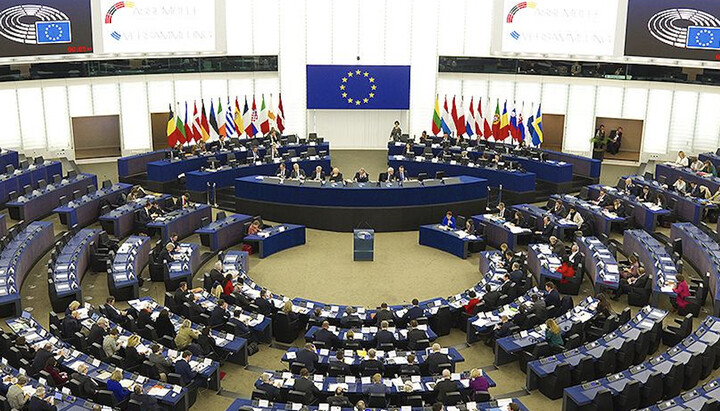
The European Parliament. Photo: mkespana.ru
In the European Union, there is growing concern over violations of religious freedom in Moldova, which may affect its status as a candidate for EU membership, reports the edition "Moldavskie Vedomosti".
According to the resource, the reason for the political scandal was the recent obstruction of Archbishop Markel's pilgrimage to Jerusalem for Easter - without explanation, as well as subsequent reports of repressions against the clergy and believers of the Moldovan Orthodox Church.
According to Moldovan media, in recent months, there have been seizures of icons, inspections of pilgrims, fines for participating in services, and administrative pressure on parishes under the jurisdiction of the MOC, canonically affiliated with the Moscow Patriarchate.
Amid these events, Belgian Member of the European Parliament Barbara Bonte (group "Patriots for Europe") sent an official inquiry to the European Commission questioning whether such a country "aligns with European values at all".
The document emphasizes: the appeal concerns the attitude of the Moldovan authorities towards the clergy and parishioners affiliated with the Russian Orthodox Church. These actions raise serious doubts about Moldova's commitment to basic European principles and standards in the field of human rights.
The basis for the inquiry was a report by the Lithuanian human rights organization Žmogaus teisių apsauga ("Human Rights Protection"), presented during the 59th session of the UN Human Rights Council in Geneva.
The document speaks of the deteriorating situation of Orthodox Christians in the Republic of Moldova, which is " a result of the discriminatory policies now being pursued by the Moldovan authorities against the Orthodox Church of the Republic of Moldova, which is canonically affiliated with the Russian Orthodox Church".
Human rights defenders emphasized that "international law and the national legislation of countries that have chosen a democratic path and claim to uphold
human rights on their territories do not permit bans on organizational or canonical ties between religious organizations and their central bodies".
"From the perspective of law and democracy, it is neither possible nor lawful to prohibit or restrict a Church’s activities solely based on its affiliation with a particular country, even if that country is the Russian Federation," the document says.
Human rights defenders also called on states "to find the resolve to refrain from persecuting or discriminating against believers whose historical religious and canonical ties with their centers are an integral part of their religious freedom and the right to freedom of belief".
The document also highlights that "no matter how much some politicians in countries like Ukraine, Estonia, or the Republic of Moldova may wish to favor certain religious denominations for political convenience and restrict the rights of others – unreasonably accusing them of being “pro-Moscow” and using hate-filled rhetoric to boost their own political ratings – such policies must be abandoned in favor of upholding human rights regardless of political trends or electoral goals.".
"If politicians continue down a path of legal erosion, selectively defending the rights of certain religious, national, or ethnic groups, this will only deepen societal division, confrontation, and hatred. Worse still, it will create a perception that crimes such as church raids, assaults on believers, and unchecked violence against those labeled 'pro-Russian' or 'enemies of the people' by state-backed political propaganda are acceptable and even justified," the human rights defenders believe.
They also emphasized that "the political authorities must distinguish between personal legal responsibility – which should apply only to individuals found guilty by an independent court – and political criticism, which must not result in discrimination or be supported by state institutions at the expense of the legal rights and interests of protected religious groups".
"Attempts to impose collective responsibility on all believers for the statements or actions of religious leaders in other countries, or to treat canonical or organizational affiliation with the Russian Orthodox Church as grounds for prosecution or denial of rights, clearly constitute discrimination and
violations of human rights," the document concludes.
Earlier, the UOJ wrote that the UN reported that radicals attack UOC believers and seize their temples.
Read also
Met. Meletiy consecrates house of worship for UOC community in Dankivtsi
Members of the persecuted UOC Intercession parish in Dankivtsi have converted a house into a place for communal prayer and worship services.
OCU eparchy sells church center site to developer for housing
The OCU’s Volyn Eparchy sold land intended for a spiritual center to a private developer planning to build townhouses and residential buildings.
SBU names UOC priest’s wife a suspect in Cherkasy region
The SBU accused Matushka Kateryna Prykotenko of “spreading enemy propaganda” through correspondence with parishioners.
UGCC cleric calls Russian Orthodox literature dangerous for clergy
While examining the causes of divisions within the UGCC, Yustyn Boiko concluded that Russian Orthodox literature had influenced Greek Catholic clergy.
UOC will play major role in achieving peace, says Vadym Novynskyi
UOC Protodeacon Vadym Novynskyi believes the Church will help bring about reconciliation within Ukrainian society after the war ends.
Catholic media outraged by forcible conscription of Uniate cleric
The Vatican’s Apostolic Nunciature has demanded the return of a forcibly mobilized Greek Catholic cleric.