How faith shaped our culture
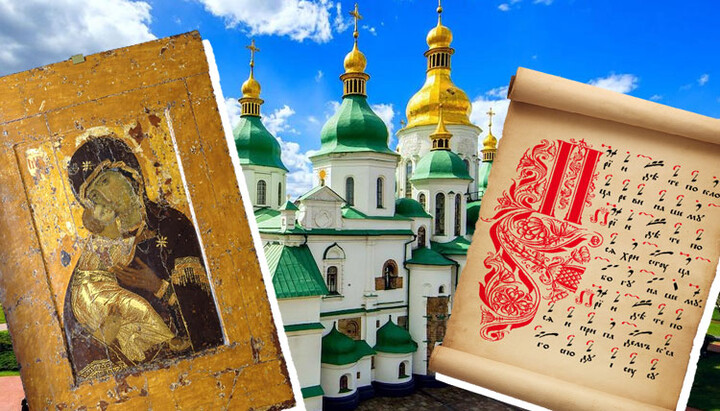
Orthodox art is a system of the universe. Photo: UOJ
"O bright and beautifully adorned is our land! And you are wondrous with many beauties…”
From a 13th-century tale
Since ancient times, religion has accompanied culture, serving as its core element. Its moral potential finds expression in the realm of aesthetics, in the world of art. Orthodox art is an entire system of the universe, filled with profound meaning and significance for people of any era.
The Birth of Christian Art in Rus
At the end of the 10th century, Kyivan Rus embraced Christianity. By the decree of Prince Volodymyr, the first stone and wooden churches were erected.
The Church sought to affirm the new faith among the people, while the princes strove to strengthen their “God-given authority.”
Skilled craftsmen painted icons and covered church walls with frescoes and mosaics. Chronicles have preserved for us the name of the monk-painter St. Alipiy of the Kyiv Caves Lavra, who was “most skilled in painting icons” and was glorified as a saint for his artistry.
Sadly, the earliest monuments of Old Rus’ culture have not survived. Fires, internecine wars, and centuries of Tatar-Mongol rule inflicted enormous damage on the country and its heritage. Excavations of the foundation of the majestic Church of the Tithes of the Dormition of the Mother of God have yielded only a few fragments of frescoes.
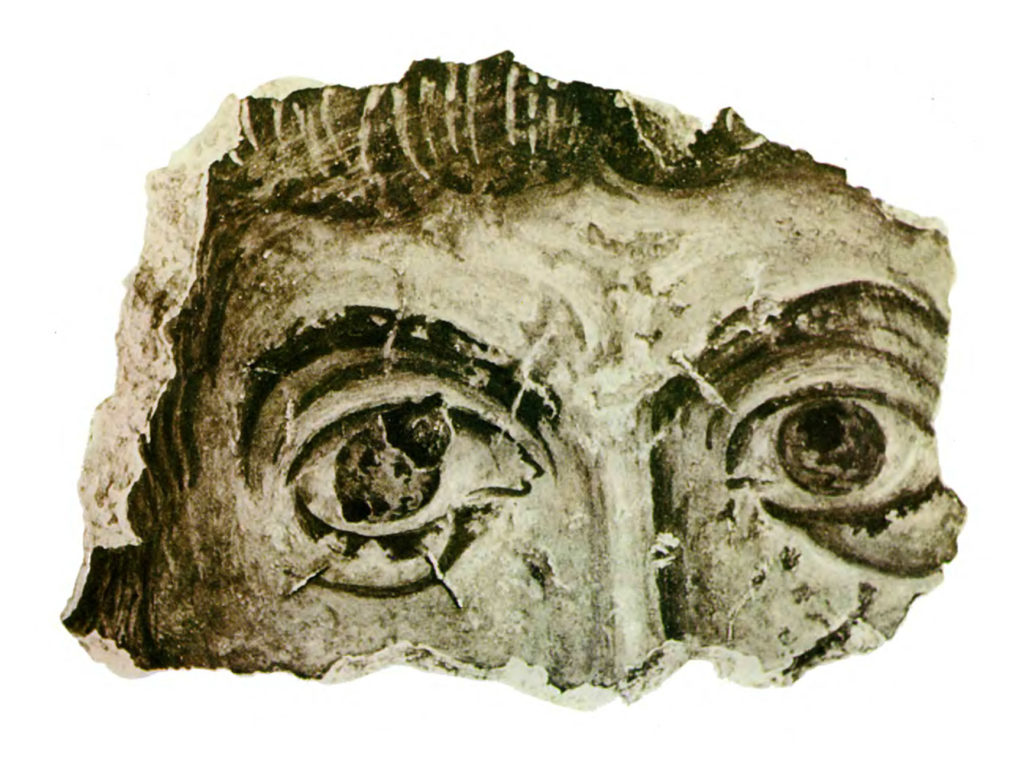
And yet much has been preserved – the cathedrals of Kyiv, Novgorod, and Chernihiv, precious mosaics and frescoes, reliefs, and, of course, icons. In the canonical images of Christ, the Mother of God, and the saints, the painters and architects of Old Rus created an artistic chronicle of their time.
St. Sophia of Kyiv – the Heart of the Metropolis
In exploring the art of Old Rus, we enter a world of powerful emotions and lofty ideas, where the spiritual element clearly prevails over the material. This world opens before us in the architecture, frescoes, and mosaics of St. Sophia Cathedral in Kyiv.
The cathedral was built during the great construction campaigns of Yaroslav the Wise and became the architectural core around which the center of the spiritual and cultural life of ancient Kyiv was grouped.
Perched high on the banks of the Dnipro, gleaming with its domes, the cathedral dominated the surrounding landscape.
Its interior was no less magnificent. Upon entering, the eye was drawn to the altar and the space beneath the central dome, where the mosaic image of Christ Pantocrator was placed. In the austere faces of the saints, in their large dark eyes, one senses an intense inner life and a deep conviction in the truth of their faith.
Above the altar rises the majestic figure of the Mother of God Oranta, whom the people have long called the “Indestructible Wall.”
The people believed: as long as the Oranta stands – Kyiv will stand.
To achieve such emotional power, the artists used a rich palette – the mosaics of St. Sophia in Kyiv contain about 130 shades of various colors.
The Icon – a “Window into the Higher World”
Icons became widespread in Kyivan Rus. Among the oldest, the “Vladimir” Mother of God of Byzantine origin holds a special place. This image is full of tender lyricism and depth of feeling. The Child presses His cheek to His Mother’s and embraces her neck. In the large, sorrowful eyes of the Mother of God is embodied the most exalted and true holiness of maternal love. The “Vladimir” Mother of God became the prototype for an entire iconographic school in Rus known as Umilenie (“Tenderness”).
Among the remarkable monuments of 11th–12th century icon painting are also the icons “Angel with Golden Hair” and “The Holy Mandylion” (The Savior Not Made by Hands).
Znamenny Chant – Music of Ancient Rus
Music held an important place in the life of Old Rus. With the spread of Christianity, musical notation appeared very early. Worship was accompanied by singing, which was recorded in special handwritten books. In them, in addition to the text, special Old Rus musical signs were preserved – znamena or hooks (kriuki), hence the name Znamenny Chant.
From the 12th century, two main notational systems can be distinguished in chant manuscripts – the Kondakar and Znamenny.
The first was borrowed from Byzantium. It was a complex two-line system of special signs placed above the main line of text. Kondaks were short hymns in honor of saints. Only five notated Kondakars from the 12th–13th centuries have survived.
The second system, Znamenny notation, became widespread and after the 14th century took the dominant position.
These examples show that the history of Orthodox artistic culture is inseparable from the history of the people who created it.
The Baptism of Rus not only brought the Christian faith to our land but also fostered the development of literacy and education, and gave rise to unique works of art unparalleled in world culture.
Read also
Trial of a dead pope
Once in Rome, the body of a deceased pope was seated on the throne and put on trial. The accusation relied on a church canon that had once saved his see.
Monastery built in defiance of king
When Orthodox believers in Minsk were left with just one church, townspeople decided to build another – and even a royal decree did not stop them.
Young Mother and Sleeping Christ
Michelangelo carved a Virgin Mary who looks younger than her Son – and signed his name in marble for the only time in his life. Neither of these peculiarities was accidental.
Orthodox books from a Uniate printing press
In the 18th century, Uniate monks at Pochaiv printed books used in prayer by Orthodox Christians and Old Believers alike.
The story of the honey brotherhood
The Mogilev Brotherhood began with members pooling money to brew honey drinks for feast days – and eventually grew to have its own printing press.
Golgotha in the midst of a pogrom
In the autumn of 1938, the Jewish artist Marc Chagall painted the crucified Christ. Synagogues burn and refugees flee around the cross, while the Crucified One Himself is wrapped in a prayer shawl.