Metropolitan Arseniy and "Mindichgate": A Tale of Two Justices
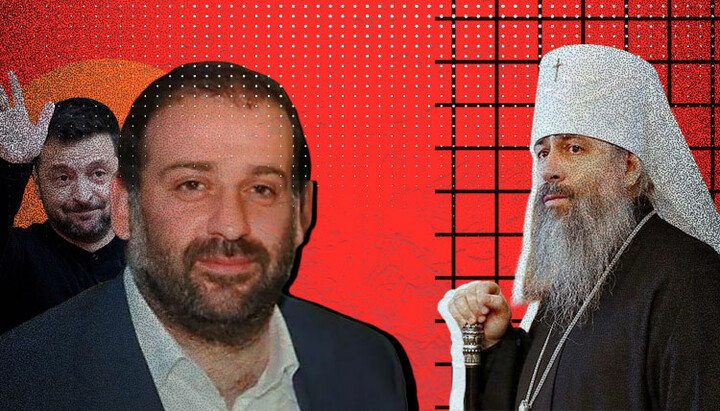
In our country, those involved in stealing millions are released on bail, while hierarchs are doomed to pre-trial detention. Photo: UOJ
On 18 November 2025, another court hearing is scheduled for His Eminence Metropolitan Arseniy of Sviatohirsk to consider a change of pre-trial restraint. In simple terms – judges once again have the opportunity to release him from unlawful detention. At the time of publication, the outcome of the hearing is unknown, but given the current reality, hopes for the bishop’s release are slim.
On 28 October 2025, after a year and a half behind bars, Metropolitan Arseniy was finally granted release on bail of 1.5 million hryvnias. Yet this decision turned into a tragic parody of justice: he was released for literally a few minutes – only to be immediately rearrested on new charges. The court then sent him back to detention, but this time “without the right to post bail.”
It is worth recalling that the bishop is being kept in extremely harsh conditions. The cells in the detention center are freezing. Moreover, he is severely ill and urgently needs heart surgery. He has no access to adequate medical care or even the necessary medication – a dangerous situation for someone with chronic illnesses and rapidly deteriorating health. During one recent hearing, his blood pressure spiked to 200/110, and hospitalization was required. Yet the court demanded that he be returned to his cell, refusing any form of bail.
Even if this were about a serious criminal, such treatment could hardly be called humane. All the more so when it concerns a clergyman who has committed no crime and who has spent years serving the Ukrainian people.
The humanitarian mission of Sviatohirsk Lavra
Throughout the war, Sviatohirsk Lavra has played a vital humanitarian role – and not in words, but in real, tangible assistance.
The monastery has become a place where thousands of refugees and war-affected civilians receive food, essentials and, for hundreds, shelter and safety.
In just the past several months alone, the Lavra has received hundreds of tons of humanitarian aid from various UOC eparchies. This help is indispensable – the Lavra has long become a haven for displaced people from all across Donbas. The monastery shelters refugees, provides them with housing and food, and supports volunteers whose work is centered around the Lavra.
All of this is concrete aid to the suffering people of Ukraine – people abandoned by the state and left on the brink of survival. And such help is especially precious during wartime.
And yet it is the shepherd who serves the suffering, not the swindlers who rob the people, whom the state punishes most severely.
"Mindichgate"
To fully understand the contrast, one must grasp the scale of the corruption scheme uncovered by law enforcement – the scheme investigators named “Operation Midas.” It is directly linked to the state enterprise Energoatom and to one of President Zelensky’s closest associates, Timur Mindich.
According to NABU and SAPO, the mechanics of the scheme were straightforward:
• Contractors seeking to work with Energoatom were required to pay 10–15% kickbacks. Those who refused were threatened with blocked payments or removal from the supplier list.
• Procurement and staffing were controlled not by official Energoatom managers but by shadow figures – insiders with no formal positions who ran the business through a “back office.”
• Money flowed through a sophisticated network of cash, foreign accounts, cryptocurrency and offshore structures.
• Part of the scheme operated abroad, including transactions linked to the United States, Moscow and other jurisdictions.
• NABU described the group as a “high-level criminal organization” with serious influence over a strategic enterprise and the national energy sector.
According to investigators, the criminal network stole at least 100 million dollars – and likely far more, as NABU hinted. And this entire scheme operated under martial law, which gave the perpetrators even more opportunity.
Even the most indifferent observer understands what this means: members of this group, who enriched themselves on money meant for protecting ordinary citizens, are nothing short of marauders. Accordingly, they should be punished with the full severity of the law.
But as we will see – reality is quite different.
Bail and the release of the suspects
On 13 November 2025, the High Anti-Corruption Court granted bail to two members of Mindich’s “back office”:
Lesia Ustymenko (bail of 25 million UAH) and Liudmyla Zorina (bail of 12 million UAH).
Almost immediately, a company with a charter capital of just 1,000 hryvnias (20 dollars) appeared and posted the 37 million hryvnias required. As a result, Ustymenko and Zorina walked free within twenty-four hours.
Formally, they face restrictions – electronic bracelets, a ban on leaving the country, and a prohibition on leaving Kyiv region without permission. But the key point is: they are free.
People implicated in massive wartime looting can now live comfortably and prepare their defense. This starkly illustrates that Ukrainian justice easily releases those involved in major corruption schemes, yet keeps a clergyman – a man who has dedicated his life to helping people – behind bars for years.
The striking contrast
We are not exaggerating; we are stating the obvious: comparing Metropolitan Arseniy’s case and the Mindich case reveals the moral choices Ukraine’s state and judicial system are making.
For pastoral service, a man faces brutal persecution.
For corruption involving millions during wartime – leniency and virtually no punishment.
Metropolitan Arseniy remains in pre-trial detention, denied bail, while those who stole millions enjoy freedom under minimal supervision and can prepare their defense.
Meanwhile, Sviatohirsk Lavra continues to be a refuge for the displaced – a center of mercy in a region abandoned by the state. Even as the government turns its back on people, the Lavra continues to help them. The corruption group, by contrast, drained resources from the state, likely depriving Ukrainians of the most basic necessities – light and heat.
This is why the contrast between these two cases, these two approaches, speaks louder about the moral character of “statesmen” than any thousand words ever could.
Freedom of religion?
Today’s Ukraine is a country where one can easily end up behind bars simply for preaching or for performing the duties of a priest. Being a believer is dangerous – not only physically, but legally. Belonging to the Church is now a real reason for persecution. Such developments should ring alarm bells among our “Western partners.”
When corrupt officials walk free on bail, but a bishop sits in prison, Europe should be asking: for whom does the law in Ukraine truly function?
Likewise, we – ordinary believers – cannot remain passive. In addition to prayer, we must organize and support the legal defense of the Church, thoroughly publicize all violations of our rights and freedoms. We must defend ourselves – trusting in God’s help and acting within the law.
Because when an Orthodox hierarch who has devoted his life to serving God and people is imprisoned, while corrupt officials walk free, then remaining silent is as much a crime as covering for those who steal from their own nation.
Read also
Why nation-first advocates do not call for peace
Ukraine’s population is declining by nearly one million people a year, and experts are warning of the nation’s demographic extinction. Yet the leaders of the Orthodox Church of Ukraine (OCU) and the Ukrainian Greek Catholic Church (UGCC) continue to call for war and mobilization.
The deception that decided the fate of the Tomos
In 2008, the "Filaret problem" derailed Yushchenko's plan. In 2018, Poroshenko solved it in just one hour – with a police escort for the Greeks and verbal promises to Filaret.
Lawyers in the crosshairs: How UOC is being stripped of its right to defense
Activists harass UOC lawyers outside courthouses, call them “traitors” on air, and promise them a “warm welcome” at hearings. The Church’s right to a legal defense is at stake.
How to respond to persecution: Lessons from St. Silouan the Athonite
The Church can and should be defended, but without malice. Why love for persecutors is not weakness but the only way to preserve the Spirit of Christ in the midst of the struggle.
Where the Spirit of the Lord is, there is freedom
Reflections on the controversies surrounding the creation of the OCU.
Pentarchy with Rome: A return to the roots or a new schism?
Patriarch Bartholomew wants to revive a council of five patriarchates, including Rome. What would reunion with Catholics look like, and what role would be left for the other Churches?