
What does the government want from Metropolitan Arseniy?
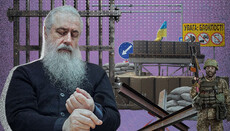
The state is trying to force Metropolitan Arseniy either to move to the OCU or to agree to an exchange.
On February 25, 2026, the court will hold another hearing in the case of Metropolitan Arseniy. Everything the authorities have been doing suggests the session will most likely be a formality. A month ago, on January 22, the court once again extended his detention – now through the end of March. Taken together, the hierarch will have spent almost two years behind bars (and a pre-trial detention center is the same prison by another name). Two years is a long time, especially for an elderly, sick man who needs urgent heart surgery.
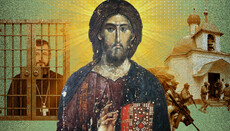
In theory, a detention center is not a place to serve a sentence. It is a place where a person is isolated while an investigation is underway. But in Ukraine’s realities, a detention center is simply a prison: a cramped, cold cell, miserable food, and only nominal access to medical care. A prison where you are treated as guilty. Ordinarily, such detention is used for those who pose a danger to society, or for suspects in “serious” cases where there is risk they will flee, destroy evidence, or pressure witnesses.
Against the backdrop of senior officials who steal tens and hundreds of millions from a suffering people and still do not spend a single day in jail, the case of Metropolitan Arseniy looks breathtakingly cynical. What “terrible” thing did the hierarch do that he is being tormented this way? How is he so “dangerous” that he must sit for years behind bars without a verdict and without proper medical care?
Two criminal cases have been opened against him. The first concerns a sermon in which he is alleged to have revealed to the enemy the location of military positions.
The words in question were spoken on the feast of the Synaxis of the Saints of Sviatohirsk, in September 2023: “Today there are three checkpoints in Tatianivka: one on the hill near Artem, another down below, and one more at the end of Tatianivka, at the entrance to the monastery.” He said this only in the context of describing how pilgrims traveling to the Lavra for worship were being stopped and delayed at those checkpoints.
Let us look at what the accusation actually amounts to.
What is the essence of the charge?
First, the Lavra is only about ten kilometers from the front line. In such areas, checkpoints exist in practically every settlement, usually at entrances and exits. This is no secret; it is routine for a frontline zone. Are we seriously supposed to believe the enemy has no way to learn where checkpoints are except by monitoring sermons?
Second, do the metropolitan’s words contain exact coordinates of defensive positions? Can a precise strike be carried out on the basis of phrases like “on the hill” or “down below”? The answer is self-evident.
Third, during the war there have been plenty of cases where public figures named exact locations of military facilities, those sites were struck, people were killed – and yet the authorities showed no interest in prosecuting those responsible. One example is enough. Just a month before the metropolitan’s sermon, on August 19, 2023, Russia struck the Chernihiv Music and Drama Theater, where a closed meeting of military drone manufacturers was taking place. Seven were killed (including a child), 156 were wounded (15 children). The day before, the organizers had posted an announcement publicly with the time and place. The tragedy caused enormous outrage – and yet no one was punished.
So: for vague words in a sermon about checkpoints “on a hill” and “by the entrance,” Metropolitan Arseniy is kept for months and years in detention without the possibility of bail. Meanwhile, those whose actions cost lives are not even charged. After that, can anyone seriously call the prosecution of the metropolitan “fair”?
Member of Parliament Heorhii Mazurashu openly calls the situation a “disgrace.”
“They’re claiming he ‘gave away positions,’ when in fact he was simply telling laypeople: be aware that in such-and-such village there are checkpoints. In my view there were no signs he was revealing anything. At that time, in virtually every settlement there were checkpoints more or less in the same way,” the MP said.
He added that Metropolitan Arseniy is being “slowly killed in pre-trial detention.”
“This is a disgrace for our country. I do not understand the point of throwing a clergyman, a monk, a person with such authority among believers, into a detention center on such a, frankly, stretched accusation. If you truly fear something, put him under house arrest and show society the evidence. What is this habit in our country? Law enforcement invents, conjures suspicions out of thin air, throws people into detention and simply abuses them. Especially when it is a clergyman,” Mazurashu stated.
And it is hard to argue with him. But perhaps the second suspicion looks different?
On November 4, 2025, the Prosecutor General’s Office said the hierarch had been arrested “for crimes against peace.” It also claimed that “in May and June 2022, during public speeches, the suspect denied Russia’s armed aggression and blamed the Armed Forces of Ukraine for the deaths of clergymen and a nun, as well as for the destruction of church buildings.”
Yet in the metropolitan’s farewell words at the funeral of monks killed in June 2022, there is no mention of who fired, from where, or how. And in a sermon delivered on the anniversary of the tragedy he said only this: “Today, brothers and sisters, is the anniversary of that terrible day in our monastery on June 1, 2022, when some deranged head gave the order to fire directly at the monastery, and some lawless hand pulled the trigger, and shells flew straight into the brotherhood buildings.”
There is no justification of aggression here, and no accusation against the AFU – only condemnation of those who shelled the monastery.
Unfortunately, law-enforcement practice in such cases is often grotesque. Statements are sent for “expert analysis” to the Kyiv Scientific Research Institute of Forensic Expertise, where “specialists” produce “conclusions” that can rest on bizarre distortions. In the case of UOC priest Serhii Chertylyn, experts accused him of spreading Russian propaganda that “violations and persecutions against UOC believers occur with the assistance of ‘aggressive NATO’” – despite the fact he never mentioned NATO at all. In the phrase “agresyvnyi natovp” (“an aggressive crowd”), the experts claimed to “hear” “agresyvnyi NATO.” That is the level of “expertise” sometimes at work.
So perhaps in Metropolitan Arseniy’s case, too, someone “heard” what they needed to hear.
It is revealing to recall the words of one of the Ukrainian authorities’ lobbyists in the United States, Julian Hayda, who claimed that “many UOC churches in Ukraine were destroyed by the Armed Forces of Ukraine.” Did a court keep him in detention without bail? No. Was he even charged? No. And the reason is the same reason corrupt MPs and officials are so rarely punished. “First-class” Ukrainians are allowed to say and do what they like without consequences. For representatives of the UOC, the pattern is the opposite: accusations are stretched to absurdity, and people are kept behind bars.
Why is the government holding Metropolitan Arseniy?
The analysis above shows there are no rational grounds to keep the Sviatohirsk hierarch in prison. The accusations are flimsy. There is no evidence he could destroy at liberty. There are no witnesses he could pressure. And yet his detention is extended again and again. Are we supposed to believe judges make such decisions purely on the case file?
By the metropolitan’s own testimony, he is being held not “for something,” but “for a purpose.”
First: attempts to pressure him into transferring to the OCU.
He spoke of such attempts in court on November 3, 2025.
The Sviatohirsk Lavra is one of Ukraine’s three lavras – perhaps not as ancient or as large as Pochaiv or the Kyiv Caves, but still a lavra. If its abbot were forced to join the OCU, it would be a massive media victory for the authorities. And because the Lavra is in Donbas – a region Russia claims as “its own” – an “Ukrainian Lavra” under the OCU would be packaged as a spectacular triumph. If Metropolitan Arseniy could be broken, the state would do everything to drag the whole monastery after him.
Second: Metropolitan Arseniy as exchange material.
“People came to me and said, ‘Sign the agreement – we will exchange you.’ I do not want that. I want to be here,” the hierarch said in court.
Even before his arrest, he was a figure of great authority. Now his name is known worldwide. His imprisonment is mentioned in UN rapporteurs’ reports. Calls for his release have already been voiced in the U.S. Congress. European media criticize the case. The authorities’ “Plan B” is an exchange. And the longer he sits in detention, the more famous the case becomes, the higher the “price” they hope to extract if he ever agrees.
Perhaps we should not even say “the state,” but “Zelensky.” Former MP Mosiychuk has claimed that the situation is personally overseen by the president.
There is no need to comment at length on the cynicism of those who seek to trade one Ukrainian for another – or rather, for several others. What we are seeing is closer to cruelty and coercion. By refusing urgent hospitalization and heart surgery, the system is trying to force a sick hierarch to abandon his country, his flock, and leave.
He is effectively presented with a choice: save your life and buy your freedom – or rot in prison for years.
And it is obvious that if he agreed, it would be portrayed as an admission of guilt, and his reputation would be demolished. That is the “choice.”
Yet he endures.
“My flock is here. My brethren are here. My sisters, my spiritual children are here. My boys in the AFU are here – they never renounced me, and I will never renounce them, because they are mine. The people who need me are here, in Ukraine. Whatever they offer, whatever agreements they want me to sign for an exchange,” Metropolitan Arseniy insists.
A bishop of love
In the 2000s a film about Metropolitan Anthony of Sourozh was released under the title Apostle of Love. It would not be an exaggeration to call Metropolitan Arseniy the same. Despite the injustice and harshness of the authorities – disturbingly reminiscent of the Bolsheviks a century ago – he does not grow bitter, does not sink into despair, but continues to speak of love, conscience, and God’s truth.
“Do not think that today we have lost,” he said at one hearing, commenting on yet another extension of his detention. “Why have we not lost? Because we remained with God and with a clean conscience. That is our main victory. Our conscience is clean. Do you understand? And I would not say God does not help us. His help is with us, He is with us. Which means we have remained for His work. For a year and a half God has given me strength to endure all this, because millions of prayers were offered for me,” he said. “By your prayers, by the strength of your spirit, and by your love we, bishops, live. And the Lord said: where two or three are gathered in My name, there am I in the midst of them.”
Everyone knows Tertullian’s words: “the blood of the martyrs is the seed of the Church.” Everyone knows that persecution does not destroy the Church – it strengthens and multiplies it. We have simply grown used to thinking those words belong only to ancient times – to the arenas and the skins torn from living bodies. But martyrs are among us today. And by their example they bring people to Christ no less powerfully.
The same MP Mazurashu, who is neither a parishioner of the UOC nor even a churchgoing man, notes that people “call Metropolitan Arseniy almost a saint” – and he hears it from those around him. Despite official propaganda trying to paint the Sviatohirsk hierarch as an enemy and a criminal, even those far from the Church can see in his steadfastness, courage, and humility a living sermon of Christ.
Metropolitan Arseniy speaks of his imprisonment simply: “His help is with us, He is with us. Which means we have remained for His mission.”
It is hard to be an instrument of God’s will. But the reward of such Christians is “great in Heaven.”