Doublesalm, Hexapsalm, and secret prayers: A tradition in motion
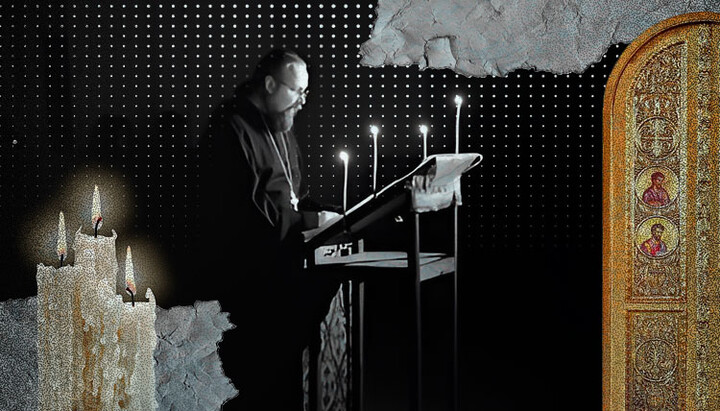
Hexapsalm is a time of silence. Photo: UOJ
Both ancient and modern Matins unfold in two movements: the pre-dawn watch, composed mainly of psalms and readings, and the sunrise ascent, crowned with the canon and the doxology. Today we turn to the very threshold of Matins, to the two opening clusters of psalms – the Doublesalm and the Hexapsalm.
Doublesalm: a royal trace
Whenever Matins is served separately from Vespers, it begins with the Doublesalm (the usual opening, Psalms 19 and 20, the troparia to the Cross, and the brief augmented litany).
Originally, this was not part of Matins at all. The Doublesalm is the surviving fragment of an ancient ktetor’s office. In the twelfth century, the Byzantine Emperor John II Komnenos, in gratitude for a series of military victories, founded the Pantokrator Monastery in Constantinople. As ktetor – founder and benefactor – he decreed that a special prayer be offered for himself and for the imperial family.
The monks fulfilled his testament by composing a special intercessory rite with two canons and refrain-verses drawn from Psalms 19 and 20: “May the Lord hear you in the day of trouble” (Ps. 19:2) and “O Lord, in Your strength the king shall rejoice” (Ps. 20:2).
Over time, this “royal” rite fused with the beginning of Matins. And although the Byzantine emperors are long gone, the Church has preserved this order.
These psalms are now understood spiritually: the King is Christ, and also every Christian who wages battle against spiritual enemies and hopes for victory through the power of God.
Hexapsalm: a conversation with God at the Last Judgment
The central part of the night segment of Matins is the Hexapsalm. It consists of six selected psalms: 3, 37, 62, 87, 102, and 142.
In current practice, this is a time of deep prayerful concentration. The lights in the church are extinguished (except for candles), and the Royal Doors are closed. The Typikon prescribes complete silence and reverence. Sitting, walking, and even making bows are forbidden, so that no sound may disturb the stillness.
Symbolically, this is the hour of the Last Judgment. The darkness recalls the night of Christ’s Nativity – when the angels began their cry of “Glory to God in the highest,” the very words through which the reading opens. It also evokes the darkness of Hades, where the Savior descended, and the spiritual night in which the soul dwells until it stands before God.
The Hexapsalm is the soul’s cry to God from the depths of sorrow and, at the same time, its hope in His mercy.
Each psalm is chosen with purpose, tracing the course of the inner life:
- Ps. 3: Trust in God amid enemies.
- Ps. 37: Repentance in sin and sickness.
- Ps. 62: Yearning for God (“O God, my God, unto You I rise early...”).
- Ps. 87: Mortal sorrow and loneliness.
- Ps. 102: Thanksgiving for God’s countless mercies.
- Ps. 142: Petition for guidance (“Teach me the way in which I should walk...”).
Secret prayers: The problem of audible silence
While the reader chants the psalms, the priest, standing before the Royal Doors (or in the sanctuary), quietly reads the twelve morning prayers. In contemporary practice, they are read consecutively, but historically they were distributed throughout the whole service of Matins, preceding the corresponding antiphons and hymns.
Gathering these prayers into a single block and reading them silently creates a liturgical problem.
Two parallel services emerge: the reader prays on behalf of the people with one set of words, while the priest prays for the people with another set at the same time, yet the people do not hear these words.
The meaning of these prayers is profound and essential for every Christian. In them we ask:
- For the bestowal of “peace upon the world”;
- For guidance on the true path;
- For forgiveness of sins;
- For God to illumine our hearts “with the incorrupt light of Your wisdom.”
Many have written about the impropriety of reading priestly prayers silently. Already in the sixth century, Emperor Justinian attempted to forbid such a practice by decree: “We order all priests and bishops to pronounce the prayers used in the Divine Offering and in holy Baptism (and all other prayers) not inaudibly, but in a loud voice, so that they may be heard by the faithful, stirring the souls of the hearers to greater reverence and lifting them to the praise of the Lord God.”
Paraphrasing the Apostle Paul, Justinian essentially says: how can one say “Amen” to a thanksgiving that is unheard and does not edify (see 1 Cor. 14:16)?
Despite the imperial decrees, by the eighth century the tradition of silent reading had become firmly established, aided by many church rubrics.
The idea of restoring the audible reading of these morning prayers – placing them once again at their proper moments in the service – is undoubtedly sound. They are, after all, written in the voice of the whole community. But such restoration demands maturity of liturgical thought, careful study of the Typikon, and, above all, the blessing of the hierarchy.
For now, every believer may incorporate these prayers into personal morning devotions, entering more deeply into their meaning and purpose.
And the deeper and more attentively the faithful study the structure and content of the services, the more conscious and alive their participation in the Church’s common prayer will become.
Read also
Why were holy monasteries turned into state prisons?
The history of Christian Europe preserves the memory of times when monasteries served as places of exile imposed by the state. Within their walls, the fates of monarchs and righteous men were decided.
A shepherd boy with a letter from Christ to French king
In the summer of 1212, thousands of pilgrims carrying staffs waited for the sea to part before them. Later chroniclers added ships, slave traders, and a pope's lament to their story.
Facade of bones and facade of light
Antoni Gaudí spent forty-three years building a church in Barcelona, knowing that this construction was for the ages.
Trial of a dead pope
Once in Rome, the body of a deceased pope was seated on the throne and put on trial. The accusation relied on a church canon that had once saved his see.
Monastery built in defiance of king
When Orthodox believers in Minsk were left with just one church, townspeople decided to build another – and even a royal decree did not stop them.
Young Mother and Sleeping Christ
Michelangelo carved a Virgin Mary who looks younger than her Son – and signed his name in marble for the only time in his life. Neither of these peculiarities was accidental.