After EU pressure, Netanyahu orders access for RCC to Holy Sepulchre
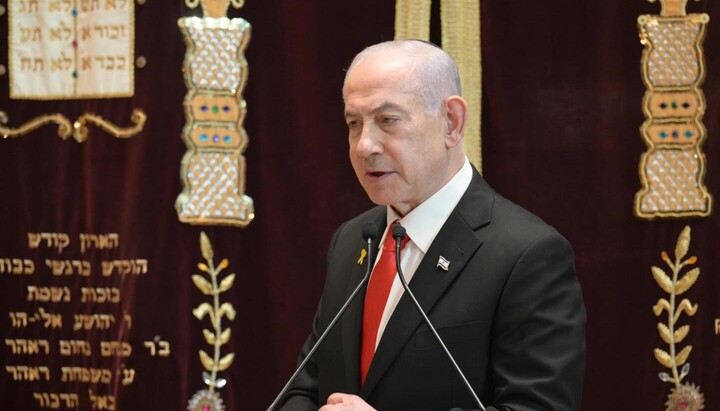
Israeli Prime Minister Benjamin Netanyahu. Photo: Netanyahu’s Facebook page
On March 30, 2026, Israeli Prime Minister Benjamin Netanyahu has instructed authorities to grant the Latin Patriarch of Jerusalem, Cardinal Pierbattista Pizzaballa, full and immediate access to the Church of the Holy Sepulchre following sharp criticism from the European Union and several European governments.
The decision came after Israeli police barred Pizzaballa and the Custos of the Holy Land, Fr. Francesco Patton, from entering the church to celebrate Palm Sunday Mass on March 29.
In a joint statement, the Latin Patriarchate and the Custody of the Holy Land described the incident as a “serious precedent,” noting that for the first time in centuries, church leaders were prevented from celebrating Mass at the Holy Sepulchre.
Netanyahu’s office said the restrictions were imposed for security reasons amid ongoing attacks from Iran and stressed that there had been no malicious intent.
The incident triggered strong international backlash. EU foreign policy chief Kaja Kallas called the move a violation of religious freedom and long-standing protections for holy sites. French President Emmanuel Macron said the actions reflected a troubling trend of undermining the status quo governing Jerusalem’s holy places. Italian Prime Minister Giorgia Meloni described the incident as an affront not only to believers but to all who uphold religious freedom, while Italy’s Foreign Ministry summoned Israel’s ambassador for explanations.
Even the U.S. ambassador to Israel, Mike Huckabee, criticized the police response as “an unjustified overreaction,” noting that the patriarch’s group was well below the 50-person limit.
Cardinal Pizzaballa ultimately celebrated Palm Sunday Mass at the Monastery of San Salvatore near the church.
The Church of the Holy Sepulchre has been closed to pilgrims since late February 2026 following the escalation of the Middle East conflict. However, according to available information, the Holy Fire ceremony on April 11 is still expected to take place despite the restrictions.
Control and liturgical rights at the Holy Sepulchre are shared among six Christian denominations – Greek Orthodox, Roman Catholic, Armenian, Coptic, Syriac, and Ethiopian Churches.
Earlier, the UOJ reported that Israeli authorities did not allow a Roman Catholic Church bishop into the Church of the Holy Sepulchre.
Read also
Lithuanian bishop: Ukraine is no model for believers' rights
Vicar of Vilnius Diocese voices concern over attempts to import Ukraine's religious conflict into Lithuania.
Hundreds of believers honor St. Alexis of Carpatho-Russia in Khust Eparchy
At the St. Nicholas Monastery in the village of Iza-Karputlash, Metropolitan Mark of Khust led a festive liturgy, concelebrated by six metropolitans, five archbishops and three bishops.
Court upholds UOC parish appeal in Voloshky over OCU switch dispute
The Northern Commercial Court of Appeal has upheld the appeal of the St. Nicholas parish of the UOC in the village of Voloshky, Volyn region, in a dispute over a transfer to the OCU.
Zelensky says 9.5M Ukrainians expected to return home from abroad
Zelensky stated that 9.5 million Ukrainians who left abroad are expected to return home to rebuild the country.
German theologian criticizes Ukrainian authorities' pressure on UOC
German theologian Regina Elsner has said that pressure from the authorities on the Ukrainian Orthodox Church places an additional heavy burden on believers during the war.
Poland bans entry to Lviv official over SS Galicia and UPA glorification
Polish Foreign Minister initiates entry ban on Lviv Regional Council deputy who proposed declaring 2027 the Year of the UPA.