Bach’s Cathedral Not Made by Hands
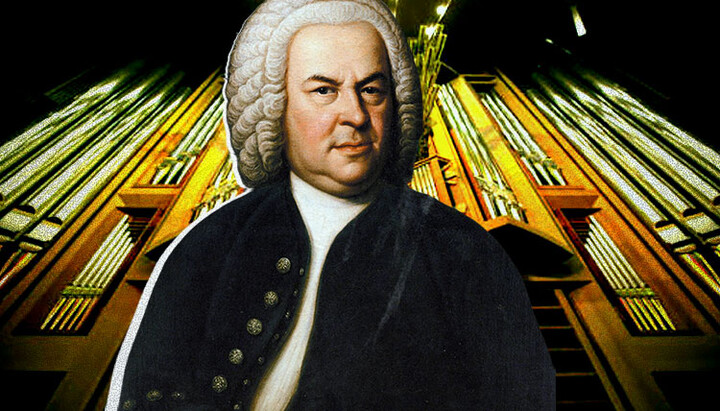
Johann Sebastian Bach. Photo: UOJ
In exploring Christian art, we have stood before canvases covered in cracked varnish, examined the warmth of marble, and debated the meaning of frescoes. All of this belongs to the visual arts. Today, however, we will consider a cathedral that cannot be found on any map. It is called the Mass in B Minor, and it can hold more people than any church in Saxony.
Its architect, of course, is well known. Yet the familiar portrait of a prosperous man in a powdered wig, with a steady gaze and the perpetual smile of a well-fed genius, has nothing to do with this building. The Bach who raised these invisible vaults was tormented as only a man can be whose home has become a cemetery.
A family curse
The composer had twenty children from his two marriages. Only ten survived. Ten times, the bereaved father walked behind the coffin of one of his children. Death visited the Bach household with the regularity of an inquisitive neighbor.
On one occasion, it treated the composer with particular cruelty. He left home on business and returned to find that his wife was dead. He entered the house only to learn that her funeral had taken place without him.
And yet it was this very man who would later set down, in calm, calligraphic, almost elegant strokes, the notes of the choral movement Crucifixus – the Crucifixion. From that moment on, Bach became an architect in music.
A foundation of tears and a dome of joy
Let us look at the score of the Crucifixus as though it were an architectural plan. The voices descend in small chromatic steps – one semitone, then another – and each step weighs upon the soul like a heavy stone. The music lays grief into the building’s foundation, course after course, with the stubborn persistence of a mason who knows how much the strength of the entire structure depends on what lies beneath it.
Then Et Resurrexit – “And He rose again” – suddenly soars upward, forming the dome of this musical cathedral. The ascent is breathtakingly swift because only moments earlier we were at the very bottom of unrestrained sorrow.
Unless we absorb the grief of the first part of this work, we cannot experience the exaltation of the second.
The composer’s musical monument
The life of this composer-architect was filled with all manner of events. Leipzig’s city council regarded him as a stubborn craftsman with a difficult temperament. His salary was cut, he was fined, he was denied the singers he needed, and he was forced to teach Latin, which he detested. He submitted petitions to the city council over the firewood that was repeatedly withheld as part of his pay. He spent days precious to his creative work embroiled in legal disputes with people who saw his music as nothing more than an unnecessary expense.
Many years later, reflecting on Bach’s surname – which means “brook” in German – Beethoven would say: “Not a brook, but a sea should be his name!” But the officials at city hall, haggling with him over a bundle of firewood, had no time for his genius. All they saw was an ever-growing bill.
And so a man who had been deprived of almost every comfort in life made a move no one expected from a mere craftsman: he stepped out of the jurisdiction of the city council and entered the jurisdiction of the Spirit, where officials no longer held any authority.
Bach was known to be a devout Lutheran. On his desk lay a heavily read Calov Bible, covered with handwritten notes. One of them, written beside a passage from the Book of Chronicles, reads: “Where there is devotional music, God is always present with His grace.” These words go a long way toward explaining why the composer cast the greatest monument to his work in the form of a Catholic Mass.
Yet the Mass in B Minor is too vast for ordinary worship. Nor was it written for a church. It was created as a monument to the Christian faith, and it had only one true recipient – the same One Bach invoked at the end of his scores with the three-letter abbreviation SDG.
“The ultimate and first purpose of all music should be nothing other than the glory of God and the refreshment of the soul,” Bach said. “Where this is not kept in mind, there is no true music, only infernal noise.”
Albert Schweitzer, the theologian and one of Bach’s most perceptive biographers, observed that for the composer, music was an act of worship and that his sounds proclaimed the Gospel.
A parcel sent into Eternity
In the final years of the musical architect’s life, his eyesight failed. After an operation performed by the traveling surgeon John Taylor – a man more accurately described as a charlatan – Bach went blind. He no longer wrote his final works himself but dictated them from memory, relying only on his ear.
Bach never heard the Mass in B Minor performed in its entirety during his lifetime. He never heard the applause at its premiere or the grateful praise of an audience.
He simply sent the work into eternity like a parcel with no return address, entrusting it to the One for Whom it had been written.
Read also
Trial of a dead pope
Once in Rome, the body of a deceased pope was seated on the throne and put on trial. The accusation relied on a church canon that had once saved his see.
Monastery built in defiance of king
When Orthodox believers in Minsk were left with just one church, townspeople decided to build another – and even a royal decree did not stop them.
Young Mother and Sleeping Christ
Michelangelo carved a Virgin Mary who looks younger than her Son – and signed his name in marble for the only time in his life. Neither of these peculiarities was accidental.
Orthodox books from a Uniate printing press
In the 18th century, Uniate monks at Pochaiv printed books used in prayer by Orthodox Christians and Old Believers alike.
The story of the honey brotherhood
The Mogilev Brotherhood began with members pooling money to brew honey drinks for feast days – and eventually grew to have its own printing press.
Golgotha in the midst of a pogrom
In the autumn of 1938, the Jewish artist Marc Chagall painted the crucified Christ. Synagogues burn and refugees flee around the cross, while the Crucified One Himself is wrapped in a prayer shawl.