

The heavy anchor of fidelity
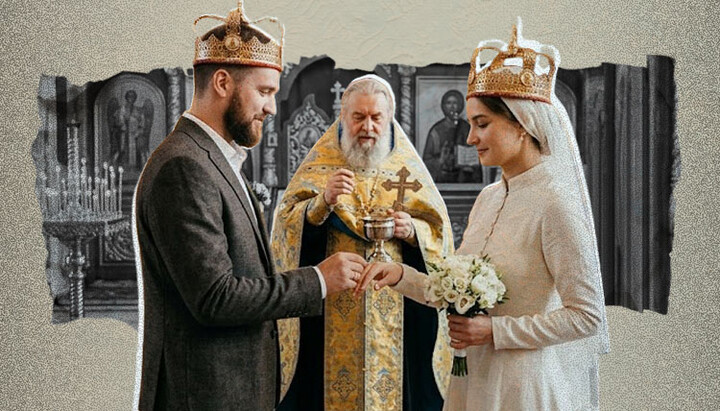
The little ring on the fourth finger has traveled a long road – from a receipt for a financial transaction to an icon of eternity. We look into its hidden and forgotten meanings.
As we pass museum cases filled with ancient gold, we rarely linger over the rings. We tend to imagine that they have always been symbols of romantic attachment and ornaments of a wedding celebration. Yet behind these museum pieces lies the story of a vast cultural upheaval that transformed human relationships forever.

The rust-stained mark of bondage
In the Roman Republic, the betrothal ring was made of iron. Its function was entirely practical. It served as a tangible pledge handed by the future husband to the bride’s father – a kind of receipt confirming that the transaction had been completed. The woman passed from the absolute authority of her father into the equally boundless authority of her husband.
Over time, the metal oxidized from sweat, rusted, and left a dark stain on pale skin. It resembled a miniature slave collar or a link from a set of shackles.
The ring was a visible sign of ownership.
Tertullian, recalling the severity of ancient customs, wrote that a Roman woman wore no gold “except on the one finger which her husband had consecrated with the wedding ring.” It was a stern reminder of the boundaries she had no right to cross.
The golden seal of the spouses
It is difficult to imagine how an instrument of commercial exchange could ever have become something entirely different. The first step in that transformation of meaning came through a remarkable legend. The Roman intellectual Aulus Gellius, referring to ancient Egyptian priestly writings, recounted a beautiful myth. Scholars examining human bodies after death had supposedly discovered an exceedingly fine nerve running from the fourth finger of the left hand directly to the heart.
This imaginary line became known as the vena amoris – the vein of love. In time, of course, it became clear that the human circulatory system is arranged differently. Yet Christian authors of the early centuries treated the metaphor with particular attention. St. Isidore of Seville wrote that “the ring is given as a sign of mutual fidelity and as a seal joining two hearts... It is placed on the fourth finger because a certain vein is believed to run from there to the heart.” Thus, a sign of a woman’s subjugation gradually came to be understood as a symbol of voluntary self-giving.
At roughly the same time, around the turn of the second and third centuries, a genuine revolution in everyday life took place – one recorded by St. Clement of Alexandria. Christians began to wear gold rings.
We might assume that the community had succumbed to pagan luxury, but the motive was entirely different. Clement wrote: “A man gives a woman a gold ring not for ornament, but so that she may place her seal upon what must be preserved in the house... For if the two are one, then their house is shared as well.”
In those days, a ring almost always served as a personal seal. A husband was not merely giving his wife a precious object. He was entrusting her with his own signet, used to authenticate financial documents, seal amphorae of oil, secure grain chests, and close the trunks containing the family archives. In the context of ancient patriarchy, this was a tectonic shift. The woman ceased to be a purchased possession. She became an equal partner, the keeper of the household, someone to whom the man entrusted his life, honor, and property without reserve. The gold symbolized the absolute purity of that trust.
Hands joined above the abyss
If we look at Byzantine wedding rings from the fourth and fifth centuries, we can see how Christian art transformed the philosophy of marriage. The Romans engraved rings with portraits of the spouses, symbols of material prosperity, and the cornucopia. Byzantine craftsmen stripped away this earthly aesthetic.
On small gold bezels, often carved in somewhat rough lines with a sharp burin, there appeared the image of the spouses joining their right hands. Their palms were clasped in an unbreakable bond. Above them, between the figures of husband and wife, stood Christ. Sometimes His hands rested upon their shoulders. Sometimes He gently held the marriage crowns above their heads.
The marriage contract ceased to be a bilateral transaction that could be dissolved as soon as market conditions changed or a woman’s beauty faded. It became a threefold Sacrament.
The third – or rather, the first and central – link in this spiritual structure was God Himself. From that moment on, to destroy such a union meant attempting to release the hand of the Savior, who holds the spouses above the abyss of life’s stormy sea.
An anchor in the storm
Every contract contains a clause providing for force majeure. A circle, however, has neither beginning nor end. Its line is closed. A ring is the line of human life folded into infinity. It does not so much restrict freedom as protect it, drawing around the family a tiny yet wholly sovereign territory into which no outside storm may enter.
We live in an age tempted to regard marriage as a temporary refuge or as a contract valid only for as long as the spouses feel warm and comfortable together. Yet the small golden band on each of their fingers recalls the heavy anchor of love, sunk deep into the ocean floor.
When distance separates husband and wife, they touch their wedding rings and remember that the space of love still exists between them. It preserves the memory of the hands once joined by Christ in the Sacrament of Matrimony. This little icon of eternity bears its silent witness: love is stronger than time – and stronger even than death itself.