A dissertation on Constantinople's "primacy": a dispute to be resolved
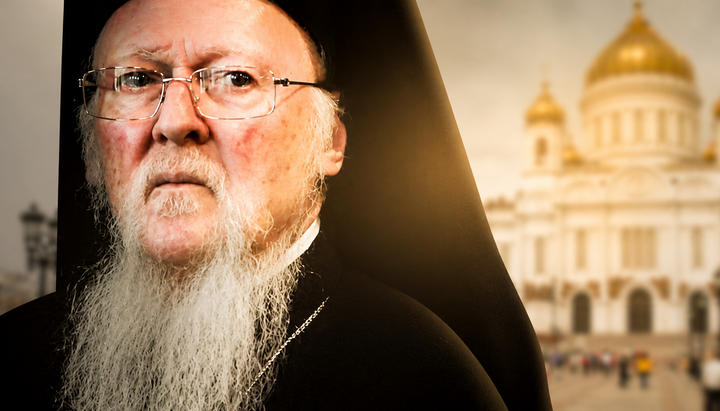
The Church of Constantinople considers its Patriarch as first without equals. Photo: UOJ
At the Moscow Theological Academy, Hegumen Dionysius (Shlenov) has defended the doctoral dissertation "In Defense of the Conciliar Structure of the Orthodox Church: The Theory of the Primacy of the Patriarch of Constantinople and Its Critique".
This is not merely another theological dissertation of interest only to specialists. The subject it examines concerns a specific religious conflict that is far from resolved. It has become a key factor in the persecution of the UOC, caused a rupture of Eucharistic communion between certain Local Churches, and already threatens the unity of Orthodoxy.
As is well known, the Orthodox Church does not recognize the idea of one bishop having supreme authority over the entire Church, as exists in Catholicism. There is only a primacy of honor, which concerns the Diptychs. However, in recent decades, hierarchs and theologians in Constantinople have begun promoting the idea that the primacy of the Patriarch of Constantinople is not limited to matters of honor. They argue that it extends to the sphere of ecclesiastical jurisdiction, the right to hear appeals, the granting of autocephaly, and so forth.
In 2018–2019, Constantinople made a bold bid to put its claimed “supreme powers” into practice. With the decisive role of the Patriarchate of Constantinople, the Orthodox Church of Ukraine (OCU) was established. It has been recognized by only 4 of the 14 generally recognized Local Orthodox Churches, while the Ukrainian and Russian Orthodox Churches broke Eucharistic communion with Constantinople. It was precisely the recognition by the Patriarchate of Constantinople of two schismatic denominations in Ukraine and the establishment of the OCU on their basis that became the main impetus for writing the dissertation.
To resolve this conflict, many Local Churches and authoritative hierarchs have called upon Patriarch Bartholomew to convene a Pan-Orthodox Council or assembly, but he persistently refuses to do so. Constantinople's argument is: we are the highest authority and our decisions do not require Pan-Orthodox consensus; we have created a new canonical reality that all others must accept.
Thus, the dispute has grown from a local conflict into a global theological question: how is the Orthodox Church structured at the universal level?
1,300 pages on primacy
The scope of the dissertation is impressive: 1,300 pages of research, with a bibliography comprising 1,408 entries. The study addresses the full range of arguments used by both proponents and opponents of the idea of Constantinople’s supremacy over the entire Orthodox Church. Particular attention is devoted to questions concerning the 34th Apostolic Canon, Canons 9, 17, and 28 of the Council of Chalcedon, the history of the institution of ecclesiastical appeals, and the procedure for granting autocephaly. The author also examines the phenomenon of the Orthodox diaspora, the meaning of the title “Ecumenical” as applied to the Patriarch of Constantinople, the concepts of “head” and “Mother Church,” as well as Byzantine and post-Byzantine precedents.
An indisputable merit of the dissertation is that Fr. Dionysius examines in detail both the works of contemporary Greek proponents of special powers for Constantinople – Metropolitan John Zizioulas, Metropolitan Gregory Papathomas, Metropolitan Kyrillos Katerelos, Archbishop Makarios Griniezakis, and others – as well as their opponents within the Greek Orthodox world. That is,
the dissertation is not a one-sided defense of arguments put forward by ROC hierarchs and theologians but an attempt to present a comprehensive picture of the dispute over Constantinople’s powers.
Moreover, the phenomenon of primacy, along with its theological and canonical aspects, is examined throughout the entire two-thousand-year history of the Church. This makes the work a truly comprehensive study, although some of its conclusions are open to debate, as the dissertation’s opponent, Doctor of Theology Pavel Yermilov, explicitly points out. In other words, the dissertation does not claim to have settled every aspect of the issue once and for all; rather, it remains open to further scholarly discussion.
Ukraine: how theory becomes practice
Ukraine occupies a special place in the dissertation. It was here that the arguments over primacy ceased to be a dispute among canonists and were “put to the test” in practice.
On October 11, 2018, the Synod of the Patriarchate of Constantinople adopted several decisions concerning Ukraine that were highly controversial from a canonical perspective. It confirmed its intention to grant autocephaly, restored the stavropegion of the Patriarch of Constantinople in Kyiv, accepted the appeals of Filaret Denysenko and Makariy Maletych, and declared null and void the Synodal Letter of 1686, under which the Patriarch of Moscow had been granted the right to ordain the Metropolitan of Kyiv.
In the context of the primacy dispute, the point on appeals is particularly telling. In the official decision, the Phanar invoked the right of the Patriarch of Constantinople to receive petitions from hierarchs and clergy "from all Autocephalous Churches." The same logic was enshrined in the Tomos of the OCU in 2019. The hierarchs and clergy of the new structure retain therein the right to appeal to Constantinople.
However, such an arbitrary and overly broad interpretation of Canons 9 and 17 of the Fourth Ecumenical Council (Council of Chalcedon) of 451 was not accepted by the majority of the Local Orthodox Churches. Orthodox ecclesiology itself does not imply that any one Local Church has the right to exercise supreme judicial authority over the clergy of other Local Churches. A substantial part of Fr. Dionysius’s study is devoted to substantiating this position: in his view, the Ecumenical Councils did not grant Constantinople the right to hear universal appeals beyond the boundaries of its own jurisdiction.
The author also examines separately the documents of 1686 concerning the transfer of the Metropolis of Kyiv to the jurisdiction of the Moscow Church, since the interpretation of these documents became one of the grounds for the actions of the Phanar in Ukraine. Constantinople maintains that the 1686 decree granted the Patriarch of Moscow only the right, by oikonomia, to ordain the Metropolitan of Kyiv and did not constitute a definitive transfer of the Metropolis of Kyiv.
In his dissertation, Fr. Dionysius examines this argument in detail and reaches the opposite conclusion. In a separate 2024 work, later incorporated into the dissertation research, he formulated it with utmost clarity: the 1686 act "was irrevocable in nature and cannot be subject to revision."
This topic was covered in detail on the pages of the UOJ back in 2018 in the article: "The Very Same Letter: Did Constantinople Transfer the Church of Ukraine?"
The main findings of the dissertation
The author acknowledges the primacy of honor of the See of Constantinople, but rejects the conclusion that this primacy entails a special universal judicial or administrative authority over other Local Churches. This is the main conclusion of the dissertation. Fr. Dionysius reduces the concept of the supremacy of the Patriarch of Constantinople to the following propositions:
- the ecumenical character of the Church of Constantinople;
- the right to act as the highest judicial instance;
- the right to receive appeals;
- the exclusive right to grant autocephaly;
- the exclusive right to govern the Orthodox diaspora;
- the exclusive role in convening Pan-Orthodox assemblies;
- the understanding of the See of Constantinople as the "head" or "mother" of the Churches it has established;
- the connection between the institution of primacy and the unity of the Church.
The author subjects each of these propositions to serious and well-substantiated criticism. At the same time, Constantinopolitan theologians explain the foundations of their authority, the meaning of the relevant canons, and the historical practice of their application in a completely different way. As already noted, the dispute over the powers of the Patriarch of Constantinople is far from over.
Conclusion
The dissertation contains some rather sharp polemical formulations, but they are not its main value. Hegumen Dionysius writes that the study could potentially "contribute to the restoration of the lost unity." But how can that unity be achieved?
The current situation in Orthodoxy can hardly be considered normal: the dispute over the scope of Constantinople’s power remains unresolved, the Ukrainian church issue has divided the Local Orthodox Churches, and the principle of resolving church conflicts through conciliarity has proved extremely difficult to implement in practice. The failure to resolve these issues only prolongs a situation that threatens the unity of Orthodoxy.
In our view, a step in the right direction would be to move the conflict away from the realm of political, administrative, and, to some extent, personal confrontation into the theological plane. The Local Churches need to seek unity and reach a common understanding. And this can be achieved much more effectively not by endlessly exchanging statements and unilateral decisions but through serious study of sources, canons, and historical precedents.
Ultimately, this should lead to a Pan-Orthodox Council at which all the current disputes and uncertainties among the Orthodox Churches can be resolved. Let us hope that Fr. Dionysius’s dissertation will play a positive role in this process.
Read also
Pentarchy with Rome: A return to the roots or a new schism?
Patriarch Bartholomew wants to revive a council of five patriarchates, including Rome. What would reunion with Catholics look like, and what role would be left for the other Churches?
Concubine or daughter? On words that cannot be used about the Church
An archon of the Church of Constantinople likened the UOC to Moscow’s “concubine.” But for St. Epiphanius of Cyprus, “concubines” are heresies.
Shameful chronicle of one week: how the OCU was born
Exarchs under escort, a call from the operations room, and 36 votes for Epifaniy: what a member of the Phanar delegation revealed about the 2018 "Council".
Can UOC eparchies be dissolved before court ruling on Metropolia?
DESS is launching separate proceedings against UOC eparchies, monasteries, and institutions while the case involving the Kyiv Metropolia is still pending.
Two murders, one silence
Zelensky condemned the killing of a Catholic priest in Poland the very same day. A month earlier, a UOC monk was murdered at the Sviatohirsk Lavra – and the president has remained silent ever since.
A bow to Phanar? Why did UOC academy congratulate Constantinople’s exarch?
A delegation from the Kyiv Theological Academy congratulated the Phanar’s exarch, who has remained silent about the persecution of the UOC. Who authorized this gesture, and why did even OCU supporters fail to appreciate it?