Salvation alone or life among people?
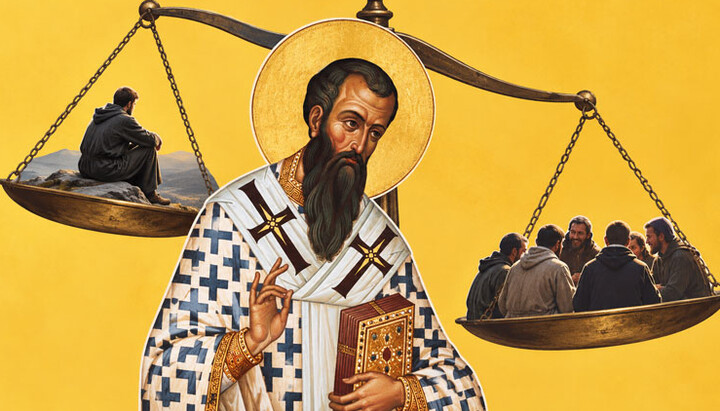
Solitude and communal life. Photo: UJO
– Vladyka, when modern bustle and endless noise exhaust the soul, one so wants to lock the doors, turn off all communication, and remain alone with God. Is solitude not the best path to salvation?
– City life does indeed give occasion for a multitude of troubles, and silence helps the soul to be cleansed of distraction, – St. Basil the Great answers with compassionate meekness. – I myself once withdrew to a deserted place on the banks of the Iris River, hoping to find peace. But soon I had to admit: although I had left the city, I could in no way leave myself behind.
We nod, understanding this profound truth. It often seems to us that we need only change our surroundings or close the doors of our home, and all the passions will subside of their own accord. But our habits, our resentments, and our hidden stubbornness remain with us, wherever we may go.
The Trap of Self-Pleasing
– But if a person has managed to find peace in prayer, why should he not remain in that seclusion? Why return to people with their infirmities and complaints?
– The Creator ordained our nature so that we would have need of one another, – the saint explains. – By his very nature, man is created to be sociable, not solitary.
The chief danger of a solitary life is self-pleasing. When there is no one nearby who could assess your actions from the outside, it is easy to imagine that you have attained spiritual perfection.
These words reveal a sober view of the human soul. When we pray in solitude, within the confines of our room, we are perfect in our own eyes. We have no reasons for irritation, no one interrupts us or forces us to yield in anything.
The Mirror of Brotherly Love
– Vladyka, but in the company of other people disputes and misunderstandings inevitably arise! Is it not easier to keep peace in the soul without constant concessions?
– How will a person show humility if there is no one near before whom he could be the lesser? – the Cappadocian saint reasonably asks. – How is one to practice long-suffering if no one opposes your desires?
A life separated from everyone turns into service to one's own needs. The love of Christ seeketh not her own. Whom will you wash, whom will you serve, before whom will you become the last, if you live apart?
We ponder this question. Christianity is not an individual meditative calm, but living service. The people around us become the very mirror in which our true spiritual growth is seen. To help a tired colleague, to remain silent in response to rudeness, to share another's pain – it is here that our faith is tested, not in the perfect silence of a locked room.
A Remedy for Stubbornness
– Saint, but accepting rebukes from others can be so painful! When brothers or loved ones point out our mistakes, everything inside us rebels.
– It is he who keeps silent about a fault who is merciless, not he who points it out, – the Archbishop of Caesarea says firmly. – It is like drawing poison out of a wound. When a bodily ailment is shown to an experienced physician, treatment is accepted with trust and a desire to be healed. In the very same way we should regard rebukes.
Everything that a man chooses solely by his own will is alien to true godly fear.
The holy preacher strikes at the most vulnerable point of our egoism. Self-will often disguises itself as a lofty striving for spiritual independence. It seems to us that we are preserving our inner freedom, but in reality we are merely shielding our own pride from unpleasant touches.
The Living Unity of the Community
– You spoke these words for monastics. But how can we, ordinary parishioners living in families and working in noisy workplaces, apply this experience?
– Render service to your neighbors as though you were serving the Lord Himself, – urges St. Basil the Great. – And when you receive help from others, receive it with humility, as a servant from his master. True love consists in grieving when the beloved suffers harm, and in sincerely rejoicing at his success.
One person cannot contain within himself all the spiritual gifts, but in a community the gifts of each are multiplied and serve all.
We stand beneath the vaults of the church, listening to these gentle and profound instructions of the ecumenical teacher. It becomes clear why Eastern monasticism and Church communities, through the centuries, have preserved precisely this testament of the Cappadocian archpastor concerning communal life as the most salvific.
Our parish, our family, or our place of work – this is the very arena where the soul is built up. Salvation is not accomplished alone. It ripens where we learn to bear one another's burdens, to yield, to show compassion, and to see in each person the image of Him Who unites us all.
Read also
The pyre on Champel hill
In late October 1553, the scholar Michael Servetus was burned at the stake outside Geneva. Reflections on the nature of ideological fanaticism and the value of freedom of conscience.
Confession from afar: from ancient letters to mobile phones
When someone is confined to a hospital bed or trapped under shelling, a difficult question arises: Can a phone conversation with a priest take the place of sacramental confession?
A tale of two oaths and a mother on a mountain
The story of a drought in Judea reveals the depths of God's justice and the price of a human promise.
Collapse of Babel's tower of globalism
October 24 is United Nations Day. An analysis of the crisis of secular institutions and the ideology of globalism through the prism of biblical Babylon and Pentecost.
Archpastor's word for weary city dwellers
When exhaustion weighs us down, we turn to ancient sermons to ask profound questions about human destiny and the nature of existence.
Brother of tax collector and brother of Lord
The Gospel is silent about the son of Alphaeus, and commentators have argued for centuries over who he was. And the Church commemorates two apostles named James in close proximity.