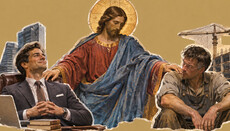
Confession from afar: from ancient letters to mobile phones
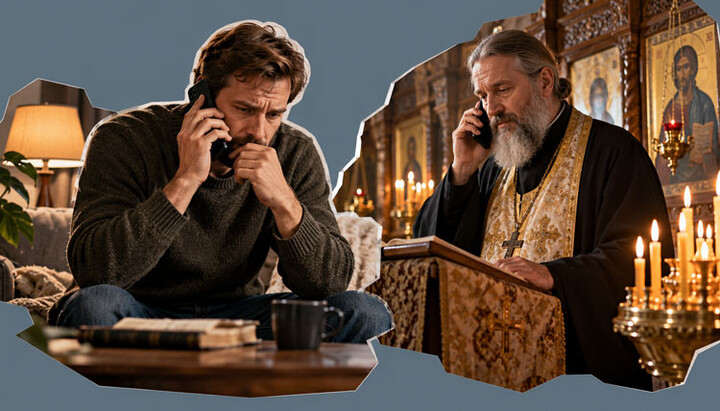
When someone is confined to a hospital bed or trapped under shelling, a difficult question arises: Can a phone conversation with a priest take the place of sacramental confession?
There are times when the world we know shrinks to the size of a hospital bed, a trench, or an apartment in an occupied city. A person is alone, weighed down by a troubled conscience, with no way to reach the nearest church. At such moments, one question keeps returning: Can I call a priest I know and make my confession over the phone?

It is easy to fall into one of two extremes. The first is despair – believing that without confession in person, there can be no forgiveness of sins. The second is assuming that a smartphone can simply replace the analogion, and that all a priest needs to do is recite the prayer of absolution into a microphone.
But the Church's experience offers a far richer understanding.
An encounter before the icon
If we open the Great Book of Needs (Trebnik) and examine the Rite of Confession, we find a model of a personal encounter.
The bishops and theologians who shaped this rite did so with remarkable pastoral sensitivity. The priest leads the penitent before an icon of the Savior. The person bows their head and confesses their sins. At the conclusion, the priest makes the sign of the Cross over the penitent with his right hand.
At the heart of this rite is the recognition that it is the Lord Himself who forgives sins, while the priest, acting by His authority, grants absolution. The sacrament is thus an act in which two people stand together before God in prayer.
Even when Holy Communion is brought to someone gravely ill at home, the rite instructs family members to withdraw for a time, leaving the person alone with the priest.
The canons of ancient councils, including the First Ecumenical Council and the Councils of Carthage, sought to ensure that those approaching death would not be deprived of a priest's final spiritual ministrations.
Yet even in the most extreme circumstances, the Church simplified the prescribed rites without dispensing with the personal encounter in prayer.
Letters from seclusion
It is sometimes said that spiritual guidance from a distance has always existed. And that is true.
In sixth-century Palestine lived St. Barsanuphius the Great, an elder who practiced strict seclusion and received no visitors. Abba Seridus, the monastery's abbot, would approach his cell and record the elder's answers to questions from the brethren.
The Holy Fathers exchanged letters, responded to the anxieties of laypeople, and helped others bring their innermost thoughts into the open. But such correspondence was a form of spiritual counsel, not the Sacrament of Repentance accompanied by the prayer of absolution.
A letter or a phone call can help a person examine their conscience. It does not, however, automatically turn a sheet of paper or a telephone into a priest's epitrachelion.
What if there is no priest?
What, then, should someone do when they are cut off from the Church?
The great preacher St. John Chrysostom offered a simple instruction: "Have you sinned? Say to God: I have sinned."
The saint was not suggesting that people seek a substitute for the Church. He was urging them to repent wherever they happened to be.
Sincere repentance begins in the heart. St. Theophan the Recluse of Vyshensky Monastery reminded us that sins of which a person has repented and which he does not repeat will not be remembered at God's Judgment.
There is also a valuable ancient practice: taking a sheet of paper and writing down everything that weighs on one's conscience. Read through those words prayerfully. Ask God for forgiveness. Resolve to go to confession in church at the first opportunity. When that opportunity comes, bring the written confession to the priest.
A phone conversation with a priest can be immensely important. It offers comfort, pastoral guidance, and support. But it remains a conversation, one that should be followed by a personal encounter at the analogion when the obstacles have passed.
St. John Climacus observed that even the thought of an approaching confession can restrain the soul from further wrongdoing, like a strong bridle.
Lessons from recent years
Consider the spring of 2020, when the world was confronted with COVID-19 restrictions. Different religious jurisdictions sought ways to respond to the unprecedented circumstances.
At that time, the Synod of the Orthodox Church in America temporarily permitted priests, for a period of one month, to hear confessions by video call or telephone and pronounce the prayer of absolution aloud.
Once that period ended, however, parishes returned to their traditional practice. Church websites subsequently made clear that confession by telephone was not the norm.
Meanwhile, a document issued in Rome emphasized that when grave circumstances prevent someone from reaching a priest, sincere contrition arising from love of God can bring forgiveness, provided the person firmly intends to confess in person as soon as possible.
The Church does not leave a person in distress.
When there is no church nearby, the doors of God's mercy do not close.
A conversation with a priest over the phone can strengthen a weary soul and offer comfort when strength is failing.
And when the time comes, there will once again be an opportunity to stand before the analogion and confess in person.