Archpastor's word for weary city dwellers
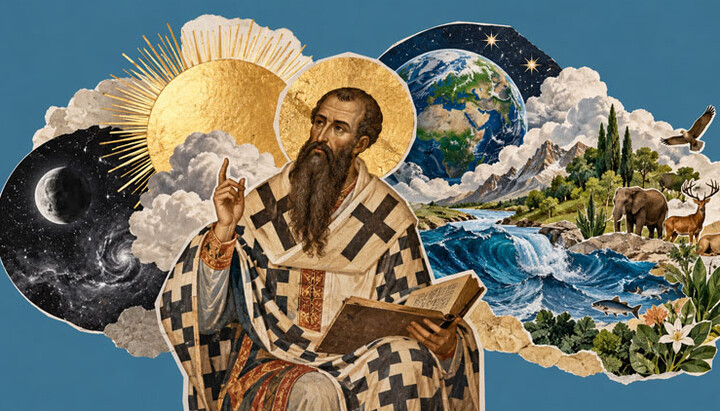
When exhaustion weighs us down, we turn to ancient sermons to ask profound questions about human destiny and the nature of existence.
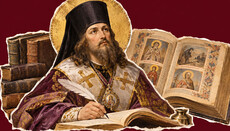
We step beneath the lofty vaults of a church in Caesarea. Around us stand ordinary townspeople: craftsmen with calloused hands, widows, women who have just finished their day's work. Beyond the doors, the marketplace bustles, the news brings anxiety, and the endless rush of daily life drains our strength. It is difficult to maintain our inner balance when the world outside seems to be falling apart. We approach the preacher, look into his gaunt face, and ask the questions weighing on our hearts.
"Vladyka, everything around us is falling apart," we say quietly. "It seems as though creation has lost its harmony and everything moves at random. Is there still any order in all this?"
St. Basil the Great turns toward us. His eyes reflect the wisdom of a man who knows the true weight of human sorrow.
"The godlessness that has taken hold of men has instilled in them the false notion that everything exists without governance or order and is set in motion as though by chance," he says unexpectedly.
His words leave us motionless. The chaos within us begins to recede. Suddenly, we realize that disorder lies not in nature itself but in our bewildered minds, which have ceased to recognize the hand of the Great Artist.
The rush of everyday life
Yet everyday worries continue to weigh heavily on our shoulders. We think of the workshops we have left behind, the bread we have not bought, the turmoil of our working lives. The craftsmen standing beside us fear losing a day's wages.
"Vladyka," we confess, "we find it difficult to preserve the peace of prayer. We are constantly rushing, and our thoughts wander to everyday concerns. How can we learn to hear God amid all the noise?"
The holy archpastor looks at the crowd of hurried workers and addresses us:
"Therefore, put aside every worldly care from your heart and gather your whole self inward. For it is of little benefit if your body is here while your heart is occupied with earthly treasure."
We lower our eyes in embarrassment, acknowledging our spiritual weakness. But the preacher is gentle and does not reproach us.
"Even the most active mind proves insufficient to explain properly the smallest part of the world. We must sincerely acknowledge our weakness," the saint says.
Thus, the Archbishop of Caesarea teaches us to be honest with ourselves and with our Creator. Unlike Him, we cannot add a single year to our lives or even one extra hour to our allotted time.
The nature of darkness
We move a step closer to the saint, for the answer to our next question matters deeply to us.
"Holy Father, where does all the evil around us come from?" we ask. "Why does darkness draw so close to our hearts that we feel ourselves sinking into despair?"
The preacher answers with calm assurance, dispelling our fear of the enemy's power.
"Darkness is not something that exists in its own right. It is simply the absence of light," the Cappadocian saint says.
Seeing our astonishment, he continues:
"Evil, too, is not a living or animate substance, but a condition of the soul opposed to virtue. It arises in careless people when they turn away from the good. Therefore, do not seek evil outside yourself."
"Then dark circumstances have no power in themselves? Does everything depend on God's will?" we ask hopefully.
"The first word of God created the nature of light, drove away darkness, dispelled gloom, gladdened the world, and at once gave everything a beautiful and pleasing appearance," St. Basil replies.
We begin to understand his teaching. Evil has no nature of its own; it is merely the absence of Good. Therefore, to drive away darkness, we must open our hearts to divine light.
Fate and free will
We then raise another question that troubles many people.
"Vladyka, what about belief in fate or omens? Could our actions be predetermined by the movements of the stars, leaving us responsible for nothing?"
There is firmness in the archpastor's voice.
"If the origins of vicious and virtuous actions do not depend on us, then legislators exist in vain, and judges who reward virtue and punish vice exist in vain," St. Basil the Great replies reprovingly.
The holy preacher restores to us a full sense of responsibility for our own lives. No astrological prediction can deprive a person of free will. We choose our own path, and that choice carries eternal significance.
Lessons from nature
We ask the saint to show us tangible examples that might strengthen our faith.
"Where should we seek comfort when our spiritual strength is exhausted?" we ask.
The holy archpastor gestures toward the humble plants growing near the church fence.
"Sand, the weakest of things, restrains the overwhelming violence of the sea," the Cappadocian saint says. "A single blade of grass or a tiny plant can occupy your mind with contemplation of the artistry with which it was made. The changing seasons stir all living things to reveal anew their power to bring forth grasses, seeds, and trees."
Through these examples from nature, the saint helps us see the world differently. He points to a blooming rose.
"At first, it had no thorns, but afterward thorns were added to the beauty of its flower, so that after delight we might behold sorrow and remember sin."
Then the preacher speaks of the grapevine.
"Looking at these tendrils, we learn to embrace our neighbors with bonds of love and find rest in those embraces."
How remarkable that nature becomes, in the eyes of the holy archpastor, a book revealing the mysteries of creation.
The preacher's parting words
The sun begins to set. Evening approaches, and we ask the preacher one final question.
"Vladyka, you have told us about the heavens, the world beneath the waters, the elements, and the plants. But what is God's design for humanity? Why did the Creator conceal certain details from the sacred writer?"
The Cappadocian saint falls silent. A gentle smile appears on his gaunt face. He looks at the people who have grown quiet after the day's bustle and speaks his parting words.
"If He passed over matters that do not concern us as being of no use, was it not so that everything might serve for the instruction and perfection of our souls?"
The preacher makes the sign of the cross over the assembled faithful and withdraws into the sanctuary.
We linger a little longer in the cool of the fading day. We know that St. Basil never delivered the remaining discourses on humanity and the world around us because of his untimely death. Later, his younger brother, St. Gregory of Nyssa, would write the missing treatise.
Yet this unfinished work holds a profound mystery. St. Basil has led us to the threshold of divine mystery and left room for our own personal search.
We emerge from the church into the city streets as changed people, our faith strengthened, our despondency and confusion overcome.